
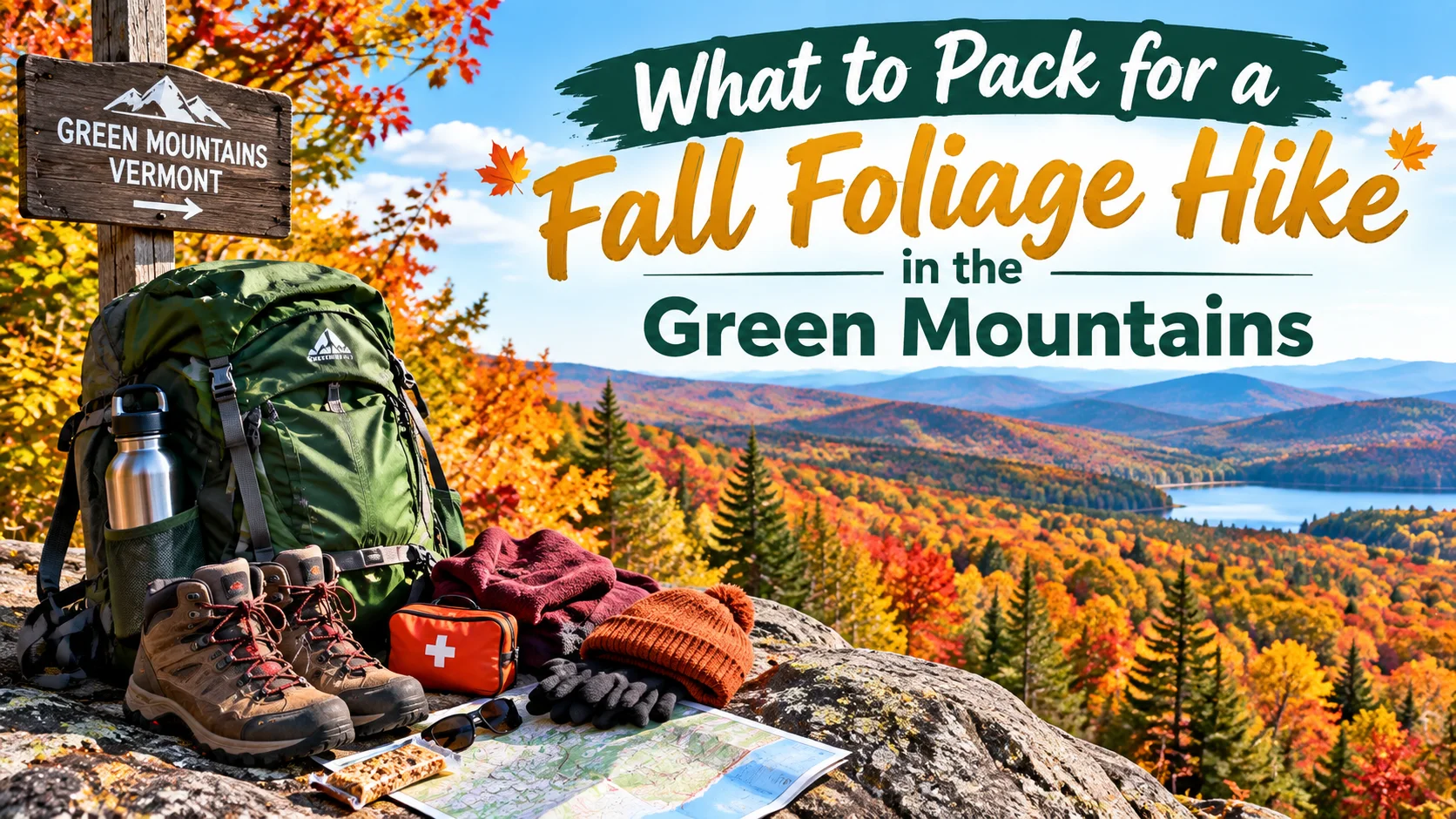
What to Pack for a Fall Foliage Hike in the Green Mountains 2026
Fall Foliage Hike in the Green Mountains. There’s a moment on a Vermont trail in early October when the forest just glows. The maples are on fire with red the birches shimmer gold and the air smells like damp earth and wood smoke . You stop to catch your breath not because the climb is hard (though it might be) but because the view genuinely stops you in your tracks.
Then the wind picks up , the temperature drops ten degrees and you realize you’re not quite as prepared as you thought.
I’ve been there . And I’ve watched plenty of hikers realize the same thing halfway up Stowe Pinnacle or somewhere along the Long Trail . The Green Mountains in autumn are spectacular, but they’re also unpredictable . Knowing what to pack for a fall foliage hike in the Green Mountains isn’t just about comfort it’s about making sure a stunning day doesn’t turn into a soggy, cold or even dangerous one.
This guide breaks down exactly what you need, why you need it and the local knowledge that only comes from actually hiking these trails in leaf season . No fluff, no generic packing lists. Just the real stuff.
Why Fall Hiking in the Green Mountains Demands Different Gear
Vermont’s fall foliage season is legendary for a reason . The Green Mountains put on a show that draws leaf peepers from around the world and the hiking trails here offer front row seats to the action . But there’s a catch.
The weather swings wildly. You might start a hike in Stowe at 55°F (13°C) under clear skies and hit the summit at 40°F (4°C) with wind whipping across the ridge . By the time you descend, it could be drizzling. A warm September day can feel like early summer in town and late November at elevation .
The trails get slick. Wet leaves on rocks and roots are basically nature’s banana peels. Vermont’s rocky, rooted trails become genuinely treacherous when covered in damp foliage .
The season is short. Peak foliage in the Green Mountains typically hits around the first two weeks of October, with higher elevations peaking in late September . You want to be out there when it matters and you want your gear to let you enjoy it, not fight it. Fall Foliage Hike in the Green Mountains.
The Non-Negotiable Layers : Your First Line of Defense
Let’s start with the foundation. Vermont fall hiking is all about layering , because you’ll be constantly adjusting . The goal is to stay dry, stay warm when you stop moving, and avoid overheating when you’re climbing. Fall Foliage Hike in the Green Mountains.
Base Layer (Moisture Management)
Merino wool or synthetic is your best friend here . Cotton kills literally , in the wrong conditions because it holds sweat against your skin and chills you when you slow down. Fall Foliage Hike in the Green Mountains.
What to bring:
- A lightweight merino wool t shirt or long sleeve
- One spare base layer in your pack (dry clothes change everything if you get soaked)
Skip : Cotton anything. It’s heavy, slow drying and useless when wet.
Mid Layer (Insulation)
This is your warmth layer . Think fleece, a light puffy jacket, or a wool sweater . You’ll likely hike in just your base layer if you’re moving uphill , then throw this on at the summit when you stop for lunch. Fall Foliage Hike in the Green Mountains.
Best options:
- Patagonia R1 or similar grid fleece : breathable, warm and dries fast
- Light down or synthetic puffy : packs tiny, provides serious warmth for the weight
- Vermont favorite : A good wool sweater. It’s not high tech, but it works.
Outer Shell (Weather Protection)
This is where people mess up. A waterproof, windproof shell is essential in the Green Mountains, even if the forecast looks perfect. Fall Foliage Hike in the Green Mountains.
What you need:
- Rain jacket with hood : something packable but genuinely waterproof (not just water-resistant). Fall Foliage Hike in the Green Mountains.
- Rain pants : underrated but worth their weight when the sky opens up or you’re pushing through wet brush. Fall Foliage Hike in the Green Mountains.
The misty mornings that make Vermont fall photos so magical also mean you might get damp. A shell keeps you comfortable and, more importantly , keeps your insulating layers dry .
Footwear : Where the Rubber Meets the (Muddy, Leafy) Trail
Your feet will make or break this hike . Vermont trails are rocky, Rooty and often muddy especially after rain or during the shoulder season .
Hiking Boots vs. Trail Runners
Hiking boots offer more ankle support and protection on Vermont’s rugged terrain. If you’re doing something like Stowe Pinnacle (moderate 1,500 ft elevation gain) or Lye Brook Falls (4.5 miles, rocky) boots are the safer bet .
Trail runners work if you’re experienced and sticking to well maintained trails. They’re lighter and dry faster. But your ankles will feel the rocks.
Key features to look for:
- Waterproof or water resistant (Gore Tex or similar)
- Aggressive tread for grip on wet leaves and rocks
- Ankle support if you’re carrying a pack or hiking steep terrain
Socks Matter More Than You Think
A good pair of hiking socks (merino wool, cushioned, moisture wicking) prevents blisters better than any fancy boot feature. Bring two pairs one on your feet , one in your pack.
Vermont brands to know : Darn Tough (made in Vermont, lifetime guarantee) and Smart wool are local favorites . Fall Foliage Hike in the Green Mountains.
Traction Devices (Maybe)
If you’re hiking late in the season (mid to late October) or after a cold snap, micro spikes can be a lifesaver. Early snow or ice on higher elevations isn’t unheard of . For most early-October hikes, they’re not necessary. But check recent trail reports before you go.
Trekking Poles: Your Secret Weapon for Fall Trails
I used to think trekking poles were for “serious” hikers. Then I hiked a Vermont trail covered in wet leaves and realized I was an idiot.
Why they help in fall:
- Balance on slick surfaces : wet leaves over roots are a recipe for slips
- Reduced knee strain : on steep descents (Vermont trails go up, then straight down)
- Confidence : you move faster and more steadily when you’re not worried about falling
What to look for:
- Collapsible (so you can strap them to your pack if you don’t need them)
- Cork or foam grips (comfortable, sweat absorbing)
- Adjustable length
Local shops like Mountain Ops in Stowe rent and sell quality trekking poles if you don’t want to commit . Fall Foliage Hike in the Green Mountains
The Backpack: Carrying It All Comfortably
Your pack needs to hold layers, water , snacks and emergency gear without throwing you off balance on uneven terrain.
For a day hike:
- 15–25 liters is the sweet spot for fall foliage hikes
- Hydration reservoir or bottle pockets : you’ll drink more if it’s easy
- Hip belt : transfers weight off your shoulders and keeps the pack stable
- Rain cover : or at least a pack liner (a trash bag works) to keep everything dry
Don’t overpack : A heavy pack makes you sweat more, which makes you colder when you stop. Bring what you need, nothing more. Fall Foliage Hike in the Green Mountains.
Water and Snacks: Fuel for the Climb
Hydration
How much water? For a 3–5 mile hike with elevation gain, bring 1.5–2 liters per person. Cooler fall temperatures might make you feel less thirsty but you’re still working hard.
Options:
- Water bladder (like a Camelback) : easy to sip while hiking
- Wide-mouth bottles : easier to refill from streams if you have a filter
- Water filter or purification tablets : Vermont streams look clean but can carry giardia. A Sawyer Squeeze or Katelyn Be Free weighs almost nothing and lets you refill on longer hikes.
Snacks
You’re burning calories climbing Vermont’s hills. Bring more food than you think you need.
Good options:
- Trail mix with nuts, dried fruit, and chocolate (the chocolate is morale)
- Energy bars : Clif, Lara or similar
- Jerky or savory snacks if you get tired of sweet
- A sandwich or wrap for a summit lunch
- Cider donuts : I’m not kidding. You’re in Vermont in fall. Buy one at a farm stand on the way to the trailhead. Eat it at the summit. This is peak leaf-peeping culture.
Bear safety note : If you’re hiking in the Green Mountain National Forest , all food and scented items must be stored in a bear canister bear box or properly hung . For day hikes, this mainly means keeping food in your pack and not leaving it unattended. Bears in Vermont are real and increasingly habituated to human food .
Navigation and Safety Essentials
Cell service in the Green Mountains is spotty at best and nonexistent in many trail areas. Don’t rely on your phone.
What to Bring
- Downloaded offline maps : All Trails , Gaia GPS or paper maps. Download before you leave town
- Portable charger : cold drains phone batteries fast
- Headlamp : even for day hikes. If you get delayed, you don’t want to navigate in the dark
- First aid kit : blister care, bandages, ibuprofen, personal medications
- Emergency whistle : attached to your pack strap
- Bear spray : optional but increasingly recommended in Vermont bear country. Know how to use it
Wildlife Awareness
Vermont has an estimated 4,500–6,000 black bears , concentrated along the Green Mountains . Encounters are rare but you should know what to do:
- Make noise on the trail (talk, sing or use a bear bell)
- Never run from a bear back away slowly
- Don’t climb a tree black bears are excellent climbers
- If attacked, fight back make yourself big and loud
Ticks are also a real concern. Vermont set a record with over 2,200 Lyme disease cases in 2025 . Wear light colored clothing, tuck pants into socks and do a thorough tick check after your hike (hairline, behind ears, armpits, behind knees).
Photography Gear (Because You’ll Want It)
Let’s be honest half the reason you’re hiking in the Green Mountains in October is for the photos. The reds, oranges and golds against a misty mountain backdrop are unreal.
What to bring:
- Camera or phone : with a good lens
- No flash setting : flash washes out foliage colors
- Polarizing filter : cuts glare and makes colors pop
- Extra batteries : cold drains them fast
- Lens cloth : mist and rain are common
- Binoculars : great for spotting color patches across valleys and wildlife viewing
Pro tip : The best light is early morning, when mist drifts through the valleys and the sun hits the ridges. This also means fewer crowds .
The “Just in Case” Items You’ll Be Glad You Packed
These are the things you probably won’t need . But if you do need them, you’ll be very very happy they’re in your pack.
- Dry socks in a Ziploc bag
- Emergency blanket (the foil kind, tiny and light)
- Hand warmers : a small luxury that feels enormous at a windy summit
- Bug spray : early fall can still have mosquitoes
- Sunscreen : you can get sunburned even on cloudy fall days
- Toilet paper + trowel : leave no trace , pack it out
- Trash bag : for your own trash and any you find on the trail (Leave No Trace)
Timing Your Hike: When to Go for Peak Foliage
Knowing when to hike is almost as important as what you pack.
Peak timing by elevation:
- Late September : High elevations (above 3,000 ft) and northern Green Mountains start peaking
- First two weeks of October : Sweet spot for most trails. High elevations still strong, mid-elevations peaking, valleys starting to turn
- Mid to late October : Valleys and southern areas peak. Upper elevations past peak, leaves dropping
Best time of day : Early morning. You’ll catch golden light, mist in the valleys and beat the crowds that show up after 9 a.m. on October weekends .
Also Check : The Best Small Fishing Villages in Outer Banks North Carolina 2026
Practical Tips for a Smooth Fall Foliage Hike
Check trail conditions before you go. Vermont has a “mud season” in spring, but fall trails can also be muddy after rain. If trails are soft, consider lower-elevation alternatives to avoid damaging fragile terrain .
Arrive early. Parking lots at popular trailheads (Stowe Pinnacle, Lye Brook Falls, Mount Abraham) fill up fast on foliage weekends .
Know the rules. Green Mountain National Forest requires bear-safe food storage. Some areas have specific regulations. Check ahead .
Support local. Stop at a farm stand for cider and apples. Grab lunch at a general store. Vermont’s small towns are part of the experience.
Frequently Asked Questions (FAQ)
What should I wear for a fall foliage hike in the Green Mountains?
Wear layers: a moisture wicking base layer, an insulating mid layer (fleece or light puffy) and a waterproof outer shell. Avoid cotton. Wear sturdy hiking boots with good tread and merino wool socks .
How cold does it get on Green Mountain trails in fall?
Temperatures can range from 50–65°F (10–18°C) in the valleys to 35–50°F (2–10°C) at higher elevations. Wind and rain can make it feel colder. Always bring an extra layer .
Do I need bear spray for hiking in Vermont?
Bear spray is optional but increasingly recommended. The more important steps are making noise, storing food properly and knowing how to respond to a bear encounter. Never run or climb a tree .
When is peak fall foliage in the Green Mountains?
Peak foliage typically occurs in late September for high elevations and the first two weeks of October for most trails. Valleys peak mid to late October .
Are trekking poles necessary for Vermont fall hikes?
Not strictly necessary but highly recommended. Wet leaves on rocks and roots make trails slick and poles improve balance and reduce knee strain on descents .
What should I do if I encounter a black bear?
Stay calm, make yourself known and back away slowly. Give the bear an escape route. If it approaches , make noise and stand your ground. If attacked, fight back do not run or climb a tree .
Is cell service available on Green Mountain trails?
No. Cell service is spotty or nonexistent in most trail areas. Download offline maps before you go and carry a portable charger .
Can I bring my dog on a fall foliage hike?
Yes but keep dogs leashed. Off leash dogs can trigger wildlife encounters. Check specific trail regulations before you go .
What’s the best time of day for fall foliage photography?
Early morning. You’ll get golden light, mist in the valleys, and fewer crowds. Midday light is harsh and washes out colors .
Do I need a permit to hike in the Green Mountains?
No permit is required for day hiking in most areas. Parking fees may apply at some trailheads ($5–10). International visitors need a valid visa or ESTA .
Final Thoughts
A fall foliage hike in the Green Mountains can be one of the most beautiful experiences of your life if you’re prepared . The difference between a magical day and a miserable one often comes down to what’s in your pack.
Layers keep you comfortable when the weather shifts . Good boots keep you upright on slick trails. Water and snacks keep you energized . And a sense of adventure (plus maybe a cider donut) makes the whole thing memorable . So pack smart , start early and soak in those Vermont colors. The mountains are waiting.