Every year, millions of travelers pack their bags, book their hotels months in advance, and drive bumper-to-bumper to the same ten destinations that every travel magazine has been recommending for the last three decades. They stand in line at the Grand Canyon. USA Visa and Immigration Services They fight for parking at Yellowstone. They squeeze onto the Hollywood Walk of Fame, squinting through the summer heat while tour guides shout into megaphones twenty feet away.
And then they go home, exhausted, slightly disappointed, and wondering why the trip didn’t feel the way they imagined it would.
Here’s the truth that the mainstream travel industry doesn’t want you to know: the most extraordinary version of America the one that genuinely takes your breath away, that makes you pull over on the side of a forgotten highway because you can’t believe what you’re looking at has never been on those lists. It doesn’t appear in the glossy brochures at your hotel lobby. It doesn’t trend on social media, at least not yet.
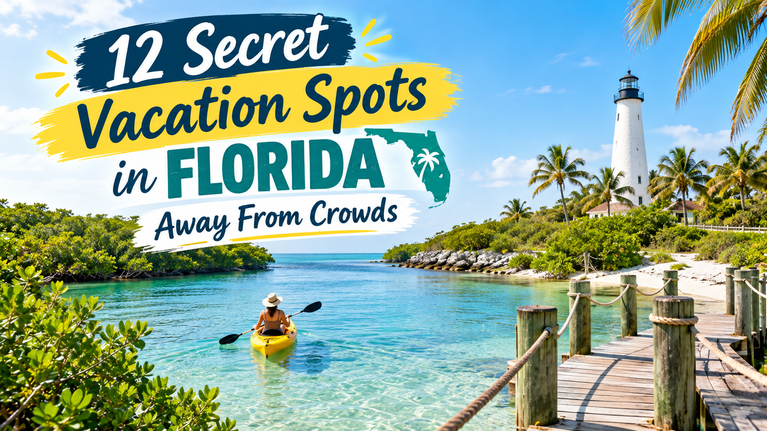
It lives at the end of a gravel road in southern Utah. It waits inside a smoky diner in rural Mississippi where the pie costs four dollars and the conversation is free. It hides along a creek bed in the Ozarks that doesn’t have a proper name on any map, where the water is cold and clear and you might spend an entire afternoon without seeing another person.
That America raw, quiet, wide open, and real is exactly what Hidden Trip USA was built to help you find.
What Is Hidden Trip USA?

Hidden Trip USA is an independent travel guide dedicated to uncovering the secret destinations, offbeat road trips, and lesser-known natural wonders that define the true character of the United States. We are not a corporate travel brand. We are not sponsored by hotel chains or tourism boards. We are a small team of obsessive road-trippers, backcountry hikers, and small-town wanderers who have spent years driving the forgotten highways, sleeping in free campsites, and hunting down the places that the rest of the travel world overlooked.
Our content is built on three pillars:
Real ground research. Every destination on our site has been personally visited, driven to, hiked through, and verified by an actual human being. Nothing on Hidden Trip USA comes from a press release, a tourism board pitch deck, or a Wikipedia rewrite. If we say it’s worth the detour, it’s because we made the detour ourselves.
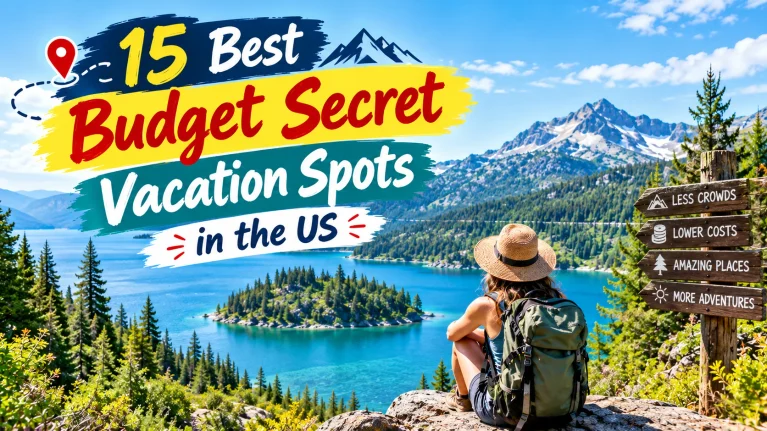
Honest, crowd-aware curation. The term “hidden gem” has been so badly abused by travel influencers that it has almost lost all meaning. A waterfall with 80,000 Instagram posts is not hidden. We only publish locations that meet a strict crowd-density standard if there’s a line to park, it doesn’t make our list.
Budget-first thinking. Extraordinary travel in America does not have to be expensive. USA Tourism & Travel We show you how to do full road trips across this country for as little as $75 a day with real numbers, real campsite coordinates, and real advice from people who have actually done it.
The Three Pillars of Hidden Trip USA
Travel & Tourism: The Roads Less Traveled

America’s highway system is one of the greatest engineering achievements in human history and most of it goes completely ignored. While millions of drivers pile onto the Interstate highways from city to city, a parallel network of state routes, county roads, and scenic byways sits almost empty, winding through landscapes of such extraordinary beauty that driving them feels almost surreal.
Our Travel & Tourism section is dedicated to helping you get off the Interstate and onto the roads that actually matter. We cover everything from the full length of Highway 1 along the California coast (including the sections that the tour buses skip) to the entirely underrated stretch of Highway 12 through Utah’s Grand Staircase-Escalante, which many serious road-trippers consider the most beautiful drive in North America.
What makes our travel guides different is that we go beyond the obvious highlights. We tell you where to stop between the famous overlooks the pull-offs that don’t have signs, the dirt tracks that lead to canyon views that most visitors drive right past, the tiny towns where the local diner closes at two in the afternoon and the only gas station is run by a guy named Earl who has probably forgotten more about that stretch of road than most travel writers will ever know.
We also cover international travel perspectives including the growing number of visitors from the United Kingdom, Europe, and Asia who are discovering that the United States offers a depth of natural and cultural variety that most Americans don’t even fully appreciate themselves. For travelers navigating changing visa requirements, currency considerations, and cultural differences, our practical guides cut through the confusion and get you focused on the experience.
Offbeat Travel & Hidden Gems: The Places Only Locals Know

The Hidden Gems section is the heart of everything we do. It is a continuously updated, personally verified database of destinations across the continental United States that meet our strict criteria for genuine discovery: low crowd density, minimal commercial infrastructure, and a reputation that travels primarily by word of mouth among people who actually live nearby.
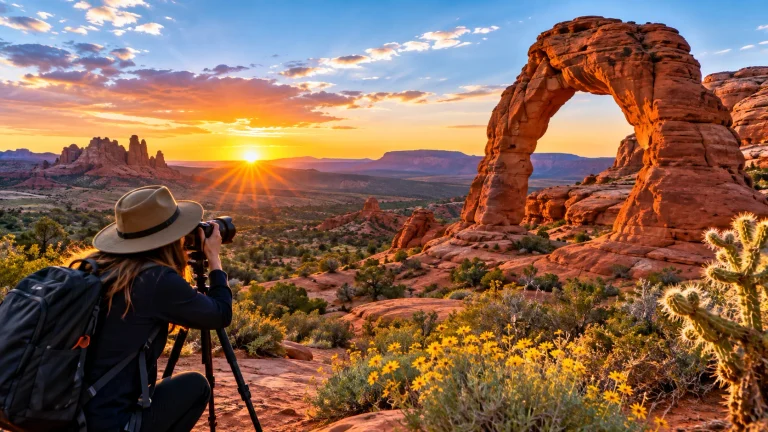
What does that look like in practice? It looks like a slot canyon in Arizona that only a handful of tour operators know about, where the light hits the sandstone walls at a specific angle in the late afternoon and turns the whole chamber into something that looks more like a painting than a natural formation. It looks like a hot spring in Nevada accessible only by a four-mile hike along a dry riverbed, where the water temperature is perfect and the views of the surrounding desert go for fifty miles in every direction.
It looks like a ghost town in Montana that the state tourism board never got around to promoting, where the abandoned buildings are still standing and the silence is so complete that you can hear your own heartbeat. It looks like a barrier island in Georgia that you can only reach by ferry, where there are no cars, no hotels, and no souvenir shops just wild horses walking along the beach in the early morning light.
These are the places we find. These are the places we write about. And these are the places that, in our experience, create the travel memories that actually last.
Road Trip Planner: The Full Breakdown

Planning a road trip across America from scratch is genuinely overwhelming. The country is enormous the continental United States alone spans over 2.8 million square miles and the information available online is either too generic to be useful or so hyper-specific that it only applies to one narrow corridor or one particular type of traveler.
Our Road Trip Planner section exists to solve that problem with complete, opinionated, experience-backed itineraries that tell you exactly what to do, where to stop, where to sleep, and what to eat broken down by budget, season, and available time.
Our most popular guide, How to Road Trip Across America for Cheap: 35 Secrets for $75 a Day, has helped thousands of travelers realize that the epic American road trip they assumed was financially out of reach is actually completely achievable on a tight budget. The secret is a combination of free camping on Bureau of Land Management land, a $35 America the Beautiful annual pass that covers every national park in the country, strategic grocery shopping at regional stores rather than tourist-area restaurants, and a route that prioritizes natural landscapes over expensive urban attractions.
- How to Get Cheap Tickets for Universal Studios Hollywood in 2026
How to Get Cheap Tickets for Universal Studios Hollywood . Planning a trip to Universal Studios Hollywood is incredibly exciting . You can already picture yourself sipping Butterbeer in Hogsmeade, revving through Jurassic World and stepping into the vibrant pixel perfect world of Super Nintendo World . But then reality hits . You look at… Read more: How to Get Cheap Tickets for Universal Studios Hollywood in 2026 - Best Scenic Road Trip Routes Through Utah’s Mighty 2026
Trip The road stretches ahead cutting through a landscape that looks more like Mars than Earth Red rock cliffs rise on both sides The sky is impossibly blue And around every bend another jaw dropping view stops you in your tracks This is Utah’s Mighty 5 road trip one of the most legendary drives in… Read more: Best Scenic Road Trip Routes Through Utah’s Mighty 2026 - The Best Small Historic Towns in Pennsylvania for Road Trips 2026
The Best Small Historic Towns in Pennsylvania for Road Trips. There comes a spell cast upon one as soon as they exchange the highways for the roads less traveled, even more so when these roads take you right into the center of Pennsylvania, which exudes history through its pores, both in museums and beyond, in… Read more: The Best Small Historic Towns in Pennsylvania for Road Trips 2026 - How to Visit Glacier National Park Montana on a Budget 2026
Glacier You have seen the photos. Turquoise lakes. Jagged peaks. Wildflowers stretching to the horizon. Glacier National Park is the crown jewel of the Rockies and you have been dreaming of standing at Logan Pass breathing in that crisp mountain air. Then you check the prices. Lodging inside the park is booked solid six months… Read more: How to Visit Glacier National Park Montana on a Budget 2026 - What is the Best Month to Visit San Francisco 2006
Best You are planning your trip to the City by the Bay. You picture sunny skies the Golden Gate Bridge glowing in the distance and perfect 70 degree weather. Then you check the forecast for July and see Fog 60°F. You start to wonder Did I pick the wrong month? Here is the thing. San… Read more: What is the Best Month to Visit San Francisco 2006 - The Best Non Touristy Things to Do in Dallas Texas 2026
The Best Non Touristy Things to Do in Dallas Texas. When you picture Dallas you probably think of the iconic skyline the cowboys and perhaps that famous grassy knoll. And sure those are part of the city’s fabric . But for those willing to look a little deeper, the real dallas is a treasure trove… Read more: The Best Non Touristy Things to Do in Dallas Texas 2026
How to Road Trip America on $75 a Day: The Real Numbers

One of the most persistent myths about American travel is that it has to be expensive. This myth is largely maintained by the travel industry itself, which profits enormously from expensive hotels, guided tours, and overpriced restaurants in tourist zones. The reality is that the United States has one of the most generous and underused public lands systems in the world a system that makes it entirely possible to travel for weeks at a time at a fraction of what most people assume it costs.
Here is a realistic daily budget breakdown for a solo traveler or couple road-tripping across America:
Gas: $15–25 per day. Based on a fuel-efficient vehicle averaging 30 miles per gallon across approximately 250–350 daily miles. Prices vary significantly by region California and the Pacific Northwest tend to run higher, while the South and Midwest are considerably cheaper. Downloading the GasBuddy app before you leave will save you meaningful money over a long trip.
Accommodation: $0–15 per day. This is where most travel budgets either collapse or succeed. The secret is dispersed camping on Bureau of Land Management (BLM) land and in national forests, both of which are completely free and legal across most of the western United States. The Compendium app and the overland platform both maintain excellent databases of free camping spots that are updated regularly by the over landing community. For the nights when you want a proper campsite with facilities, most national forest campgrounds charge between $8 and $15 per night a fraction of the $40–80 that private campgrounds charge.
Food: $20–30 per day. The single best food decision you can make on an American road trip is to eat at local diners rather than chains, and to supplement with groceries from regional supermarkets. Local diners in small American towns consistently offer better food at lower prices than any chain restaurant and they are one of the genuinely irreplaceable cultural experiences of traveling through the United States. A full breakfast at a good diner rarely costs more than $8–10. Regional grocery chains like Grocery Outlet, Winco, and Aldi allow you to stock a cooler with quality food at prices well below what you’d pay at a Whole Foods or a tourist-area convenience store.
Activities: $0–10 per day. Hiking, stargazing, scenic drives, wild swimming, and exploring small towns are all free. The $35 America the Beautiful Pass covers entrance to every national park and national monument in the country for a full twelve months if you visit more than two national parks in a year, it pays for itself immediately. Most small-town museums, historical sites, and local attractions charge between $3 and $10 for admission and are almost always worth it.
Total: $35–80 per day. The $75 target is not only achievable for experienced travelers who know the system, it’s actually on the higher end.
The Best Hidden Destinations in the USA by Season

America’s secret destinations are not equally accessible year-round. The country’s dramatic range of climates and geography means that timing your trip correctly can be the difference between an extraordinary experience and a genuinely miserable one. Here is our seasonal breakdown for hidden travel across America.
Spring (March through May): Desert Blooms and Empty Trails
Spring is arguably the finest season for exploring the American Southwest. The Sonoran Desert in southern Arizona transforms completely between late February and mid-April, when wildflower blooms paint the landscape in colors that seem almost artificially vivid against the red rock backdrop. Anza-Borrego Desert State Park in California, the lesser-traveled sections of Joshua Tree National Park, and the entire Apache Trail corridor in Arizona all reach their peak during this window.
Spring is also the best season for exploring the American South before the summer humidity sets in. The Natchez Trace Parkway a 444-mile scenic road that follows an ancient travel corridor from Nashville, Tennessee to Natchez, Mississippi is at its most beautiful in April, when the dogwoods and redbuds are in full bloom and the traffic is still light enough that you can stop anywhere you want without worrying about backing up the cars behind you.
Summer (June through August): Go North, Go High
The secret to summer road tripping in America is elevation. While the rest of the country swelters, the high alpine country of the American West sits at temperatures that are consistently ten to twenty degrees cooler than the valleys below. The San Juan Mountains of southwestern Colorado, the Bighorn National Forest in Wyoming, and the remote reaches of Montana’s Bob Marshall Wilderness all hit their visual peak in midsummer and they remain dramatically less crowded than the famous destinations that absorb the bulk of summer tourism.
The Pacific Northwest is another summer revelation for travelers who expect rain. July and August in Oregon and Washington are among the most reliably beautiful months of the year anywhere in the country warm, sunny, and completely free of the grey overcast that defines the region in fall and winter. The coast of the Olympic Peninsula, the North Cascades, and the volcanic landscapes around Mount St. Helens are all at their best during this window.
Fall (September through November): America’s Most Underrated Season
New England fall foliage is justifiably famous. What is dramatically less famous and dramatically less crowded is the fall color that transforms the rest of the country during the same period.
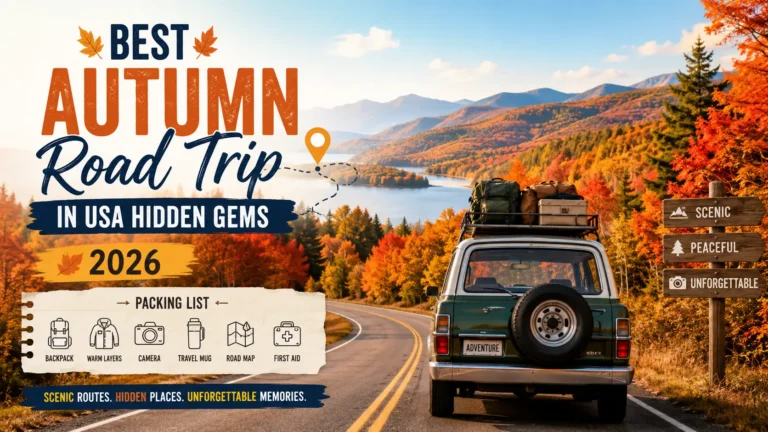
The Ozark National Forest in Arkansas and Missouri turns crimson and deep gold by mid-October. The Flint Hills of Kansas one of the last remaining intact tallgrass prairie ecosystems on Earth glow a rich copper color in late September that has to be seen to be believed. The Black Hills of South Dakota in October offer a combination of fall color, dramatically reduced crowds, and cool temperatures that makes them arguably the best version of one of America’s most underappreciated landscapes.
For leaf-peepers willing to explore beyond New England, the Upper Peninsula of Michigan, the Porcupine Mountains Wilderness State Park, and the Pictured Rocks National Lakeshore all offer fall displays that rival anything in Vermont with a fraction of the traffic.
Winter (December through February): The Brave Season’s Rewards
Winter road tripping requires preparation, flexibility, and a tolerance for cold but the rewards are extraordinary for those willing to embrace the season. The American Southwest in winter is frequently warm enough during the day for comfortable hiking and camping, and the dramatic reduction in visitor numbers transforms even famous parks into genuinely quiet places.
Big Bend National Park in southwest Texas is a perfect example. One of the least-visited national parks in the entire system, Big Bend is at its absolute finest from November through February. Daytime temperatures are mild and comfortable, the skies are consistently clear, and the park’s remote location puts it in one of the darkest night-sky corridors in the lower 48 states making it one of the finest stargazing destinations on the continent.
Why the Tourist Trap Model Is Broken And What to Do Instead

The conventional American tourism industry operates on a model that is fundamentally misaligned with the interests of travelers. It funnels enormous numbers of people into a small number of destinations because those destinations have the infrastructure the hotels, the restaurants, the visitor centers, the gift shops that generates revenue for the industry. The result is a self-reinforcing cycle: the most famous places get more crowded every year, the experience deteriorates, the industry responds by marketing those places even harder, and the cycle continues.
The travelers who suffer most from this system are the ones who trust it most the first-time visitors, the families with limited vacation time, the international travelers who have dreamed about coming to America for years and arrive expecting the grandeur they saw in photographs, only to find parking lots and souvenir stores.
The antidote is not complicated. It requires only three things: a willingness to do a small amount of independent research, a vehicle that can handle gravel roads, and the flexibility to follow a recommendation even when Google Maps tells you there’s nothing of interest within thirty miles.
Hidden Trip USA exists to provide that research. The vehicle is your responsibility. The flexibility is the most valuable thing you can bring to any journey.
The Great Smoky Mountains Secret Loop: A Case Study

To make the Hidden Trip USA philosophy concrete, consider the Great Smoky Mountains the most visited national park in America, with over 12 million visitors per year. Most of those visitors follow the same route: park at Sugarlands Visitor Center, drive to Clingmans Dome, walk the paved path to the observation tower, take a photo, and drive back through Gatlinburg for dinner at a restaurant they could have gone to in any city in America.
The experience is fine. The views from Clingmans Dome are genuinely spectacular. But it is not the Great Smoky Mountains. It is a highly edited, highly managed, commercially optimized version of the Smokies designed to process twelve million visitors per year without overwhelming the infrastructure.
The real Smokies are accessed through a different set of roads. They involve the Greenbrier area on the park’s eastern side, where a gravel road follows a creek through old-growth forest to a series of waterfalls that most park visitors never find. They involve the Cataloochee Valley, a remote section of the park on the North Carolina side where wild elk graze in open meadows at dawn and where the restored historic buildings of a nineteenth-century mountain community still stand in a silence so complete it feels almost sacred.
They involve Roaring Fork Motor Nature Trail, a one-way loop through dense forest past cascading streams and restored pioneer homesteads, accessible only during daylight hours and completely overlooked by the majority of visitors who come to the park. They involve the dozens of backcountry campsites scattered throughout the park’s 800 miles of trails — sites that require a free permit and a modest hike to access, but that offer a version of the Smokies so different from the main corridor experience that they might as well be a different park entirely.
This is what we mean when we talk about hidden destinations. We don’t mean places that nobody has ever heard of. We mean places that most people drive right past on their way to somewhere more obvious.
Honest Travel for Real People
The travel media landscape has become increasingly dominated by content that is optimized for search engines, sponsored by brands, and written by people who may never have actually visited the places they recommend. The result is a kind of information pollution an enormous volume of travel content that looks useful on the surface but provides almost nothing of practical value to someone who actually wants to go somewhere and have a genuine experience.
Hidden Trip USA was founded as a direct response to that problem. Our editorial standards are simple and non-negotiable: we visit every place we recommend, we disclose every sponsorship and partnership clearly and prominently, and we never publish a recommendation that we wouldn’t personally stand behind to a friend asking for advice over dinner.
We believe that the best travel writing is honest about the trade-offs. Every destination has drawbacks distances that are longer than they look on the map, access roads that require a capable vehicle, facilities that are minimal or nonexistent. We tell you about those things upfront, because a traveler who arrives prepared has a better experience than a traveler who arrives surprised.
We also believe that the best travel is slow travel. The American instinct to maximize to see as many places as possible, to check as many boxes as possible, to cover as many miles as possible is understandable but ultimately counterproductive. The trips that stay with you are not the ones where you visited seven national parks in twelve days. They are the ones where you spent three days in one canyon, learned its rhythms, watched the light change on its walls at different hours, and left feeling like you actually knew the place.
That is the kind of travel we are trying to help you do. And we think America with its extraordinary range of landscapes, its network of public lands, and its thousands of miles of empty roads is one of the finest places on Earth to do it.
Start Your Journey
Hidden Trip USA covers three main categories of content, each designed to serve a different stage of the travel planning process.
Travel & Tourism is for the traveler who knows they want to explore America but hasn’t yet decided where or how. Our regional overviews, seasonal guides, and scenic route breakdowns provide the big-picture orientation you need to start narrowing down your options.
Offbeat Travel & Hidden Gems is for the traveler who is ready to get specific — who wants to know exactly where to go, how to get there, what to bring, and what to expect. Our hidden gem profiles are the most detailed and personally verified content we produce, and they represent the core of what Hidden Trip USA is all about.
Road Trip Planner is for the traveler who is ready to commit — who has a time window, a vehicle, and a budget, and needs a complete, actionable itinerary that will actually work in the real world. Our road trip guides are tested, honest, and designed to be followed as written or adapted to your specific situation.
Wherever you start, the goal is the same: to help you find the version of America that most travelers never get to see the one that’s been waiting for you all along, just a little bit off the main road.
The Real America Is Still Out There
America is bigger than most people realize, even people who have lived here their whole lives. It contains within its borders more ecological diversity, more geological drama, more cultural variety, and more sheer physical space than most of the rest of the world combined. The tragedy is not that the country lacks extraordinary places to explore — it has an almost embarrassing abundance of them. The tragedy is that the way most people travel means they never find more than a fraction of what’s actually there.
FAQs.
What is Hidden Trip USA and who is it for?
Hidden Trip USA is an independent travel guide dedicated to uncovering America’s secret destinations, offbeat road trips, and hidden gems that most travelers never find. It is for anyone who is tired of crowded tourist traps and wants to explore the real, unspoiled side of the United States — whether you are a solo adventurer, a couple, or a family looking for something genuinely different.
How much does it cost to road trip across America using your guides?
Our guides are built around a real $75-per-day budget. This covers gas ($15–25), free or low-cost camping on BLM land ($0–15), meals at local diners and grocery stores ($20–30), and activities like hiking and scenic drives which are almost entirely free. A $35 America the Beautiful Pass covers entry to every national park for a full year, making it one of the best travel investments you can make.
Are the hidden destinations on your site really uncrowded?
Yes and we take this seriously. We only publish a location if it passes our crowd-density standard. If a spot has long parking lines, heavy foot traffic, or heavy commercial development, it does not make our list. We also update our guides every season, because places that go viral can lose their charm fast and we always want to stay ahead of the crowds for our readers.
Do I need a 4×4 or special vehicle to visit these hidden spots?
Not always. Many of our hidden gems are accessible by a standard car on paved or well-maintained gravel roads. However, some of our more remote destinations do require a high-clearance vehicle or basic off-road capability. Every guide clearly states the road conditions and vehicle requirements upfront so you always know what to expect before you leave home.
How do I get started with Hidden Trip USA?
The easiest way is to pick your interest browse Travel & Tourism for scenic routes and regional guides, explore Offbeat Travel & Hidden Gems for specific secret spots, or visit the Road Trip Planner for complete day-by-day itineraries with budgets included. You can also join our free Secret Inbox Club and receive hidden destinations, free campsite coordinates, and exclusive road trip maps delivered straight to your inbox every week.