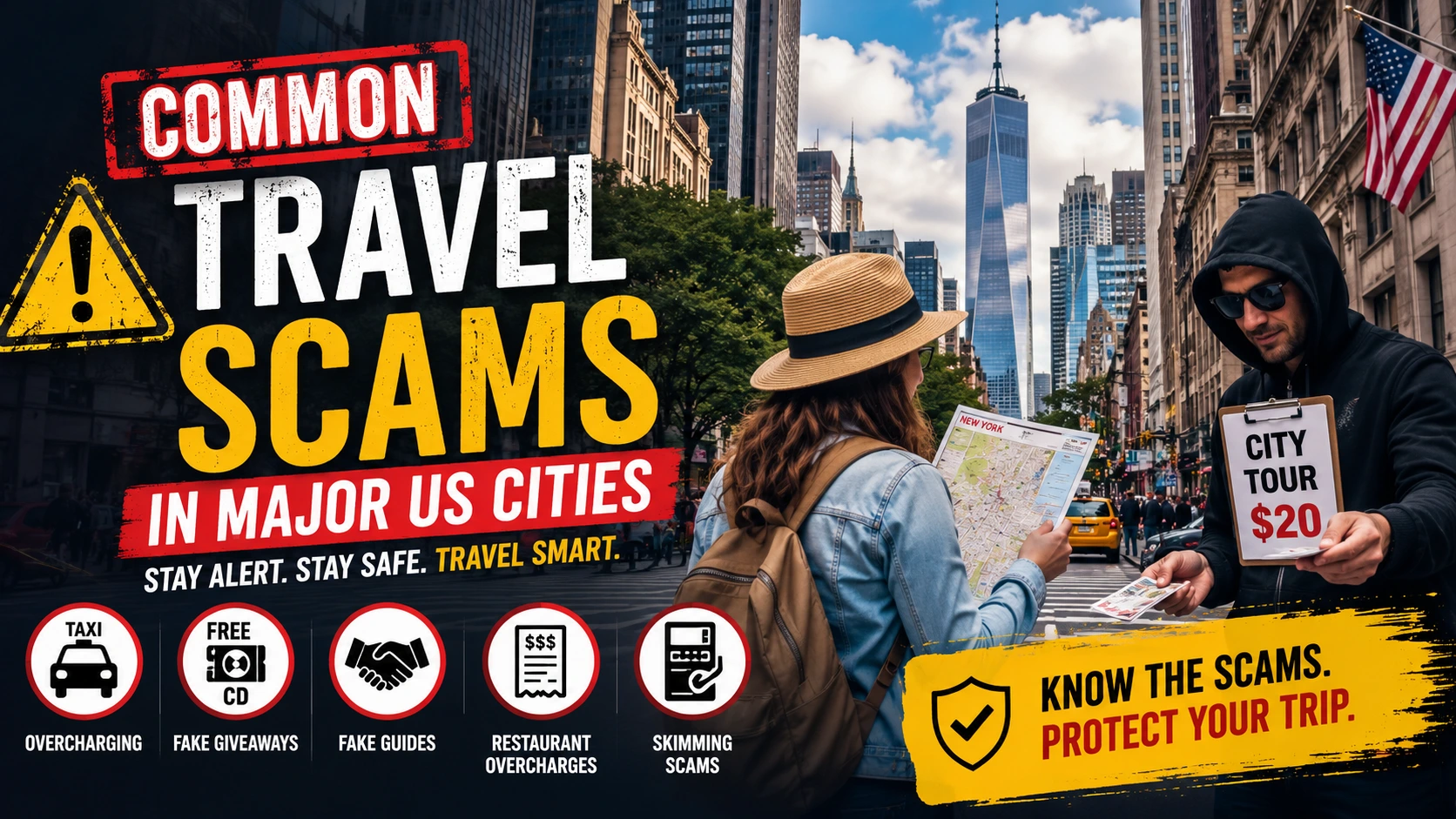
Common Travel Scams in Major US Cities 2026
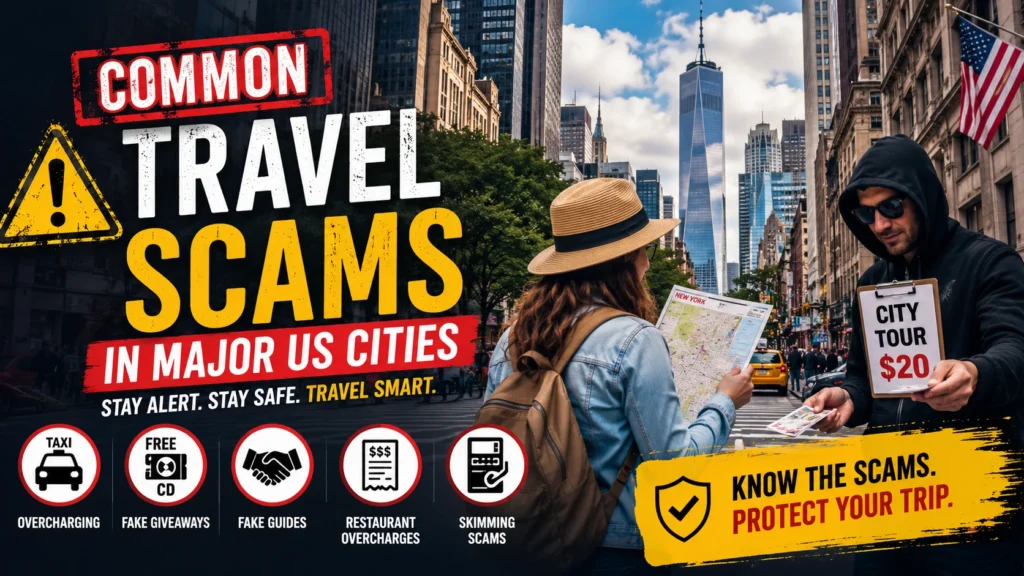
Common Travel Scams in Major US Cities. You’ve finally made it. City lights gleam, the atmosphere is palpable and you’re excited to venture out into it. But just as you’re beginning to ease into the metropolitan rhythms, you encounter a stranger with an “oh so helpful” offer that is quite too sweet to pass up. If something on your travel journey seems too good to be true chances are that it probably is. As exciting as it can be to meander through a metropolis of any size, it’s imperative that you come armed and ready.
From the hustling side walks of the Time Square to the sunny and breezy boulevards of La La Land having street smarts is a very profitable proposition indeed. This guide is the intel we bring into playing the field; helping you detect who’s who from yards away so that your getaway experience with out further complications. I’ve made my tour all over country, learned more over then one occasion on how a disaster averted could’ve just gone out down as another story. Here’s the know how for the most prevalent travel scams out there , designed with you, the globetrotter, in mind!
The Big Apple’s Biggest Cons: NYC Scams to Watch
As you probably already know, New York City is a city that never sleeps but is does keep “hustling ” that includes of little something that many tourist eventually will come across one that that, is trying to take advantage. Know some of the major frauds are part of the city.
Common Travel Scams in Major US Cities
One of the oldest tricks in the book is the unlicensed cab and it’s still catching visitors off guard. I’ve heard horror stories of travelers, like a British tourist visiting for the World Cup, being coerced into paying exorbitant fees. She was charged around $370 for a ride that should have cost a fraction of that . These scammers often use unmarked black cars and display official-looking documents to seem legitimate. They might not have a visible meter and will pressure you to pay with a credit card reader, making you feel trapped .
Here’s the golden rule : only use official yellow cabs or hail rides through trusted apps like Uber or Lyft. If you’re at the airport, follow the signs to the designated taxi stands . The Port Authority has been cracking down on these “hustlers” issuing thousands of summonses for illegal solicitation . If a driver claims the meter is broken or tries to negotiate a flat rate that seems high, just walk away. Your safety and wallet are worth the extra minute to find a legitimate ride.
Pedicab and Sightseeing Scams
Those colorful pedicabs might look like a fun way to see Central Park but they can also be a financial pitfall. The New York City Council has warned that some operators cover up their required “rate per minute” signs, only to reveal a shocking bill at the end of your ride . A short, scenic trip can suddenly cost you a small fortune.
Don’t be ripped off by street vendors of other types of “tickets” either , especially at tourist heavy sites . One street vendor at Battery Park has been recorded selling $20 boat tickets that “go around the Statue of Liberty” never actually docking to allow you to visit . Purchase tickets from the main vendor or from a well known trusted tour operator . Do a bit of research beforehand.
AI Voice Phishing and Fake Customer Service
As technology advance same are getting more advanced. A new growing scam is AI voice phishing also known as “vishing”. This is where fraudsters use AI generated voices to call people, to then impersonate themselves as representatives from your airline, your hotel or your credit card company. Common Travel Scams in Major US Cities.
Then to create an urgent sense of danger to the situation so people feel the need to give up sensitive information to them, by trying to claim your bookings or card, have issues that would require you to enter details such as your passport number or credit card number. Don’t believe the caller ID though as this can be faked. Common Travel Scams in Major US Cities.
Another common trick is setting up fake customer service numbers for airlines and hotels. If you’re dealing with a delay or cancellation and search for a support number online, you might end up calling a scam call center designed to capture your payment and personal data . Common Travel Scams in Major US Cities.
Always go to the company’s official website or app to find contact information. If you receive an unexpected call , hang up and call the company back using a number you know is legitimate. Legitimate agencies will never pressure you to act immediately . Common Travel Scams in Major US Cities.
Vacation Rental Fraud: Finding a Bed That’s Actually Real
We all love the idea of staying in a cool, local apartment but the world of vacation rentals is a prime hunting ground for scammers . The promise of a great deal in a perfect location can be a powerful lure, so you need to be a savvy shopper. Common Travel Scams in Major US Cities.
How to Spot a Fake Listing
Scammers often create fake listings with stolen photos of beautiful properties that don’t exist or aren’t available. They might offer a “bait and switch,” where the property you book is drastically different from the one advertised or they might invent a property that’s entirely fictional . They prey on your excitement and the assumption that all platforms thoroughly vet their listings.
Here’s how to protect yourself:
- Read Verified Reviews: Be cautious of properties with very few or no reviews. A string of positive, detailed reviews from different users is a good sign. Common Travel Scams in Major US Cities.
- Examine the Photos: Do a reverse image search on Google. If the same photos appear for properties in multiple cities it’s a huge red flag . Common Travel Scams in Major US Cities.
- Never Pay Outside the Platform: This is the most important rule. Scammers will always try to get you to pay via wire transfer, Zell or cryptocurrency to avoid the platform’s protections . Legitimate hosts will process payments through the booking site. Common Travel Scams in Major US Cities.
The Digital Danger Zone: Social Media and QR Code Scams
Scams aren’t just happening on the street; they’re also happening online. Social media, a great tool for travel planning, can also be a minefield. Common Travel Scams in Major US Cities.
Beware of “Too Good to Be True” Travel Deals on Social Media
Travel Facebook groups are wonderful communities for getting advice but they are also monitored by fraudsters. Scammers pose as travel agents or offer “exclusive deals” on trips, often asking you to switch to a private messaging app like WhatsApp to finalize payment . Once you send money via Zella wire transfer, or cryptocurrency, they disappear. Common Travel Scams in Major US Cities.
If someone contacts you directly with an unsolicited offer, be extremely skeptical. Stick to official company websites for bookings. If a deal sounds too good to be true, it almost certainly is . Common Travel Scams in Major US Cities.
“Quishing” and Malicious QR Codes
QR codes are everywhere now, from restaurant menus to airport posters. But a scam called “quishing” (QR code phishing) is on the rise. Scammers place their own fraudulent QR codes over legitimate ones. When you scan it, you’re redirected to a malicious website designed to steal your personal and financial information . Common Travel Scams in Major US Cities.
Always inspect a QR code before scanning. Does it look like it’s been tampered with or stuck on top of another one? If so, don’t scan it. It’s safer to type the URL directly into your browser or use the restaurant’s official app . Common Travel Scams in Major US Cities.
City by City Scam Guide: What to Watch For
While the big scams are universal, each city has its own flavor of tourist trap. Common Travel Scams in Major US Cities.
Los Angeles: The Food and Hospitality Sector
According to the Mastercard Economics Institute, fraud in food services is significantly prominent in the US, making up a large portion of reported cases in New York City . In LA, this could mean restaurants that overcharge, add unauthorized tips to your bill, or steal your credit card information. Always check your bill carefully before paying, and if you’re paying with a card, watch it leave your sight if possible. Common Travel Scams in Major US Cities.
San Francisco: A Safer Bet
Data from Mastercard suggests that tourists report some of the lowest rates of fraud in San Francisco . That doesn’t mean you shouldn’t be vigilant but you might be able to let your guard down just a little. Still, standard city rules apply: be aware of your surroundings and don’t leave valuables in plain sight in rental cars, as break ins are a known issue. Common Travel Scams in Major US Cities.
How to Keep Your Cool and Your Cash: A Step by Step Survival Guide
You’ve got the knowledge, now let’s turn it into action. Here’s a simple step by step plan to keep you safe on your next trip. Common Travel Scams in Major US Cities.
1. Confirm Your Bookings via Official Channels.
- Don’t just trust a confirmation email. Log in directly to the airline’s or hotel’s website or app to confirm your reservation .
2. Avoid Urgent Payment Requests.
- Scammers create panic to short circuit your logic. Take a deep breath. If a “representative” demands immediate payment or personal information, it’s a major red flag .
3. Check Online Listings Meticulously.
- For vacation rentals, scrutinize photos, read all reviews (especially the bad ones), and use reverse image search to verify the property’s authenticity . Common Travel Scams in Major US Cities.
4. Use Secure Payment Methods.
- Credit cards often offer better fraud protection than debit cards or bank transfers. Always pay for accommodations and tours through the platform’s secure system . Common Travel Scams in Major US Cities.
5. Monitor Social Media Interactions.
- Be wary of strangers offering travel assistance, deals, or “exclusive” opportunities through direct messages. Keep conversations on official channels .
6. Protect Your Digital Life.
- Use a VPN when connecting to public Wi-Fi, especially when making online payments or accessing travel accounts .
7. Keep Digital Copies of Important Documents.
- Have a secure digital backup of your passport, visa, and other important IDs in case they are lost or stolen .
8. Ignore Suspicious QR Codes.
- If a QR code looks like it’s been pasted over another, don’t scan it. Type the web address manually into your browser . Common Travel Scams in Major US Cities.
Spotting a Scam Before It Spots You
Being able to identify a scam is your superpower. Scammers are experts at psychological manipulation, but you can beat them at their own game.
The Psychology of a Scam: They Count on You Being Nice
One of the most common tactics is creating a false sense of urgency or panic. They want you to act before you think . They might threaten you with legal action or insist an immediate payment is required to fix a problem. Remember, a legitimate company will never pressure you to make a snap decision. Common Travel Scams in Major US Cities.
Also, scammers count on you being a polite and nice person. Don’t be afraid to be firm. It’s okay to say “no” to a persistent street vendor, walk away from a pushy cab driver, or hang up on a suspicious caller. A tourist who looks confident and aware is a less appealing target than one who looks confused or overly eager to please. Common Travel Scams in Major US Cities.
Also Check : 15 Underrated State Parks in the US
Key Takeaways for a Scam Free Adventure
Navigating the urban jungle doesn’t have to be stressful. With the right mindset, you can focus on the awesome experiences waiting for you. Here’s a quick recap of what you need to remember: Common Travel Scams in Major US Cities.
- Trust your gut. If something feels off, it probably is. Common Travel Scams in Major US Cities.
- Do your research. Knowledge is your best defense. Common Travel Scams in Major US Cities.
- Pay with a credit card when possible for better fraud protection. Common Travel Scams in Major US Cities.
- Stick to official channels for booking and customer service.
- Stay alert in crowded, high traffic tourist areas. Common Travel Scams in Major US Cities.
- Don’t be afraid to be assertive. It’s your vacation; don’t let a scammer ruin it.
Final Thoughts: Stay Smart, Travel Happy
Your dream trip to the US should be about making amazing memories, not losing money to a con artist. By staying informed and keeping your wits about you, you can dodge these common pitfalls. Remember, these scams aren’t a reflection of the country’s spirit; they’re just a part of the landscape you need to navigate in any major city. Use these tips, be a savvy traveler, and enjoy every incredible moment of your adventure.
Have you ever encountered a travel scam? Share your story in the comments below to help fellow travelers stay safe! And if you found this guide helpful, don’t forget to share it with your friends who are planning a trip.
Frequently Asked Questions (FAQs)
What is the most common travel scam in major US cities?
One of the most frequently reported scams is the unlicensed taxi/overcharging scam, particularly in cities like New York and Los Angeles . Scammers will approach tourists at airports or popular spots, offering a ride and then charge an exorbitant fee or drive an unnecessarily long route. Always use official, metered cabs or ride sharing apps.
How can I spot a fake vacation rental listing?
Fake listings often use stolen photos and have suspiciously low prices. To avoid them, read verified reviews carefully, be cautious of properties with few or no reviews, perform a reverse image search on the photos and never pay outside the platform via wire transfer or cryptocurrency .
What is “squishing” and how can I avoid it?
“Squishing” is QR code phishing. Scammers place fake QR codes over legitimate ones, which, when scanned, direct you to a malicious website to steal your personal or financial information . Avoid scanning codes that look tampered with or overlaid and manually type the website address instead.
Are AI voice scams a real threat to travelers?
Yes, this is a growing threat. Scammers use AI to create realistic voice clones to call you, pretending to be from your airline or bank. They create a panic to get you to share sensitive information. Don’t trust caller ID; hang up and call the company back on an official number you find on their website .
Is it safe to book tours through social media groups?
It can be risky. Scammers monitor social media groups, offering deals and then requesting payment through private messaging apps. It’s best to avoid sending money to strangers via Zella wire transfer, or cryptocurrency. Always book through official and reputable tour companies .
What should I do if I fall victim to a travel scam?
If you realize you’ve been scammed, the first step is to report the incident to the relevant authorities like the local police, the Federal Trade Commission (FTC) and the platform where the booking was made . If you paid with a credit card , you should also dispute the charge with your credit card company immediately.
What are “hustlers” in NYC and how do they operate?
“Hustlers” is a term for unlicensed cab drivers who prey on tourists, especially at airports. They often drive unmarked black cars, show fake documentation and pressure passengers into paying inflated rates . The Port Authority has undertaken a massive crackdown on them but they still operate. Always use official yellow cabs or ride-sharing apps.
Is there a specific type of fraud that is common in LA?
According to data from the Mastercard Economics Institute , fraud in the food services sector is prominent , which includes restaurants that may overcharge add unauthorized tips or steal credit card information . Always double check your bill and watch your card when paying.
Can I trust the QR codes on restaurant menus?
Most legitimate restaurants use QR codes but it’s good practice to inspect them first. If the code looks like it’s been stuck on top of another one, it could be a scam. It’s often safer to just type in the restaurant’s URL manually or use their app .
Where can I report a scam or get updated information on travel scams?
You can sign up for alerts from the Federal Trade Commission (FTC) . Local tourism boards and local news outlets are also good resources for the latest information on scams happening in the city you plan to visit.