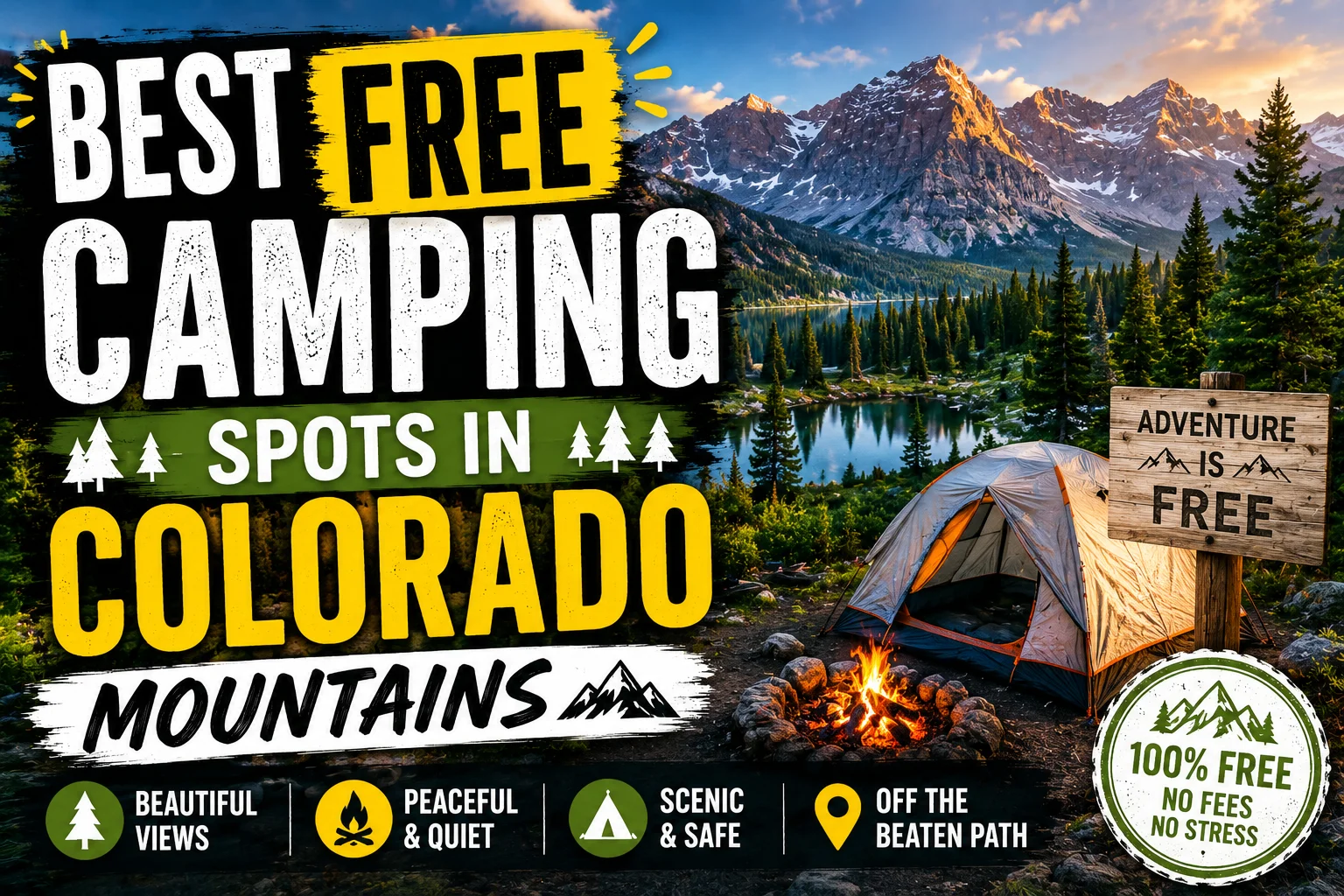
Best Free Camping Spots in Colorado Mountains 2026
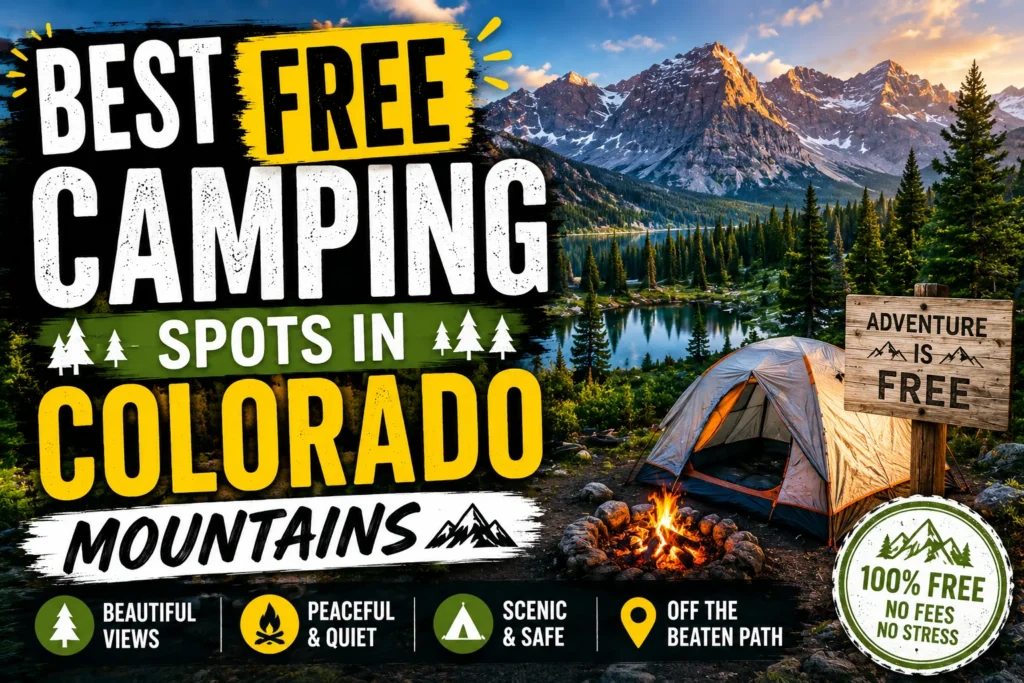
Camping There’s a certain brand of magic when you pitch a tent at 10,000 feet and the air is perfumed with the scent of pine and clean, crisp alpine air while the Milky Way stretches overhead like a glittering highway. Colorado may be a camper’s haven but one thing that surprises many is that you don’t have to spend a fortune for a true experience. Despite the state being well known for its luxury ski resorts and high end glamping sites, many of Colorado’s most breathtaking camping experiences are completely free.
I have spent many years traversing the Rockies on a shoestring with a boundless appetite for adventure, and I’m about to tell you all about my 9 favorite free camping spots in Colorado mountains that will provide an experience of a lifetime with an unparalleled value.
What is Dispersed Camping and Why You Need to Know About It
The word that gets us on our way to free camping is “dispersed camping.” Now, this isn’t that campground where the KOA comes with RV hooks, hot showers, swimming pools, etc. Dispersed camping is just primitive camping on public land off a road that is outside of developed campsites. No neighbors, no charge and no reservation!
Understanding the Rules of the Game
U.S.
Forest Service and Bureau of Land Management (BLM) lands include millions of acres of public lands that are open to dispersed camping. Dispersed camping rules are fairly simple but crucial: Use existing dispersed campsites : Look for fire rings and level areas that people have previously occupied.
This preserves and protects the environment.
Pack it in and pack it out : There are no trash services on dispersed campsites. Any waste you produce should be brought back home and disposed of responsibly. 14 day rule : most areas allow a 14 day consecutive stay, and then you have to move to a new spot to allow resources to recover. Fire safety : Know what fire regulations apply to the area you plan to camp. During dry years, fires are often prohibited due to drought risk.
Essential Gear for Free Camping
Because you will be doing it without luxuries, the key to this endeavor is preparedness. I never leave home without the following: Ample water: At least 1 gallon per person per day is needed or use a trustworthy water filter. Portable toilet or wag bags: There are no restrooms out there; plan for the lack thereof.
Bear canister or proper food storage: You’ll be in bear country; make sure your food is secure.
Good map or GPS: There is little or no cell service available in the mountains. Plenty of warm layers: Temperatures can drop well below freezing even in mid-summer high up in the mountains.
The 9 Best Free Camping Spots in Colorado Mountains
Alright, let’s get to the good stuff. These are the spots I return to year after year, the ones that feel like secret treasures hidden in the mountains.
Boreas Pass Road Near Breckenridge
1. Boreas Pass Road (Between Breckenridge and Como) One of my personal favorites for free camping. Boreas Pass Road is an abandoned railroad bed between Breckenridge and Como and will take you to just over 11,000 feet.
The panoramic views from the top will leave you breathless, overlooking the Tenmile and Mosquito Ranges.
What Makes It Amazing The road is lined with old railroad buildings and trestles, which gives the entire area a sense of history. In the fall, you’ll experience an explosion of golden aspens, which puts it high on my list for free camping in the Colorado mountains for fall. Where to Go From Breckenridge, drive south on Highway 9, then turn left onto Boreas Pass Road. Follow this road all the way up to the summit where you’ll have access to countless free campsites.
Pro Tip: High clearance vehicle is advised, but not essential.
The road is relatively well-maintained, although there are some rocky portions.
Guanella Pass Between Georgetown and Grant
This scenic byway winds up to 11,669 feet and provides amazing views of Mount Bierstadt and Mount Evans. Dispersed camping opportunities here are plentiful and readily accessible.
Why It’s Amazing: This dispersed camping is at high elevation so you have amazing views of the Rocky Mountains without any major hikes to get to them. Catching sunrise here is truly a spiritual experience.
Where to Go: From I 70, take the Georgetown exit and go south on Guanella Pass Road. Dispersed camping starts a few miles south of town and includes pull-offs and designated dispersed camping sites.
Pro Tips:
When to go: Late June September. There’s usually some snow up into June.
Side trip: Silver Dollar Lake hike fairly easy and rewarding trail not too far up the Pass.
Bears: This is a popular area with a fair number of bears pack accordingly.
Rampart Range Road Near Colorado Springs
A slightly drier, warmer alternative is the Rampart Range Road southwest of Denver and Colorado Springs, which will take you to Pike National Forest. Why it’s Amazing: The road twists and turns through ponderosa pine forests, with a few hundred dispersed campsites available. Compared to some of the more renowned sites in Colorado, it tends to be less busy and you’ll have a better chance of securing a campsite far from others.
How to Get There: From Colorado Springs, take Highway 24 West towards Woodland Park, then head north on the Rampart Range Road (marked with lots of camping signs).
Pro Tips: Best Season to Visit: May to October (lower elevation than most other spots, thus it gets less snow). Vehicle Type: 2WD vehicle OK for main road; 4WD will help when exploring side roads. Bonus: The views of Pikes Peak from various sites along the road are unparalleled.
Camp Hale Near Leadville
A Brief History: Camp Hale was the World War II training site of the 10th Mountain Division. Now it’s an open valley offering tons of disbursed camping. Why it Rocks: the valley floor is rimmed by huge mountain peaks like Mount Elbert and Mount Massive and the expansive meadows give amazing, expansive views that really make you feel like you’re right in the heart of the Rockies.
How to Get There: South of Leadville, just south on Highway 24 for a few miles.
Then turn right onto the gravel road for Camp Hale and start searching for a site near the river.
Insider Tips: Best Time of Year: July to September (the valley floor is totally exposed and gets cold very fast) History Enthusiast: Check out the remaining WWII structures and the soldiers’ monument Eagle River fishes well with trout in the valley.
Flat Tops Wilderness Near Meeker
This is not for the faint of heart. The Flat Tops Wilderness has distinctive flat-topped mountains offering spectacular views and miles of secluded backcountry. Several of the forest service roads leading into the wilderness allow free dispersed camping.
Why It’s Awesome: The views are extraterrestrial. The flat tops lend themselves to a landscape unlike anything I’ve ever seen, and you won’t encounter throngs of other people here like you would around Denver.
Where to Go: Head east from Meeker on CO Highway 13 and then turn south on County Road 8. Several forest service roads will take you into the wilderness.
Pro Tips:
When to go: late June to September.
Vehicle: 4×4 with high clearance required.
Wildlife: Elks, deer; you’ll see plenty at dawn and dusk.
Shelf Road Near Cañon City
Shelf Road Shelf Road is a true diamond! It is an old miners’ road and today is an absolute heaven for climbers. The camping along the shelf is among the most spectacular anywhere.
Why it’s so cool: This is a road built into the side of a cliff. The views over the Arkansas River Valley and the Sangre de Cristo Mountains are astounding. Camping on the shelf overlooking a canyon!
Directions: from Caon City, head east on Hwy 50 and turn onto the Shelf Road. Camping is found along this road.
Pro Tip: Best season is April to October as this is a low elevation camping area so great for shoulder season camping. Best suited for 4×4 high clearance vehicle, the road is rocky and steep. Best for climbers. Hundreds of routes to be found here.
South Park City Area Near Fairplay
Wide, high altitude mountain valley and enormous piece of land with infinite free places to camp. Also based on the TV show, though not actually there. Why It’s Amazing: Big, wide open sky, huge feeling of space you won’t get from trees.
Nice and quiet.
Getting There: From Fairplay east on Hwy 285, pick up any of the forest service roads that peel off from the highway every few miles, find a spot.
Pro Tips: Best June to Sept. Wind: Definitely bring a windbreak for your tent. Windy.
History: Check out South Park City in Fairplay for a 19th century mining town replica.
Independence Pass Near Aspen
One of the highest paved roads in Colorado, Independence Pass climbs to an elevation of 12,095 feet. It’s quite a sight; there’s a rugged, high alpine feel about the place.
Why it’s great: You’re sleeping smack dab in the middle of the Elk Mountains with all of the world’s greatest views of all the great peaks Maroon Bells, Castle Peak etc…but be forewarned this is extremely exposed territory.
Directions: From Aspen, travel east on Hwy 82. Once you leave the town, and start to gain elevation, the dispersed camping can be found up high.
Pro tips:
Best Time of Year: July early September, as the pass is impassable in winter.
Note: Camping occurs above 10,000 feet, and wind is a serious factor. Invest in an extremely sturdy tent.
Photography: Watch for sunrises above the high peaks it’s unforgettable.
Buffalo Creek Recreation Area Near Pine
Buffalo Creek: Lunar-Like Views in the Foothills Buffalo Creek is a favorite for both mountain bikers and hikers. As a fire scar from the 1996 Buffalo Creek Fire, this landscape is lunar-like with awesome views and is also easily accessed. Why It’s Amazing: The fire left a beautiful yet desolate landscape that is completely blanketed in wildflowers each spring.
The dispersed camping is plentiful and accessible.
How To Get There: Follow Highway 285 West from Denver to Pine, and then turn onto the gravel road. Pro Tips: Best season: May to October Best vehicle: the road is accessible for 2WD. Mountain biking: This spot is known for its extensive trail system.
Planning Your Dispersed Camping Trip
Alright, now that you know the spots, let’s make sure you’re fully prepared for the adventure.
What to Pack The Essentials
- Water.
- Did I say water?
- There’s not water at dispersed sites.
- Carry one gallon minimum per person per day.
- I typically carry two gallons. A reliable water filter. For longer backpacking trips, a filter, like a Sawyer Squeeze or a life straw, is a lifesaver. We refill from streams for longer outings.
- A portable stove.
- Open camp fires are usually prohibited. Camp stove to cook your meals on. Warm sleeping gear.
- Night temperatures can drop to freezing even during the summer, so aim for a sleeping bag rated to at least 20F. Layered clothing. I find a base layer (wool or synthetic) to draw out moisture, an insulating layer of fleece and a wind breaking/waterproof outer layer works well.
- A tent.
- Choose one designed to stand up to high winds especially if your sleeping over the treeline. A camp chair. The ground wears on you pretty quickly. A battery pack.
- To charge your phone and camera.
- There is absolutely no power out here. A map. Not google maps.
- Take the actual physical map of the region or down load the map onto your GPS application for off line use. A first aid kit.
Leave No Trace The Golden Rules
This is not optional. Dispersed camping is a privilege and it is granted to us because we care for these places. If we can’t stick to the guidelines then we’ll have access taken away from us.
Plan and Prepare.
Travel and Camp on Durable Surfaces.
Dispose of Your Waste Properly.
Leave What You Find.
Minimize campfire impact.
Respect wildlife.
Be considerate of other visitors.
Dealing with Wildlife
Bears, mountain lions, moose, and elk live in Colorado. These are wildlife. Respect these wild animals.
Store all food and scented items correctly.
Use a bear resistant food container, or hang food in a tree. Never approach wildlife. Keep your camp clean. Wash dishes far from your tent.
Understanding Fire Restrictions
Most of Colorado’s great free camping areas in the mountains fall under extreme fire restrictions. So check the Forest Service site (or call the ranger station) before heading out-in a dry year, campfires are usually outlawed entirely.
More Free Spots You Should Know About
Need even more choices?
Here are 15 more free Colorado camping locations that didn’t quite crack the top 9 but are more than worth considering: Lizard Head Pass – Outside Telluride, just stunning. Red Cone Near Breckenridge, hands down some of the best views you will find in Colorado.
Cottonwood Pass Outside of Buena Vista, high and open country.
Sawmill Road In the Boulder foothills, outside of Nederland. Kelly Flats Just outside Fort Collins, a really good spot with dispersed sites. Pingree Park Road In the middle of the mountains, outside Fort Collins. Trail Creek Road Quiet and beautiful, near Gunnison.
Ohio Pass Great views of the peaks, outside of Crested Butte.
Kebler Pass Known for aspen groves, outside of Crested Butte. Schofield Pass Just rugged, near Crested Butte. Williams Fork Road Simple, easy choice near Silverthorne.
Ute Pass Road In the Dillon area, outside of Silverthorne. Minnie Gordon Creek An “unknown” spot near Montrose. Alpine Loop One of the best views in the entire world, outside Ouray.
Cinnamon Pass Remote and spectacular, near Lake City.
Conclusion
Mountain camping in Colorado does not have to break the bank! With a bit of ingenuity, a touch of adventure, and some great tips, some of the best free camping in the Colorado mountains can be yours to discover. From the lofty peaks of Independence Pass, through the historical valley of Camp Hale, to the cliffside wonders of Shelf Road, you’re sure to have a remarkable time in one of the best free dispersed camping locations Colorado has to offer.
These locations will allow you to feel a sense of wonder where the stars glow so bright that you will see the Milky Way stretching across the sky; where you can lie on a soft bed of pine needles and listen to the rustling of the wind through the trees the only soundtrack you need; and where you will wake to “the best view in the house” and the best part?
It’s free. Now, I would love to hear your tips and tricks. Do you have a favorite free spot in Colorado mountains that I missed? Or do you plan on a dispersed camping trip and have questions?
Leave your tips, suggestions, or questions in the comments section below!
Share this post with your friends to encourage them to find a little mountain therapy in their lives.
Click For More:
Frequently Asked Questions (FAQs)
Is dispersed camping legal everywhere in Colorado?
No, dispersed camping is only allowed on public lands managed by the U.S. Forest Service and the Bureau of Land Management (BLM). It is not allowed in state parks, national parks, or on private property. Always check the land management agency for the area you’re visiting.
How long can I stay at a dispersed campsite?
In most areas, the Forest Service and BLM allow you to stay up to 14 days in any 28 day period . After 14 days, you must move to a new location. Be sure to move your camp at least 5 miles away.
Can I have a campfire at a dispersed campsite?
Campfire regulations are constantly changing based on fire danger, especially in Colorado. In many areas, campfires are only permitted in existing, established fire rings. You must check the current fire restrictions for the specific National Forest or BLM area you plan to visit.
Is the water safe to drink from mountain streams?
Absolutely not. All water from backcountry sources must be treated, filtered, or boiled before drinking. Even crystal clear mountain streams can contain giardia or other parasites. A portable water filter is a crucial piece of gear.
Do I need a 4WD vehicle to access these free spots?
Not for all of them. Some spots, like Boreas Pass Road and Buffalo Creek, are generally accessible with a 2WD vehicle if driven carefully. However, roads like Shelf Road and many forest service roads require high clearance and often 4WD. Do your research on the specific road conditions before you go.
What about human waste?
There are no bathrooms at dispersed sites. You are responsible for your own waste. The best practice is to dig a “cathole” at least 6 to 8 inches deep, at least 200 feet from any water source, and bury your waste and toilet paper. The even better option is to bring “wag bags” or a portable toilet to pack it out completely.
Is it safe to camp alone in the Colorado mountains?
Yes, solo camping is very common and can be incredibly rewarding. However, you must take extra precautions. Tell someone your exact itinerary and when you plan to return. Bring a reliable method of communication (satellite messenger like a Garmin InReach is recommended) and always be aware of your surroundings.