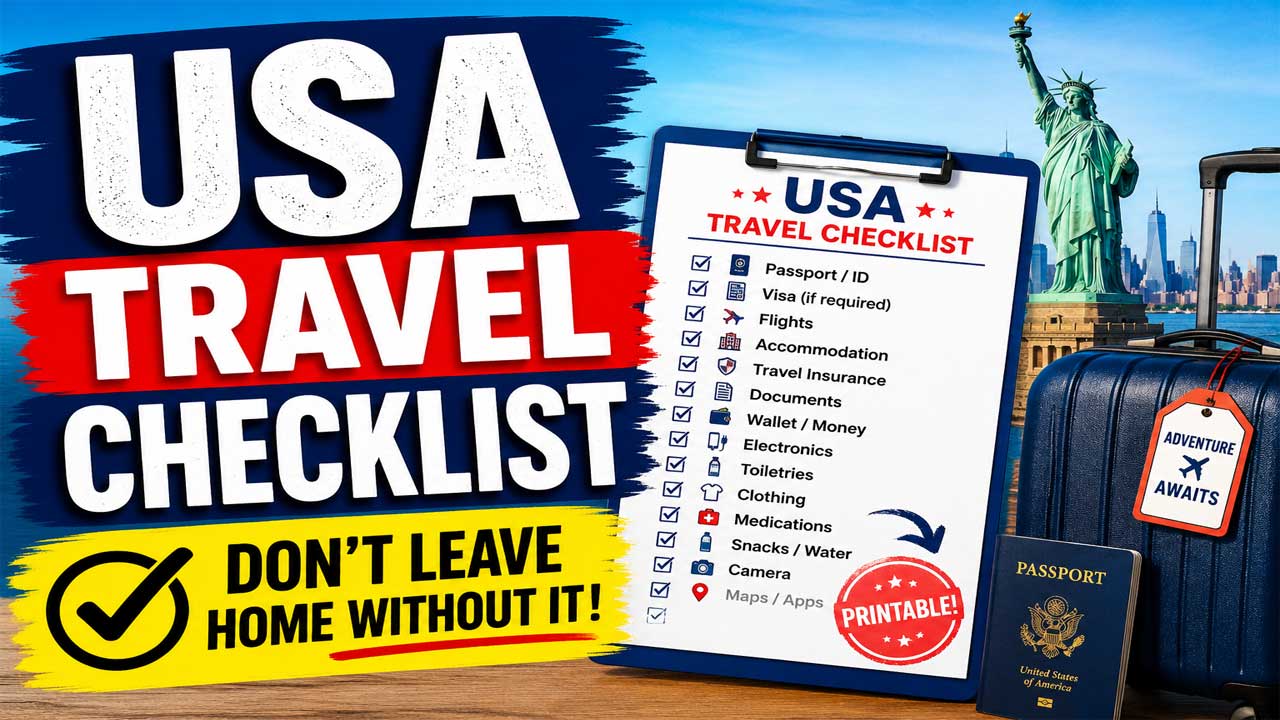
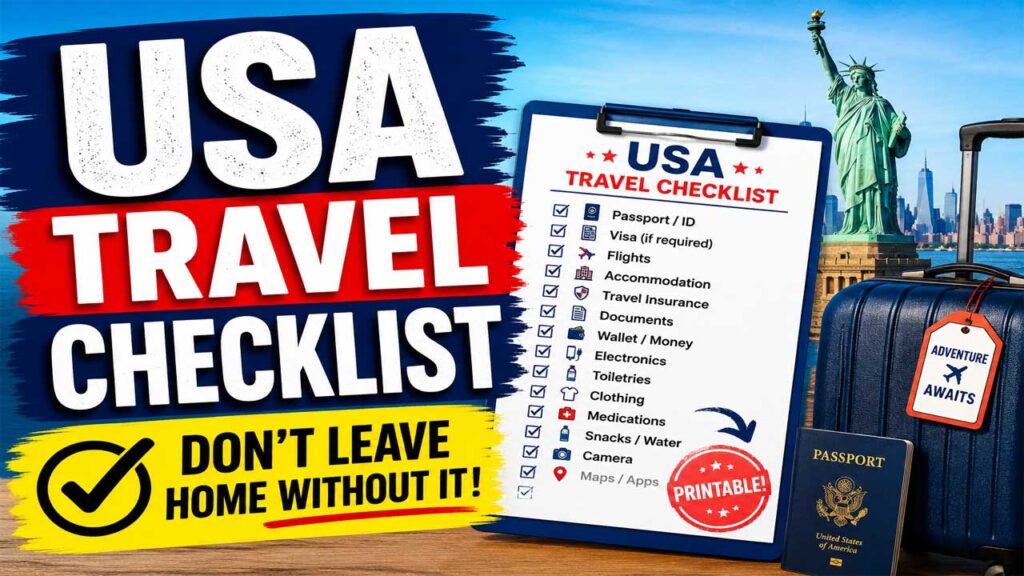
USA Travel Checklist Printable: Don t Leave Home Without It
USA Travel Checklist Printable. You’ve booked the flight. You’ve pinned a dozen hidden gems across three different states. Your bags are half-packed. But something feels… off. Did you remember the paper map for that dead zone in West Texas? What about the cash for the honor ystem pie stand in Vermont?
I’ve been there. More times than I’d like to admit.
After logging over 50,000 miles on back roads and forgotten highways, I’ve learned one hard truth: a USA travel checklist printable isn’t just a piece of paper. It’s your safety net, your sanity saver, and the difference between a smooth adventure and a frantic search for an ATM at 10 PM in a town with one gas station.
This guide gives you exactly that. A complete, detailed, print and go checklist tailored for offbeat USA travel. No fluff. No “common sense” items you already know. Just the gritty, real-world gear and documents that have saved my trips more times than I can count.
Let’s build your perfect checklist.
Why a Printable Checklist Matters More for Hidden Gems Than Big Cities
Forget New York or Chicago. When you’re heading to Nevada’s Loneliest Road or a swamp boardwalk in Louisiana, things get… unpredictable.
Cell service dies. Gas stations close at 6 PM. The charming “general store” on Google Maps is now a pile of lumber.
A USA travel checklist printable that lives on paper (not your phone) guarantees you won’t forget critical items like a physical map, a headlamp, or a printed backup of your reservations.
Key takeaway: Digital fails. Paper saves. Print two copies. One for your bag. One for your glovebox.
The Master Printable Checklist (Organized by Category)
Below is your complete checklist. I’ve broken it into six logical sections. Print this page directly or copy it into a document.
Documents & Permissions
Nothing ruins a trip faster than a missing ID at a remote ranger station. Here’s your exact list.
- Driver’s license or state ID (plus a photo of it on your phone different device)
- Passport card (for land border crossings into Canada or Mexico from hidden border towns like Roosville, MT)
- Vehicle registration & insurance card (printed not just the app)
- National Parks pass (America the Beautiful buy it at any entrance station)
- Printed campsite or lodging confirmations (many off-grid cabins have no Wi Fi to pull up your email)
- Medical insurance card (plus a printed list of allergies and blood type I tape this inside my glovebox)
- Emergency contacts (two people, printed, with phone numbers)
Hidden Trip Pro Tip: Take a photo of all these documents. Email it to yourself with the subject line “EMERGENCY DOCS [YOUR NAME].” Now it exists in the cloud even if your phone breaks.
Vehicle & Road Survival Kit
You’ll thank me when you’re 40 miles from the nearest tow truck.
- Spare tire with air pressure checked (and know how to change it practice once before you leave)
- Jumper cables or a portable jump starter (I use the NOCO Boost Plus saved me in Utah)
- Paper road atlas (Rand McNally’s large scale version highlights dirt roads)
- Printed driving directions (from your last gas stop to your first overnight)
- 12-volt tire inflator (plugs into your car’s cigarette lighter $30 on Amazon)
- Tow strap (if you drive onto soft sand or mud never use a rope)
- Extra windshield washer fluid (summer bugs in the South will blind you without it)
- Reflective triangles or flares (at least three use them even during the day)
When to double-check this list: Before any drive over 100 miles on roads marked “unpaved” or “primitive” on a map.
Clothing & Layering
America’s hidden spots have microclimates. I’ve sweated in 95°F heat at 2 PM and shivered at 45°F by 8 PM same day, same trail.
Your core layering system (no cotton except for the bandana):
- Base layer (wool or synthetic): 2 short sleeve shirts, 2 long sleeve shirts
- Mid layer: 1 fleece or lightweight puffy jacket
- Outer layer: 1 waterproof rain jacket (windproof is a bonus)
- Bottom layers: 2 pairs of hiking pants (convertible to shorts are gold), 1 pair of fleece leggings for sleeping
- Socks: 4 pairs of wool hiking socks (Darn Tough or Smartwool)
- Underwear: 4 pairs of quick dry (ex officio or similar)
- Hat: 1 wide brim sun hat, 1 beanie for cold nights
- Bandana: 2 (one for sweat, one as an emergency filter or sling)
- Gloves: 1 pair light fleece or wool (even in summer for high altitude mornings)
The test: Lay out everything. Can you wear all of it at once? If yes, you’re ready for a sudden 30°F drop.
Health, Hygiene & First Aid
Remote areas mean remote help. A minor cut can become a big problem.
First aid kit add ons (beyond the basic store bought kit):
- Mole skin or hydrocolloid bandages (for blisters you will get blisters)
- Tweezers (splinters and ticks I check myself every night)
- Tick removal card (smaller than a credit card slides under the tick)
- Antihistamine (Benadryl) (for unexpected allergic reactions bees, plants, mystery bugs)
- Ibuprofen or acetaminophen (enough for 5 days)
- Electrolyte powder packets (Liquid IV or Drip Drop one per day of hiking)
- Anti-diarrhea medication (Imodium) (nothing ruins a dirt road like… you know)
- Sunscreen SPF 30+ (small tube reapply every 2 hours)
- Lip balm with SPF (cracked lips in desert wind are miserable)
Hygiene basics:
- Biodegradable soap (Dr. Bronner’s safe for rivers and lakes)
- Hand sanitizer (small bottle use before every snack)
- Toothbrush & toothpaste (travel size)
- Toilet paper (remove the cardboard tube, flatten the roll into a Ziploc bag)
- Small trowel (for digging cat holes Leave No Trace rule #3)
Food, Water & Kitchen
Hidden towns don’t have 24 hour diners. Pack like you might not see a grocery store for two days.
- Water storage: 1 gallon per person per day (I carry two 1 gallon jugs plus a 32 oz reusable bottle)
- Water filter or purification tablets (Sawyer Squeeze or Kata dyn creek water can be drinkable in 2 minutes)
- Camp stove + one small fuel canister (even if you plan to eat cold hot coffee saves morale)
- Lighter or waterproof matches (store in a prescription bottle)
- Spork + collapsible bowl (Titanium is light. Plastic is fine. Wood is stupid.)
- High-calorie, no cook food: Peanut butter, tortillas, tuna packets, protein bars, trail mix, instant oatmeal
- One “emergency luxury” food (chocolate bar, instant mac & cheese, or a tiny bottle of hot sauce)
Key rule: Eat one protein bar before you feel hungry. Drink water before you feel thirsty. Once you’re behind, you stay behind.
Navigation, Electronics & Power
Offbeat means off grid. Prepare for zero bars and no Wi Fi for days.
- Phone + charger cable (obvious, but I’ve forgotten the cable three times)
- External battery pack (10,000 mAh minimum 20,000 is better for 3+ days)
- Car charger (plugs into the 12volt outlet charges while driving)
- Headlamp with extra AAA batteries (handheld flashlights tie up one hand headlamps leave both free)
- Paper map of the specific region (not just a state map buy a USGS topo map for national forests)
- Compass (learn to use it before you gotakes 10 minutes on YouTube)
- GPS device or app with offline maps (I use Gaia GPS or OnX Backcountry download before you lose signal)
- Printed copies of key waypoints (trailhead coordinates, campground addresses, ranger station phone numbers)
The 2-Device Rule: Keep your phone and your external battery on different devices. If your phone dies, the battery is useless. I carry a second cheap “burner” phone with offline maps as my backup.
How to Customize Your USA Travel Checklist Printable by Season
A summer checklist in Arizona looks nothing like a winter checklist in Montana. Here’s how to adapt.
Summer (June August)
Add these items:
- Cooling towel (wet it, snap it, wear it around your neck)
- Extra sunscreen (a full 3 oz tube you’ll use it)
- Wide-brim hat with neck flap (baseball caps miss your ears and neck)
- Loose, light-colored long sleeves (keeps sun off without trapping heat)
Remove: Heavy fleece, insulated gloves, winter beanie (leave them in the car’s emergency bin instead of your daypack).
Best summer hidden spots for this checklist: North Cascades (WA), Upper Peninsula (MI), White Mountains (NH) cool at night, warm during the day.
Winter (December February)
Add these items:
- Insulated boots (rated to at least 10°F)
- Hand warmers (4 pairs open them before you need them)
- Wool blanket (keep in the car not just for camping)
- Ice scraper + snow brush (even in the South freak storms happen)
- Extra food (3 days worth winter roads close unexpectedly)
Remove: Sandals, convertible pants (the leg zippers freeze), lightweight sleeping gear.
Best winter hidden spots: Moab (UT) cold but sunny, no crowds. The Oregon Coast storms are spectacular. Big Bend (TX) 60°F and perfect.
Spring & Fall (The “Everything Happens” Seasons)
These are the trickiest. You might see 80°F and a hailstorm in the same afternoon.
Your specific additions:
- Rain pants (lightweight they go over your hiking pants)
- Neoprene socks (if you’re walking through snowmelt or cold creeks)
- An extra dry bag (for wet clothesnothing worse than damp sleeping gear)
Pro move: Pack your bag in layers. Morning layer on top. Afternoon layer in the middle. Evening layer at the bottom. You won’t have to unpack everything at a muddy trailhead.
The “Hidden Trip USA” Exclusive 10 Things You Won’t Find on Generic Checklists
Most travel lists miss these. I’ve learned them the hard way.
- A physical checkbook One remote lodge in Colorado had no card machine. I wrote a check. They gave me a cabin.
- Earplugs That “quiet” campground might have a generator running until 11 PM or a rooster at 5 AM.
- Ziploc bags in three sizes Leaky sunscreen, wet socks, half eaten sandwiches. Gallon, quart, and snack size. Trust me.
- A clothespin Curtains that don’t close in a motel room? Pin them. Chip bag won’t stay sealed? Pin it.
- Duct tape wrapped around a credit card Takes zero space. Fixes a torn tent, a shoe sole, or a side mirror.
- A spare car key hidden outside the vehicle (magnetic box under the bumper) I locked my keys in the trunk in Death Valley. $400 tow. Never again.
- Small bills (1sand1sand5s) Honesty boxes at farm stands. Tips for a local who shows you a secret trail. Laundromats.
- A printed list of emergency numbers Ranger stations, tow companies, and the nearest hospital. Not 911 (which may not work without signal).
- Pen and paper Not your phone. Write down a local’s name and their tip immediately. Shows respect.
- A small gift from your home town A keychain, a postcard, local honey. Trading this for information has unlocked locked gates and private land access more times than I can count.
How to Print and Use Your Checklist
A checklist does nothing sitting on your computer. Here’s my proven system.
48 hours before departure: Print two copies. Place one in your suitcase. Place one on your kitchen counter.
24 hours before departure: Walk through your house with the kitchen copy. Check off each item as you put it into a single “go pile.”
Night before: Lay out your clothing. Check the weather forecast one last time. Adjust layers.
Morning of departure: Compare your packed bag to the suitcase copy. You’ll catch 1 2 forgotten items every time.
Pro tip: Laminate one copy at a FedEx Office ($1 2). Use a dry-erase marker to check items off. Erase after the trip. Reuse forever.
The Digital Backup Your Checklist on Your Phone (But Paper Still Wins)
I’m not a luddite. Use your phone too. But do it right.
Download these apps before you lose signal:
- Google Maps offline (download the region settings offline maps)
- WhatsApp or Signal (works over Wi Fi for calling)
- Weather.gov (no ads, simple forecasts, works on slow connections)
- A PDF reader (store a scanned copy of your checklist and documents)
Then do this: Text the PDF of your checklist to a trusted friend. Tell them, “If you don’t hear from me by [date], send this list to search and rescue.” Dramatic? Maybe. Smart? Absolutely.
FAQs About the USA Travel Checklist Printable
Can I really print this from your website?
Yes. Copy the checklist sections above into a Word or Google Doc. Print at 100% scale. Or screenshot the lists and print as images. No sign-up required.
How many copies should I bring on a road trip?
Three. One in your main bag. One in the glove box. One given to your travel partner. If you lose a bag, you’re not stuck.
What’s the most forgotten item on this list?
The spare car key hidden outside. People think about it. They don’t do it. Do it before your next trip. Costs $5 for a magnetic box.
Do I really need a paper atlas if I have a GPS?
Yes. GPS fails in canyons, deep forests, and remote valleys. A paper atlas never needs batteries. I’ve used mine in 12 states when my phone showed “No Service.”
How do I pack for both desert heat and mountain cold on the same trip?
The layering system above. Wear the fleece and rain jacket in the morning. Strip down to the t shirt by noon. Add the puffy jacket at sunset. Don’t pack “either/or.” Pack “both/and.”
What about flying with this checklist? Any TSA issues?
Yes. Camp stoves must be empty of fuel (new, unused). Camp fuel canisters are prohibited in carry-ons but allowed in checked bags. Multi-tools with blades go in checked bags. Put your lighter in a checked bag (one per passenger allowed).
How do I adapt this for a family of four?
Multiply the quantities. More importantly, assign each person their own small bag with snacks, water, and a layer. Kids get cold and hungry faster. Print a kid friendly picture checklist for younger children.
What’s the one item you never leave without?
My headlamp. I’ve used it to change a tire at midnight, find a trail in fog, and read a paper map in a dark car. Spend $30 on a good one (Black Diamond or Petzl).
How often should I update my printed checklist?
Every season. Winter gear is different from summer gear. Also update after every trip cross off anything you didn’t use two trips in a row.
Can I share this checklist with my hiking group?
Please do. Share the link to this post. The more people travel prepared off the beaten path, the safer and better we all are. Just credit Hidden Trip USA if you repost.