The Ultimate Guide to the Best Places to See Wildflowers in Death Valley During Spring 2026
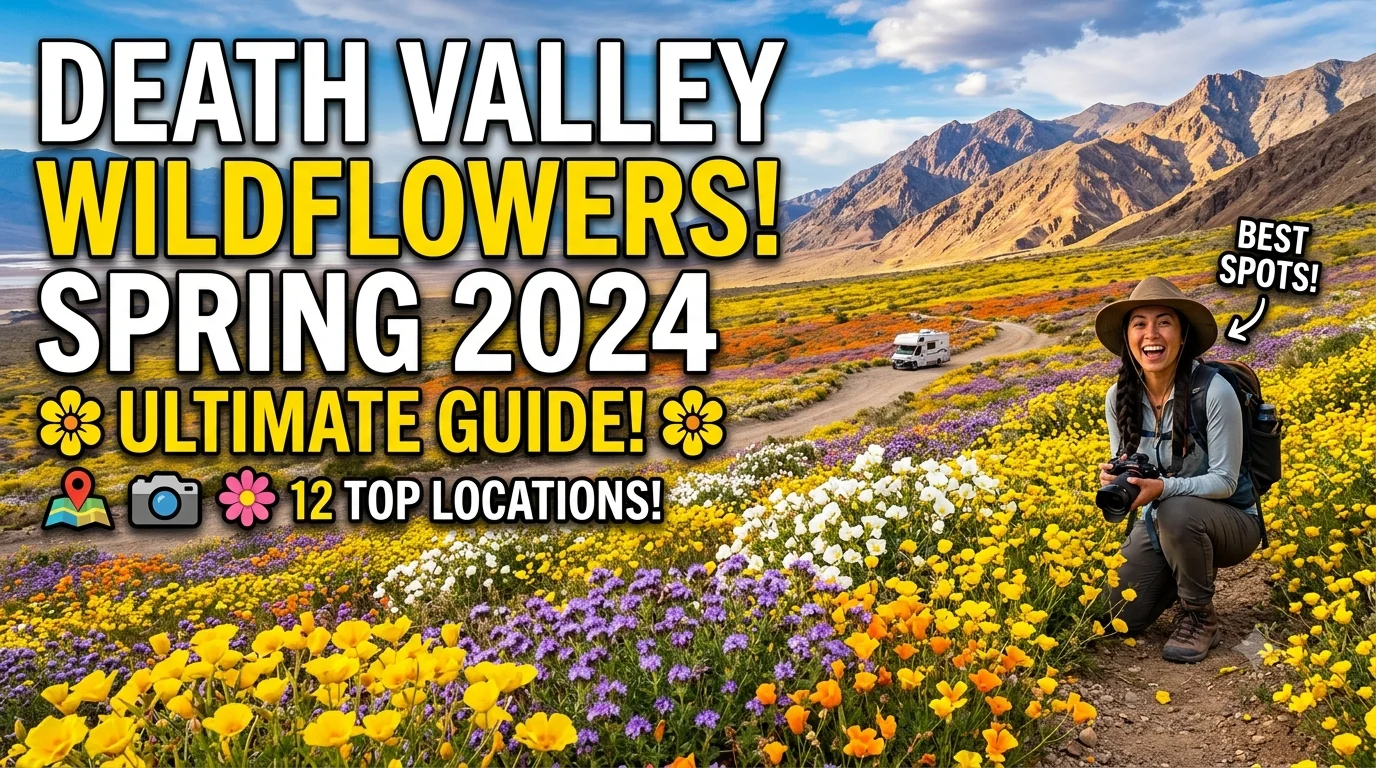
Valley Death Valley National Park: One of North America’s most arid and intensely hot deserts, the landscape is a breathtaking vista of rock formations and salt flats that appear alien. Nevertheless, at times, under just the right circumstances, the stark desert comes to life with one of the rarest and most spectacular of the United States flower-blooming events: the Death Valley super bloom.
Should you catch it at the right time, you can experience the desert’s stunning resilience with a wash of colorful blossoms across its surface. This guide offers insight into how you can plan a trip to experience Death Valley’s flower display and how you can help preserve this natural treasure, while sharing all about the bloom’s best vantage points and the floral species to anticipate.
Why Spring is the Magic Season in Death Valley
Most of the year, Death Valley does what it sounds like and for the most part, not exactly a fun time to visit! In the summertime temperatures can exceed 120 degrees Fahrenheit, which can make it impossible to walk around outside. The sun beats down relentlessly and the desert can look pretty desolate.
BUT, in the springtime… the opposite happens.
The wild blooms Death Valley is so famous for have a secret weapon; dormant seeds in the desert soil. Many wildflowers that bloom here are known as ephemerals (annuals), so they wait years to bloom until the conditions are JUST right. This isn’t just about any rain, the seeds will not grow unless the conditions meet a “perfect recipe” of spaced out, wetting rain falls in the fall/winter (enough to water the soil deeply) warm spring temperatures, and no strong drying winds! When that happens Death Valley, which is typically so barren and dry, explodes into a tapestry of color: yellow, purple, pink, white.
This happens maybe once a decade on a massive scale, but smaller blooms happen in most years.
The most recent huge “superblooms” were in 2016, 2005 and 1998. The 2026 season was one such above average year, so it will be a perfect time to take a visit to Death Valley and see it all! Stay flexible with your trip and follow along on the park’s wildflower updates, however!
Understanding the Bloom: Timing and Elevation
To chase the best blooms, know how the season unfolds; it doesn’t hit all at once. Instead, wildflowers begin in the lowest elevations of the parks and make their way up mountains as the season warms; plan to hit different parts of a park as each bursts into bloom.
Early Bloom The Low Elevation Show
The first to emerge will be at the lowest elevations, in the valley and on alluvial fans 3 2. It is at these lower elevations where the showiest flowers show up, covering the valley floor with a riot of colors, as they did during the 2026 boom 4 2. The best places to visit during this time are right off a highway and roads to see large fields of color. 4
Mid Season BloomThe Mid Elevation Magic
As the valley floor heats up, the bloom moves up to elevations between 2,000 and 4,000 feet. This is where you’ll find a wider variety of species, including vibrant shrubs like Brittlebush and the unmistakable red of Indian Paintbrush . While the hillsides might not be carpeted in color like the lower elevations, the diversity of flowers here is astounding. Exploring places like the Daylight Pass Road or the roads leading up to Dante’s View can yield incredible finds .
Late Bloom The High Elevation Finale
For those who come later in the spring, the flowers are still thriving you just need to look up. Elevations above 4,000 feet hold the last wave of the bloom . The air is cooler, and the species are often unique to these higher climates. Magnificent Lupine, Purple Sage, and the rare Panamint Penstemon are just a few treasures you might encounter. This is the perfect opportunity to explore the higher canyons and mountain slopes for a completely different wildflower experience .
The Best Places to See Wildflowers in Death Valley
Alright, let’s get to the good stuff. Where exactly do you need to go? Many of the best spots are accessible from paved roads, making it easy for anyone to enjoy the show. The National Park Service highlighted several areas during the 2026 bloom .
The Highway 190 Corridor
Highway 190 This is the main through route of the park, connecting the two key settlements of Furnace Creek and Stovepipe Wells. If the bloom is strong, this highway itself can provide rich pickings with displays of Brown eyed Primrose, Phacelia, Desert Gold, and Mojave Desert Star often concentrated between those two settlements.
Best bits: Vast sweeps of bright color along the highway that you can pull over to photograph (safely!) at many designated lay by points.
North and South Badwater Road
Badwater Road: this is a popular place because you can take a scenic drive to North America’s lowest point. Badwater Road actually had sections that the park thought were particularly lovely for 2026. These include: North Badwater Road: between CA 190 and Badwater Basin, the road shoulders are dusted with Desert Gold and Brown-eyed Primrose South Badwater Road: near Ashford Mill Historic Ruins, you can find Desert Gold, Sand Verbena, Five Spot, and even more Brown-eyed Primrose .
A Note About Pulling Over: if you’re on one of these roads, be extra sure to use designated pullouts.
Soft sand can suck you into the ground and wreck your day. The shoulders of Badwater Road are known to be especially susceptible.
Beatty Cutoff and North Highway
Another somewhat less-trafficked option: the Beatty Cutoff, a road that leads out of the park toward the town of Beatty, Nevada, is another area for potential wildflowers, and Phacelia, Desert Gold, and Suncups have been spotted out in the “North Highway” region, should you wish to try to avoid the masses of Furnace Creek visitors.
For the Adventurer Higher Elevation Drives
For the brave among you, or if you have high clearance or 4WD vehicle, you can also reach less trafficked spots at higher elevation. According to the NPS, you won’t find the “carpet of color” seen at lower elevations, but there are still stunning diversity and context: “Purple mats and small patches of colorful wildflowers can be found along some high elevations. These patches can be interesting and offer great photographic opportunities of the diverse and colorful desert bloom among rocky and sparse landscapes”.
Daylight Pass Road and Dante’s View Road: This road and others nearby atmid elevations are a good starting point to search for flowers in mid elevations.
Greenwater Valley Road: This is a great and remote road with numerous spur roads to explore that requires 4WD.
The Death Valley / Big Pine Road: Great road to find purple mat, indigo bush, and desert dandelions amongst many others.
Wildflowers You Might Encounter
Even Death Valley has over 1000 different plants, many of which are incredibly spectacular in spring. Here is what to expect, for most of which there is at least a chance in any of the wildflower years, as not all species bloom in every given year: Desert Gold (Geraea canescens) the king of all wildflowers! You have probably seen photographs of massive yellow carpets spread across the desert – this is it!
A skinny, daisy like flower.
Brown eyed Primrose (Camissonia brevipes) & Golden Evening Primrose (Camissonia) many, many delicate, cupped shaped flowers can form a carpet of them. They vary in color from yellow, golden, or palest yellow with dark center for the first one. Phacelia (Phacelia spp.) beautifulclusters of blue, purple or white flowers. Look for Notch-leaf Phacelia and Caltha-leaf Phacelia at lower elevations.
Sand Verbena (Abronia spp.) clusterof small, trumpet flowers at the ground level that come in pinks,purples, and whites and are a sure sign of a good bloom.
Desert Five spot (Eremalche rotundifolia) a bit more rare than other desert flowers but always a real find. A pretty deep pink or purple bloom with a distinctive red center to each petal. Brittlebush (Encelia farinosa) hills covered with bright yellow sunflowers.
You’ll often find them at mid elevation elevations when the low desert bloom starts to fade. It appears as sunflowers blooming from leafless brittle stems. Desert Paintbrush (Castilleja spp.) recognizableby the bright red, brush-like flowers of this perennial.
Common at mid to high elevation.
Panamint Daisy (Enceliopsis covillei) A truly unique and one off species for flower chasers. The Panamint Daisy can get up to four to five inches across with large yellow petals. These can be found higher in the park and make for a very memorable photo.
Essential Tips for a Successful Wildflower Trip
Seeing the flowers requires a bit of planning and a lot of patience. Here are my top tips to make sure your trip is memorable for all the right reasons.
Check the Bloom Report
This step is crucial. Prior to your trip, visit the National Park Service’s official site for the latest on bloom areas and the overall situation . What you read from last year might not apply this year as the situation is changing every day.
Go Early or Late in the Day
Photograph best at the golden hour of sunrise or sunset. It’s a bit warmer at this time too. Mid-day gets too harsh and sun on the flowers makes them look wilted. You’ll also miss the crowds a bit this time of morning too.
Pack the Essentials
If you are heading to the desert always carry much more water than you can fathom as well as sun screen, a hat, suitable walking boots, and a camera with a sufficient zoom to get pictures of the flowers without damaging the flora beneath.
Be a Responsible Visitor
This cannot be stressed enough: Don’t pick the flowers. They are very delicate, and there might be only a few seeds in miles. Park Rangers implement the “Don’t Bust the Crust” policy, which includes no flower picking.
Stick to the trails: Walking on the desert soil will kill all plants and roots.
Walking around also impacts the cryptobiotic crust, which stops soil erosion. Don’t drive off-road: National Parks are big on “don’t drive off-road,” and there is a lot of damage and money in it if you do. Pack out what you pack in.
Conclusion
Death Valley wildflowers: one of the most breathtaking natural phenomenon on Earth. There’s nothing quite like a desolate landscape with brutal conditions to bring the sweet little things into the life in such a brilliant and yet so ephemeral state. Take the right precautions when it comes to how, when and where you visit during the best flower blooms in Death Valley in spring and your adventure will never be forgotten!
Don’t rush the process, have patience.
Also, wear suitable gear for a proper hiking trip!
Have you ever seen a superbloom in Death Valley or elsewhere in the desert? Tell us about it in the comments! We’d love to hear from you. And if this article helped you plan your own trip, share it with a fellow traveler!
Click For More : How to Visit Ruby Falls Chattanooga Safely with Kids 2026
Frequently Asked Questions (FAQs)
When exactly is the best time to see wildflowers in Death Valley?
The timing depends on elevation. The most spectacular displays at lower elevations typically peak from mid February to mid April. Mid elevation blooms follow from early April to early May, and higher elevations can have flowers well into June .
2. What is a “superbloom”?
There is no formal scientific definition, but the term is used to describe a year when the desert landscape is so covered in flowers that it appears as vast, colorful carpets, particularly at low elevations where the ground is normally barren rock and sand . They are rare and tend to occur about once a decade .
Does it cost money to see the wildflowers?
Yes, you must pay the entrance fee for Death Valley National Park. The fee is per vehicle and is valid for 7 days. You can check the NPS website for current rates.
Are the flowers blooming right now?
You’ll need to check the official National Park Service wildflower update page for the most current information. The conditions change rapidly, so a report from a few weeks ago may be outdated .
Can I drive through Death Valley just to see the flowers?
Absolutely! Many of the best viewing areas are right off the main roads, like Highway 190 and Badwater Road. You can have a fantastic experience simply by driving and stopping at designated pullouts
Is a 4WD vehicle necessary?
Not for the main displays. The most famous spots are on paved roads. However, to access some of the hidden gems at higher elevations, a high clearance 4WD vehicle is recommended .