
Hidden Gem Tourist Places in USA Away From Crowds 2026

Hidden Gem Tourist Places in USA Away From Crowds. Let’s be real for a second. You don’t want to be that person elbowing a stranger for a photo at a crowded overlook, waiting 45 minutes for a mediocre hot dog, or fighting traffic in a national park that feels more like a mall parking lot.
You want the good stuff. The quiet trails. The weird roadside wonders. The places where you can actually hear the wind.
I’ve spent the last decade driving every backroad in this country to find the Hidden Gem Tourist Places in USA Away From Crowds. These aren’t just “less busy” spots. These are the spots your coworkers haven’t heard of. The ones that make you look like a professional explorer.Grab your keys. Let’s go off map.
Why You Should Ditch the Crowds This Year
The magic of travel isn’t standing in a shuttle line at Zion. It’s turning a corner and finding a landscape so quiet you feel like you discovered it yourself. Over 300 million people visited US national parks last year, but 80% of them went to only 10 parks.
That leaves an entire continent of silence, mystery, and beauty.
This guide is your ticket to those places. From ancient volcanic fields to underwater ghost towns, I’ve hand picked 15 Hidden Gem Tourist Places in USA Away From Crowds. that deliver big views, zero stress, and 100% bragging rights. No reservations required (well, maybe for one or two I’ll tell you which).
The Northeast Where History Meets Isolation
The Lost Villages of Vermont (Underwater Ghost Town)
Most people think of fall foliage and Ben & Jerry’s. I think of drowning.
Just kidding. But seriously when the Waterbury Reservoir was created in 1938, it swallowed up several small towns. Today, when water levels drop in late summer, you can walk on the foundations of old homes, bridges, and stone walls.
- Exact location: Waterbury, VT (access via Moscow Woods Trailhead)
- Best time to visit: Late August to October (lowest water)
- Pro tip: Bring waterproof boots and a kayak. You can paddle directly over submerged roads.
Pulpit Rock, Pennsylvania (Zero Lines, 100% Drama)
Forget the Liberty Bell crowds. Pulpit Rock gives you a 100 mile panoramic view of Lehigh Valley with virtually zero tourist traffic. The trail is steep you’ll earn it but the payoff is a massive sandstone outcrop hanging over the forest.
- Exact location: Hamburg, PA (Blue Mountain)
- Trail length: 2.8 miles round trip
- Why it’s hidden: Most people stop at the nearby Pinnacle. Pulpit Rock is quieter.
- Best sunrise spot: 6:00 AM in July. You’ll have the rock to yourself.
The South Swamps, Canyons, and Secret Shores
Congaree National Park (South Carolina’s Forgotten Giant)
Ask anyone to name a national park. Go ahead. They’ll say Yellowstone, Yosemite, maybe Acadia. Nobody says Congaree. That’s exactly why you need to go.
This is the largest intact old growth floodplain forest in North America. Trees here hit 170 feet. You kayak through chicken foot shaped cypress knees while barred owls watch you from above.
- Best activity: The 2.4 mile Boardwalk Loop (elevated, easy, and surreal)
- Hidden gem inside a hidden gem: Weston Lake reachable only via a side trail
- Crowd level: On a summer Tuesday, you might see 4 people. Total.
Providence Canyon State Park (Georgia’s “Little Grand Canyon”)
Locals call it the “Grand Canyon of Georgia.” But unlike the real one, you won’t wait in a car line for two hours. These massive pink, orange, and red canyons were actually caused by poor farming practices in the 1800s. Nature reclaimed the mess and turned it into art.
- Exact location: Lumpkin, GA (about 2 hours south of Atlanta)
- Best trail: Canyon Loop Trail (7 miles, or do the backcountry sites for overnight solitude)
- Insider tip: Go after a rainstorm. The colors pop like neon.
The Midwest Flat Doesn’t Mean Boring
Cuyahoga Valley National Park (Ohio’s Quiet Waterfall)
Yes, Ohio has a national park. No, it’s not crowded. Cuyahoga Valley sits between Cleveland and Akron, yet 90% of visitors never leave the Towpath Trail. The real magic is Blue Hen Falls a 15 foot cascade that requires a short, muddy scramble to reach.
- Pro tip: Go on a weekday at 8 AM. I’ve had the falls entirely to myself.
- Also worth it: The Everett Covered Bridge at sunset.
- Hidden secret: There’s a second waterfall 0.5 miles upstream. No sign marks it.
The Apostle Islands Ice Caves (Wisconsin Winter Only)
Most people visit the Apostles in summer for kayaking. The real hidden gem? Walking on frozen Lake Superior to reach blue ice caves that look like something from another planet.
- Exact location: Bayfield, WI
- When to go: Mid February to early March (when the ice is thick enough)
- Warning: Check the National Park Service ice conditions daily. It’s not always safe.
- Crowd factor: Even on busy weekends, fewer than 500 people visit. Compare that to 10,000+ at Niagara Falls.
The Southwest Red Rocks Without the Selfie Sticks
Kasha Katuwe Tent Rocks (New Mexico Closed but Worth Watching)
Update: This site is currently closed due to tribal and federal management changes, but keep it on your radar. When it reopens, you’ll find cone-shaped volcanic pumice formations that look like a thousand stone teepees. There’s a slot canyon so narrow you have to turn sideways.
- Backup option: Ojito Wilderness (nearby, no crowds, similar geology)
Goosenecks State Park (Utah Better than Horseshoe Bend)
Horseshoe Bend is gorgeous, but it’s also a zoo. 1.5 million people per year. Goosenecks State Park, just 45 minutes away, gives you the same type of river bend except it bends three times instead of once. And you’ll share the view with maybe two other cars.
- Cost: $5 per vehicle
- Camping: Primitive sites with zero facilities. Bring your own water.
- Best shot: Sunset. The shadow of the canyon wall creeps across the water slowly.
Tonto Natural Bridge (Arizona A Travertine Monster)
This is the largest natural travertine bridge in the world. It spans 400 feet and stands 183 feet high. Yet most Phoenix locals have never been. Why? Because it’s tucked into a state park that doesn’t advertise.
- Best trail: Waterfall Trail (short, steep, ends under the bridge)
- Pro tip: Go in spring after snowmelt. The waterfall is actually roaring.
- Crowds: Busy on summer weekends, but empty on weekdays before 10 AM.
The West Coast Cliffs, Craters, and Seclusion
Lava Beds National Monument (California Underground Adventure)
Most people drive past this on the way to Crater Lake. Big mistake. Lava Beds has over 700 caves lava tubes you can crawl, stoop, and scramble through. Some are pitch black. Some have ice year round. Some have Native American petroglyphs on the walls.
- Gear needed: Helmet and headlamp (rentals available at visitor center)
- Easiest cave: Mushpot Cave (lit, educational)
- Expert cave: Labyrinth Cave (bring a second light and leave a breadcrumb trail)
- Crowd level: I’ve visited three times. I’ve seen fewer than 20 people total.
Samuel H. Boardman State Scenic Corridor (Oregon The Secret Coast)
Everyone flocks to Cannon Beach. The real Oregon coast is here 12 miles of twisted spruce trees, natural bridges, and secret coves. The Natural Bridges viewpoint requires a short, slippery trail. Do it anyway.
- Exact location: Brookings, OR (just north of the California border)
- Must-see: Secret Beach (you have to climb down a rope to reach it yes, a rope)
- Best time: Morning fog burns off by 10 AM, leaving golden light.
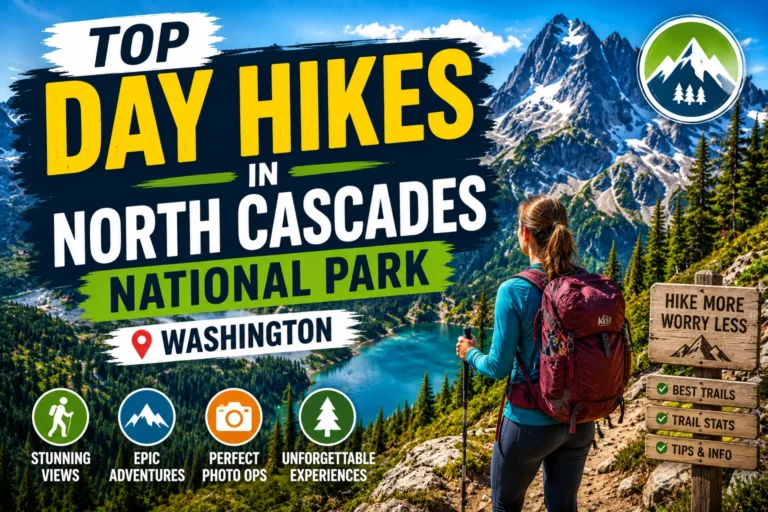
North Cascades National Park (Washington The Least Visited Gem)
Here’s a shocker: North Cascades gets fewer annual visitors than some city parks (roughly 30,000 vs. 4 million at Great Smokies). Why? No major lodges. No road through the middle. Just jagged peaks, turquoise lakes, and total silence.
- Best easy hike: Thunder Knob (3.6 miles, lake views)
- Best serious hike: Cascade Pass (7.4 miles, mountains exploding in every direction)
- Where to stay: Marblemount (tiny town, one gas station, zero Starbucks)
The Mountains & The Weird Offbeat USA
Bighorn Canyon (Wyoming/Montana The Forgotten Reservoir)
Everyone goes to Yellowstone. Bighorn Canyon is 120 miles away and gets 1% of the visitors. It’s a massive canyon carved by the Bighorn River, with 60 miles of sheer cliffs, wild horses, and zero gift shops.
- Best viewpoint: Devil’s Canyon Overlook (looks like the Grand Canyon’s quieter cousin)
- Activity: Rent a kayak at Barry’s Landing. You’ll paddle alone.
- Wildlife: Bighorn sheep, eagles, and pronghorn.
Great Sand Dunes National Park (Colorado Sandboarding in Silence)
I know a national park? But trust me. Most people drive to the first dune, take a photo, and leave. If you hike one mile beyond the main dune field, you enter an endless sea of sand with no footprints. It feels like the Sahara, but you’re in Colorado.
- Best time: Late May (the creek is flowing, creating a “beach” at the base)
- Gear rental: Sandboards and sand sleds at Oasis Store (outside the gate)
- Hidden secret: Camp at the Pinon Flats campground. On a moonless night, the stars are absurd.
The Enchanted Highway (North Dakota Giant Metal Sculptures in the Middle of Nowhere)
This isn’t a single place it’s a 32 mile stretch of road between Regent and Gladstone. A local farmer named Gary Greff built the world’s largest scrap metal sculptures. We’re talking a 45 foot tall pheasant, a family of giant grasshoppers, and deer that look like they’re from a Tim Burton movie.
- Why it’s hidden: Nobody goes to western North Dakota for art. They should.
- Best stop: “Teddy Roosevelt Rides Again” (a 50-foot statue of TR on a horse)
- Pro tip: Go at sunset. The sculptures cast wild shadows on the prairie.
Also Read: Safe and Affordable Places to Stay in New York for Tourists
Practical Tips for Visiting Hidden Gems
Before you pack the car, let’s talk logistics. These places are hidden for a reason usually because they lack infrastructure.
Essential checklist:
- Download offline maps. Cell service is a myth in most of these spots.
- Bring more water than you think. A gallon per person per day in the Southwest.
- Tell someone your route. If you’re hiking alone, share your exact trailhead and return time.
- Pack a physical map. Yes, a paper one. GPS fails.
- Leave no trace. These spots are pristine because people respect them. Pack out your trash, including apple cores and banana peels (they’re not native).
Best seasons for crowd-free travel:
- Southwest: Late fall (Oct Nov) or early spring (March April)
- Pacific Northwest: September (post Labor Day pre rain)
- Northeast: Early June (kids still in school)
- Mountain states: Mid September (elk are bugling crowds are gone)
Frequently Asked Questions (FAQs)
Hidden gem tourist place in USA away from crowds right now?
Lava Beds National Monument in California. It’s otherworldly, affordable, and you can explore caves alone. No crowds, no lines, no noise.
Are these places safe for solo travelers?
Most are very safe. For the caves (Lava Beds) and remote hikes (Bighorn Canyon), always tell someone your plan. Carry a personal locator beacon if you go deep into the backcountry.
Which hidden gem is best for families with young kids?
Congaree National Park (boardwalk is stroller friendly) and the Enchanted Highway (kids love giant bugs). Avoid the ice caves and rope-access beaches with toddlers.
Do I need a 4×4 vehicle to reach any of these?
For most, no. For Goosenecks, the road is paved. For Secret Beach in Oregon, the parking lot is dirt but accessible by sedan. Only Bighorn Canyon’s backcountry sites require high clearance.
When is the worst time to visit hidden gems?
Summer weekends at any of the national park sites (Congaree, North Cascades, Great Sand Dunes). Even hidden spots get busy on holiday weekends like July 4th or Labor Day.
Can I camp at these locations?
Yes many offer primitive camping. Goosenecks has $5 first come, first-served sites. Lava Beds has a small campground with pit toilets. No hookups anywhere. Plan ahead.
Are dogs allowed?
At state parks (Providence Canyon, Goosenecks), usually yes on leash. At national parks (Congaree, North Cascades), dogs are often restricted to paved trails or not allowed. Always check the specific park’s pet policy before driving.
What hidden gem has the best stargazing?
Great Sand Dunes National Park (International Dark Sky Park) or Bighorn Canyon (zero light pollution). Bring a blanket and just lie in the sand.
How do I find more hidden gems like these?
Use Google Maps in satellite mode. Look for green patches (public land) without marked trails. Then cross-reference with All Trails low review count = low crowds.
Are any of these places overrated or too touristy now?
Tent Rocks (before closure) got busier. Providence Canyon sees Georgia day-trippers in spring. But compared to Zion or Yosemite? Still blissfully quiet
Conclusion:
You don’t need to fly to Iceland or hike for a week to find solitude. You just need to look past the postcard shots.
The hidden gem tourist places in USA away from crowds on this list are real, reachable, and waiting for you. Some require a muddy boot. Some require a little research. None require an anxiety attack over parking.
So here’s my challenge to you: Pick one. Just one. Put it on your calendar for this year. Drive there. Walk until you can’t hear the highway. And when you find that perfect, silent view take a photo. Then put the phone down. Stay awhile.
Got a hidden spot I missed? Drop it in the comments below. I’m always looking for the next off map adventure. And if this guide helped you, share it with a friend who needs to escape the crowds.
See you on the quiet trail. Your hidden trip guide at Hidden Trip USA