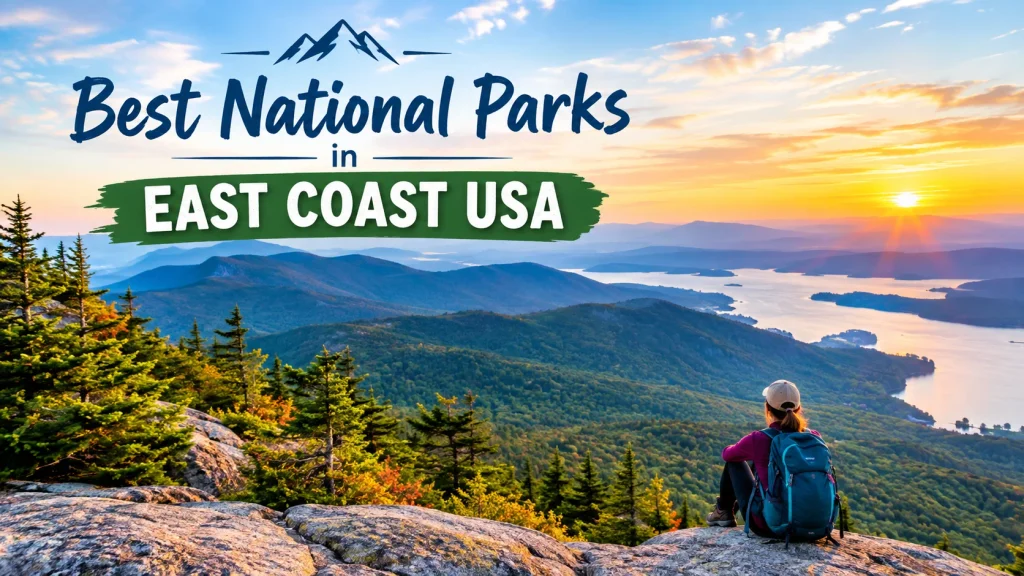
Best National Parks in East Coast USA 2026
The best national parks in East Coast USA offer granite cliffs that drop into the Atlantic, Appalachian ridges older than the Rockies, subtropical wetlands full of alligators, and a whitewater gorge that became a national park at the end of 2020. Most people assume they need a cross-country flight for a great park trip, but you can reach these places by car from many eastern cities, often with shorter drives and plenty of history along the way.
The catch is that some of these parks are among the busiest in the country. This guide helps you choose the right park for your trip, shows what each one costs in 2026, and explains how to enjoy the busy ones without spending your day in traffic.
Fees, closures, and reservation rules change often. Confirm details on the official National Park Service (nps.gov) page for each park before you go.
What Counts as an “East Coast” National Park?
Only a few national parks sit directly on the coast: Acadia in Maine, Biscayne and Everglades in Florida, and Dry Tortugas off the Florida Keys. Many of the best-known eastern parks, such as Great Smoky Mountains, Shenandoah, and Congaree, are inland in the Appalachian region.
This guide uses the way most travelers think about it: if you can drive there from a major East Coast city in a day or so, it belongs in the conversation. That includes parks in West Virginia and Ohio, plus one national seashore that earns its spot.
Best National Parks in East Coast USA at a Glance
| Park | State | Best for | Best season | Entrance fee (2026) |
|---|---|---|---|---|
| Acadia | Maine | Coastal hiking and scenery | Sept to early Oct | $35 per vehicle |
| Shenandoah | Virginia | Scenic drive, easy family hikes | Late spring, Oct | $30 per vehicle |
| Great Smoky Mountains | Tennessee / North Carolina | Waterfalls, wildlife, historic valleys | Oct, or early morning any season | No entrance fee (parking tag required) |
| New River Gorge | West Virginia | Rafting, climbing, bridge views | Spring to fall | No entrance fee |
| Everglades | Florida | Wildlife and wetlands | Dec to April | $35 per vehicle |
| Biscayne | Florida | Snorkeling and boating | Winter and spring | No entrance fee (tours cost extra) |
| Cuyahoga Valley | Ohio | Waterfalls and easy trails | Spring and fall | No entrance fee |
| Cape Hatteras (seashore) | North Carolina | Beaches and surf fishing | Spring and fall | No entrance fee |
Check each park’s NPS page for the current price before you travel.
Which Park Is Right for You?
- First-time visitor who wants the classic experience: Acadia or Great Smoky Mountains.
- Families with young kids: Shenandoah (short trails right off the road) or Cuyahoga Valley.
- Wildlife and warm weather in winter: Everglades.
- Adventure (rafting, climbing): New River Gorge.
- Water lovers: Biscayne for snorkeling, Cape Hatteras for beaches.
- Anyone who dislikes crowds: Shenandoah on a weekday, New River Gorge, or the quieter corners of the Smokies.
1. Acadia National Park, Maine
Acadia packs granite mountains, rocky shoreline, tidepools, and old carriage roads into nearly 50,000 acres near Bar Harbor. It became a national park in 1919 and was the first national park east of the Mississippi River. Cadillac Mountain, at 1,530 feet, is the highest point on the North Atlantic coast of the United States.
Best things to do
- Ocean Path: an easy walk of about 4.4 miles one way from Sand Beach to Otter Point, passing Thunder Hole (best near high tide) and pink granite cliffs.
- Gorham Mountain Loop: a moderate hike with rocky summit views and an optional detour to the Cadillac Cliffs sea cave.
- The Beehive: a short but exposed climb on iron rungs and ladders, with steep drop-offs and no guardrails. Only try it if you are comfortable with heights. The Beehive and the harder Precipice Trail typically close in spring and summer for peregrine falcon nesting, so check for current closures.
Best time to visit: July and August are warmest, with the most services and the biggest crowds. September and early October bring cooler, sunny days and fall color, usually peaking in mid-October. Late spring is quieter, but fog is common and blackflies can be annoying from mid-May to mid-June.
How to beat the crowds: Start early, because parking at Sand Beach and the popular trailheads fills up. Spend time on the carriage roads, which are great for walking and biking, or visit the quieter Schoodic Peninsula.
Practical details
- Entrance fee: $35 per private vehicle, valid for 7 days.
- Nonresident fee: in 2026, non-U.S. residents age 16 and older pay an extra $100 per person at Acadia, unless they hold the Non-Resident Annual Pass.
- Cadillac Summit Road: needs a timed vehicle reservation in the busy season.
- Getting there: about 4.5 hours from Boston.
2. Shenandoah National Park, Virginia
Shenandoah is one of the closest national parks to Washington, D.C., about 75 miles away, which makes it a favorite weekend escape. It protects roughly 200,000 acres of the Blue Ridge Mountains, with hundreds of miles of trails.
Best things to do
- Skyline Drive: a 105-mile road along the ridge with more than 70 overlooks. The speed limit is 35 mph, which is perfect, because you will want to stop often.
- Easy family hikes: many trailheads are right off Skyline Drive.
- Limberlost Trail: a gentle 1.3-mile loop with benches and a wide, smooth path.
- Dark Hollow Falls: a 1.4-mile round trip to a 70-foot waterfall. The climb back is the hard part.
- Stony Man: a 1.6-mile round trip with wide valley views.
- Hawksbill Summit: about 2 miles, to the highest point in the park at just over 4,000 feet.
- Appalachian Trail: it runs through the park for over 100 miles, so even a short stretch gives you a taste of it.
- Wildlife: black bears live here. Keep your distance and never feed them.
Best time to visit: October is peak fall color and also peak traffic on Skyline Drive. Late spring brings wildflowers and strong waterfalls with fewer people. Parts of the road can close during ice or snow in winter.
How to beat the crowds: Visit on a weekday, or hike in the early morning. Dark Hollow Falls parking fills up fast, so go early or pick a less popular trail such as Limberlost.
Practical details
- Entrance fee: $30 per private vehicle, valid for 7 days.
- Nonresident fee: the extra $100 nonresident fee does not apply at Shenandoah.
- Getting there: about 75 miles west of Washington, D.C.
3. Great Smoky Mountains National Park, Tennessee and North Carolina
The Smokies is the most visited national park in the country, with roughly 12 million visits a year. It covers about 520,000 acres on the Tennessee and North Carolina border, is a UNESCO World Heritage Site, and has more than 19,000 documented species of plants, animals, and fungi. The “smoke” in the name is a natural blue haze created by moisture and compounds released by the forests.
Best things to do
- Newfound Gap Road: the main route between Gatlinburg, Tennessee, and Cherokee, North Carolina. It can close during winter weather, so check conditions before you go.
- Cades Cove Loop Road: an 11-mile one-way loop through a historic valley with preserved cabins, churches, and barns. In season, vehicles are kept off the loop on certain mornings for walkers and cyclists. Arrive early to avoid long lines of cars.
- Roaring Fork Motor Nature Trail: a quieter drive with waterfalls and historic homesteads. Check the NPS site for closures, since storm damage can affect roads.
Best time to visit: Fall color in October is spectacular, and so are the crowds. Summer is cooler at higher elevations. Winter is quiet, but some roads close.
How to beat the crowds: Get away from Gatlinburg and Cades Cove. The Cataloochee area on the North Carolina side and the less-visited trails away from the main roads are far quieter. Always start early.
Practical details
- Entrance fee: there is no entrance fee, but you need a parking tag to park in the park. Check the NPS page for the current price.
- Camping: reservations are usually needed well in advance. LeConte Lodge, a hike-in lodge, also books far ahead.
- Weather: the elevation difference across the park is large, so conditions can change quickly. Pack layers.
4. New River Gorge National Park and Preserve, West Virginia
New River Gorge became a national park at the end of 2020, making it the newest park on this list. Despite the name, it is one of the oldest rivers in North America. The area protects about 70,000 acres and is a paradise for rafting and rock climbing.
Best things to do
- New River Gorge Bridge: the steel arch towers about 876 feet above the river. The Long Point Trail gives you one of the best views of it. On Bridge Day in October, the road is closed to cars and people BASE jump from the bridge.
- Whitewater rafting: the upper section has gentler rapids that suit families. The lower section has Class IV and V rapids for experienced paddlers, best with a licensed outfitter.
- Endless Wall Trail: follows the gorge rim with wide views.
Best time to visit: Fall has bright maples and oaks. Spring brings wildflowers and high water. Summer is prime rafting time.
How to beat the crowds: Avoid Bridge Day weekend if you want quiet. Weekdays are calm, and the smaller rim trails are rarely busy.
Practical details
- Entrance fee: none.
- Getting there: southern West Virginia, about an hour from Charleston. The Canyon Rim Visitor Center is a good first stop for maps and trail advice.
5. Everglades National Park, Florida
The Everglades is the largest subtropical wilderness in the United States and a UNESCO World Heritage Site. It protects wetlands, mangroves, and coastal prairie, and it is home to the Florida panther, the American crocodile, and many bird species such as the roseate spoonbill.
Best things to do
- Anhinga Trail: a 0.8-mile paved and boardwalk loop near the Royal Palm Visitor Center. Alligators, anhingas, herons, and turtles are usually easy to spot.
- Shark Valley: a flat 15-mile paved loop, great for biking or a narrated tram tour, with a 65-foot observation tower halfway.
- Paddling: experienced paddlers can try the Hell’s Bay Canoe Trail. Check conditions and permits first.
Best time to visit: December through April is the dry season. Water levels drop, wildlife gathers in smaller pools, and mosquitoes are far less of a problem. Summer is hot, wet, and buggy.
How to beat the crowds: Go on a weekday and arrive early, then walk the trails away from the main parking areas. Ranger programs are a good way to learn more.
Practical details
- Entrance fee: $35 per private vehicle, valid for 7 days.
- Nonresident fee: in 2026, non-U.S. residents age 16 and older pay an extra $100 per person at Everglades, unless they hold the Non-Resident Annual Pass.
- Getting there: about 45 minutes from Miami.
6. Biscayne National Park, Florida
Biscayne is about 95 percent water, which makes it a favorite for snorkelers, divers, and boaters. It sits just south of Miami and protects part of the Florida reef.
Best things to do
- Boat tours to the outer reefs, where you can see tropical fish and sea turtles.
- Boca Chita Key: a small island with a decorative lighthouse, reachable only by boat.
- Shipwreck Heritage Trail: an underwater trail with several historic wrecks.
Best time to visit: Winter and spring have clear water and comfortable weather. Summer brings afternoon thunderstorms and hurricane season.
How to beat the crowds: Book a weekday tour, and consider an island camping trip if you have a boat or a kayak.
Practical details
- Entrance fee: none to enter the park. Boat tours, equipment rentals, and island camping have their own costs, and camping starts at about $25 per night.
- Getting there: about 35 miles south of Miami.
7. Cuyahoga Valley National Park, Ohio
Cuyahoga Valley sits between Cleveland and Akron and is easy to underestimate. It offers waterfalls, rock formations, and gentle trails that work well for families.
Best things to do
- Brandywine Falls: a 65-foot waterfall reached by a short boardwalk trail of about 1.5 miles round trip.
- Ledges Trail: a loop of about 2 miles through mossy rock formations that kids love.
- Beaver Marsh Boardwalk: an easy walk through a restored wetland with herons, turtles, and sometimes beaver activity.
- Ohio and Erie Canal Towpath Trail: runs through the park and is great for cycling.
Best time to visit: Fall color is excellent, spring brings wildflowers, and summer is lush and green.
How to beat the crowds: Brandywine Falls is the busiest spot, so visit early or on a weekday.
Practical details
- Entrance fee: none.
- Getting there: between Cleveland and Akron, Ohio.
Also read: 15 Best Budget Secret Vacation Spots in the US
8. Cape Hatteras National Seashore, North Carolina
Cape Hatteras is a national seashore, not a national park, but it earns a place here because it offers a very different East Coast experience: about 70 miles of protected barrier island beaches, wild shoreline, and some of the best surf fishing on the Atlantic.
Best things to do
- Beachcombing: after a storm or at sunrise you may find shells such as whelks, sand dollars, and scallops.
- Birdwatching: more than 250 species have been recorded, and several sea turtle species nest on the beaches.
- Surf fishing: a long-standing local tradition.
- Ranger programs: the seashore sometimes offers public programs about sea turtles in late summer. Check the NPS schedule.
Safety note: If you see stranded jellyfish or Portuguese man o’ war on the beach, look but do not touch. They can still sting.
Best time to visit: Summer for swimming, surfing, and kiteboarding. Fall for quieter beaches and good fishing.
How to beat the crowds: Walk away from the beach access points. Spring and fall are much calmer than July.
Practical details
- Entrance fee: none.
- Getting there: North Carolina’s Outer Banks.
Two Sample Itineraries
Long weekend in Maine (3 days): Acadia
- Day 1: Ocean Path, Sand Beach, and Thunder Hole.
- Day 2: a moderate hike such as Gorham Mountain, then sunset on the coast.
- Day 3: carriage roads by bike, then a quiet stop on the Schoodic Peninsula before heading home.
Appalachian road trip (about 7 days): Shenandoah, New River Gorge, Great Smoky Mountains
- Days 1 to 2: Skyline Drive and two or three short hikes in Shenandoah.
- Day 3: a full driving day to West Virginia. Plan extra time and check road conditions.
- Day 4: New River Gorge. Walk the Long Point Trail and the Endless Wall Trail, or book a rafting trip.
- Day 5: a second driving day south to the Smokies.
- Days 6 to 7: the Smokies. Start early at Cades Cove, then explore a quieter corner such as Cataloochee.
Leave buffer time between parks, because mountain roads are slower than they look on a map.
Tips for Visiting East Coast National Parks
Check fees before you go. Fees change, so confirm the current price on each park’s NPS page. The America the Beautiful annual pass can save money if you visit several parks or federal recreation sites.
Know the nonresident fee rules. In 2026, non-U.S. residents age 16 and older pay an extra $100 per person at certain very popular parks. On this list, that applies to Acadia and Everglades only. A Non-Resident Annual Pass is available and can be cheaper if you visit more than a couple of those parks.
Book reservations early. Timed entry, camping, and lodge reservations often fill months ahead, especially for fall color season.
Go early, or go in shoulder season. Late spring and early fall usually offer better weather and fewer people.
Download offline maps. Cell service is patchy in many parks.
Pack layers. Conditions can change quickly, especially in mountain parks.
FAQs.
How many national parks are on the East Coast?
Only a few sit directly on the Atlantic coast: Acadia, Biscayne, Everglades, and Dry Tortugas. If you include inland parks in the Appalachians and nearby states, such as Great Smoky Mountains, Shenandoah, Congaree, New River Gorge, and Cuyahoga Valley, the list is a dozen or more.
What is the best East Coast national park for families?
Shenandoah is excellent for families because many trailheads are right off Skyline Drive and trails like Limberlost are easy. Cuyahoga Valley is also great, with accessible waterfalls and gentle trails.
Which East Coast national parks have no entrance fee?
Great Smoky Mountains, New River Gorge, Biscayne, Cuyahoga Valley, and Cape Hatteras National Seashore do not charge a standard entrance fee. The Smokies do require a parking tag, and other costs such as tours or camping may apply.
What is the best time to visit Acadia?
July and August have the most reliable weather and the most services. September and early October bring fall color and fewer people.
Do I need reservations?
Some parks require reservations for certain roads or campgrounds, especially in busy seasons. Acadia, for example, uses a timed vehicle reservation for Cadillac Summit Road. Always check the park’s official page.