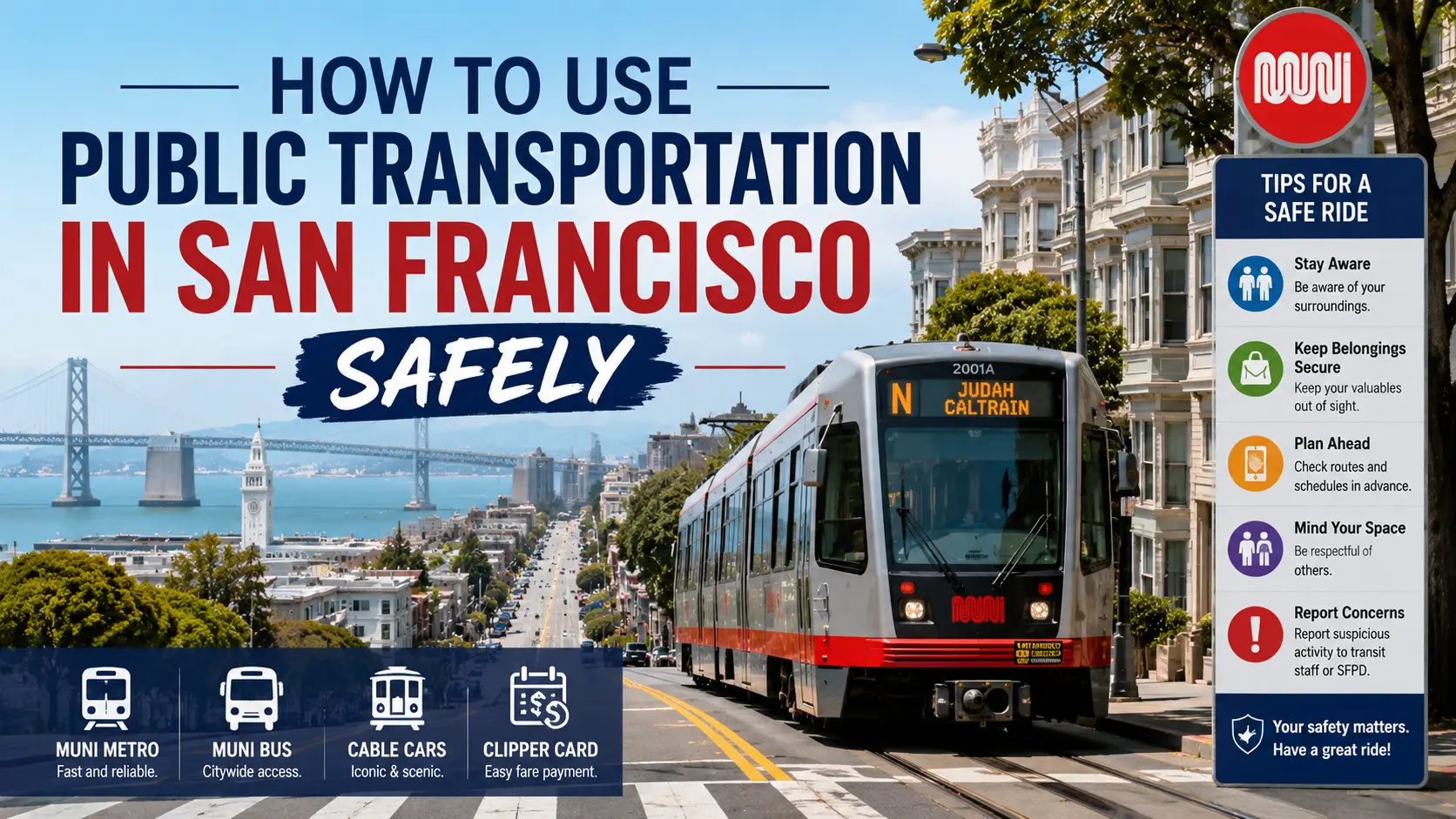
How to Use Public Transportation in San Francisco Safely 2026
How to Use Public Transportation in San Francisco Safely. San Francisco is a postcard city. You’ve seen the Golden Gate Bridge, the crooked curves of Lombard Street, and those iconic cable cars. But when you actually get here, you might be shocked by the hills (seriously, they hurt) and the parking prices (yes, $50 for two hours is real).
That is why learning how to use public transportation in San Francisco safely is the single best decision you can make for your wallet and your sanity. But let’s be real SF transit has a reputation. You’ve heard about the “BART drama” or the guy singing opera shirtless on the Muni bus.
Don’t worry. I’ve lived here for years. I’ve ridden every bus, train, and streetcar at 2 AM. This guide isn’t about scaring you. It’s about making you a smart, confident local for a day. We are going to cover the hidden hacks, the safe routes, and the exact apps you need to avoid looking like a tourist holding a paper map.
Ready to ditch the rental car? Let’s ride.
Why You Shouldn’t Drive in San Francisco (Even if You Have a Car)
Before we dive into the safety tips, let’s talk logic. Driving here is a nightmare for the unprepared.
- The Hills: Your rental car’s transmission will cry on a 31% grade.
- Broken Windows: “Bipping” (car break-ins) is an epidemic. Thieves scan rental cars specifically. Leave a phone charger visible? Your window is gone.
- Cost: Parking garages charge $35–50+ per day.
Using public transit solves all of this. The key is knowing how to do it without looking lost or scared.
The Core System: Muni vs. BART vs. Cable Cars
Most visitors mix these up. Here is the breakdown of the three systems you will actually use.
Muni (The Everyday Hero)
Muni covers everything inside the city limits. Buses, light rail trains (the underground ones), and historic streetcars.
- Where it goes: Everywhere. Ocean Beach, Golden Gate Park, The Mission, The Wharf.
- Safe Rating: High during the day. Moderate at night.
BART (The Airport Shuttle & Commuter Train)
BART is your bullet train to the airport (SFO or OAK) or across the bay to Berkeley.
- Where it goes: Downtown SF (Powell, Civic Center), Mission District, SFO Airport.
- Warning: BART stations get “spicy” after 9 PM. We will talk about that.
Cable Cars (The Tourist Magnet)
These are not for efficiency. They are for fun. A single ride costs $8 (cash only? No, get the app).
- Pro tip: Don’t wait in the long line at Powell & Market. Walk two blocks up to the Mason Street turnaround. The line is 20 minutes shorter.
Is Public Transit in San Francisco Actually Safe? (The Honest Truth)
Let’s cut the fluff. Yes, it is generally safe. But “safe” in SF looks different than “safe” in a small town.
You are sharing a metal box with 40 strangers. 39 of them are just tired workers or travelers. One might be having a rough day. The key to How to Use Public Transportation in San Francisco Safely is awareness, not paranoia.
The Golden Rule: Don’t look at your phone right by the doors. Phone snatching happens when the doors open. Thieves grab it and run.
The “Weird” Factor vs. Actual Danger
Visitors often confuse “odd” with “dangerous.”
- Not dangerous: The person yelling at a pigeon outside the window. The smell of weed. A drummer using a bucket.
- Potentially dangerous: Someone following you to a dark seat. Aggressive panhandling blocking the exits.
Use your gut. If a car feels off, get off and wait for the next one. Buses run every 5–15 minutes on major lines.
The Golden Hour: Best & Worst Times to Ride
Timing is everything for a smooth ride.
Best Times (The “Sweet Spot”)
- Weekdays 10 AM – 2 PM: The commuters are gone, the late sleepers aren’t up yet. You will get a seat. The trains are clean(er).
- Weekend Mornings (7 AM – 10 AM): Locals are hungover. Tourists haven’t left hotels. Great for getting to the Ferry Building.
Times to Stay Vigilant
- 4 PM – 6 PM (Rush Hour): Not dangerous, just packed. Pickpockets love crowds. Keep your backpack in front of you.
- 9 PM – 12 AM (The “Post Dinner” Zone): Still fine on main lines (like the 38 Geary or N Judah). Avoid the 14 Mission after 11 PM unless you want a story to tell.
- After 12 AM: Just take a rideshare (Uber/Lyft). It’s worth the $15.
How to Pay Without Looking Like a Newbie
Forget cash. Yes, the buses say they take cash, but drivers hate making change. Here is the modern way.
Get the “Clipper Card” on Your Phone
Clipper is the payment system for every transit agency in the Bay Area.
- Open your Apple Wallet or Google Pay.
- Add a “Transit Card.”
- Search for “Clipper Card.”
- Add $20.
To ride: Hold your phone over the glowing blue reader. Ding. You’re in.
Safety tip: Load your card before you get to the station. Standing on a street corner trying to type your credit card number makes you a target.
The “Don’t Stand Here” Rule (A Visual Guide)
Where you stand matters more than you think.
Dangerous Zones:
- Right inside the door: You block traffic and are the first target for thieves who jump off at the last second.
- The back of a nearly empty bus at night: Too isolated.
- Between train cars on BART: It’s actually illegal and very dangerous (sharp turns).
Safe Zones:
- Near the driver (on buses): The driver has cameras and a silent alarm.
- In the first train car (on BART/Muni Metro): The train operator is literally right there. Bad actors avoid this car.
- Standing facing the crowd: Shows you are aware.
Exactly Which Lines to Take (And Which to Skip)
As a visitor, you have specific destinations. Let’s map them.
The “Hidden Gems” Routes (Safe & Scenic)
- The 33-Stanyan: This bus winds through the Haight, past the Painted Ladies, and near Twin Peaks. It feels like a roller coaster. Very safe.
- The F Market Streetcar: Historic streetcars from the 1920s. Goes along the Embarcadero. Touristy but harmless and beautiful.
The “Proceed with Caution” Lines
- The 14-Mission: Runs 24/7. It is the gritty artery of the city. Fine at noon. Weird at midnight.
- BART between Civic Center and 24th Street: Usually fine, but keep headphones off. You need your ears.
Packing Your “San Francisco Survival Belt”
You don’t need hiking gear. You need smart gear.
Bring this:
- A mask: People take transit hygiene seriously here. You don’t have to wear it, but locals appreciate it during flu season.
- A carabiner clip: Clip your bag to the seat rail. Prevents grab and go theft.
- Power bank: Your phone is your map and ticket. Don’t let it die.
Leave this at the hotel:
- Expensive watches/jewelry: It screams “sue me.”
- Laptop bag: If you don’t need it, don’t carry it.
- Open-toed shoes: You will step in something mysterious.
Real Talk: Navigating the Tenderloin & Civic Center
These two neighborhoods sit right in the middle of the transit hub (Powell Station). They are not war zones, but they are intense.
The Reality: You will see homelessness. You will see drug use. 99% of these folks are in their own world and won’t touch you.
How to use public transportation in San Francisco safely through this area:
- Don’t make eye contact for more than 2 seconds. A quick glance is fine. Staring is rude everywhere.
- Walk with purpose. Fast, straight spine, eyes on the horizon (not the sidewalk).
- If someone asks for money: A polite “Sorry, not today” while keeping moving works best.
Pro tip: To avoid this entirely, take the N Judah train underground. You skip the street level weirdness.
Emergency Hacks (What the Locals Know)
- The “Next Bus” Secret: Text “Muni [Stop ID]” to 41411. You will get real arrival times even without internet.
- The Quiet Car: On BART trains, the first car is usually the quietest. No phones, no loud music.
- The Exit Strategy: Always know which door you need before the train stops. Standing up at the last second gets you bumped into strangers.
- If you feel unsafe: Pull the yellow emergency strip only if it’s a real emergency (fire, assault). For a creepy feeling? Just get off at the next stop and wait 5 minutes.
Night Riding: A Cheat Sheet
You had dinner in North Beach. It’s 10:30 PM. How do you get back to your hotel in Fisherman’s Wharf?
- Bus 8 or 39: Fine. Sit near other people.
- The Powell Hyde Cable Car: Magical at night. Totally safe. The gripman watches everything.
- Don’t take: The 31-Balboa if you’re alone.
The 10 PM Rule: After 10 PM, sit on the aisle seat, not the window. It gives you an escape route.
Also Check : What to Pack for a Desert Road Trip in USA
Bonus: The Hidden Accessibility Hacks
Even if you don’t need accessibility features, knowing them helps you be a good human.
- Kneeling Buses: All Muni buses “kneel” (lower themselves) at the curb. Press the blue button outside.
- The Front Door: Always board at the front door until you know the system.
- BART Elevators: Avoid them at night if possible. They smell terrible. Use the escalators.
Final Checklist Before You Tap Your Card
Let’s do a mental run through.
Do you have your Clipper Card loaded?
Is your phone in a zipped pocket (not your back pocket)?
Do you know which stop you’re getting off at? (Look up the street cross streets, not just the name).
Are your headphones volume low enough to hear the train doors open?
If you said yes to all four, you are ready. You have officially learned How to Use Public Transportation in San Francisco Safely.
Frequently Asked Questions (FAQs)
Is it safe to take BART from SFO airport to downtown San Francisco alone at 10 PM?
Yes, but sit in the first car near the train operator. Avoid the last car. Keep your luggage between your legs, not on the seat next to you.
Do I need cash for the cable cars?
Technically yes, they accept cash, but you are better off using the MuniMobile app or your Clipper Card. Cash riders slow down the line, and locals will sigh loudly.
What is the absolute safest form of public transit in SF?
The N-Judah light rail during daytime. It serves hospitals, universities, and families. Very chill vibe.
Can I take my rental bike on Muni?
Yes, but only on the front of the bus (bike rack) or on the first and last BART cars during non-commute hours. Never take a bike on a packed 5 PM bus.
How do I know if a bus stop is safe to wait at?
Look for the “Muni Rapid” signs (red and white). These stops have better lighting and more cameras. Avoid bus stops in underpasses (like under the freeway).
Is the “Homeless” issue on transit dangerous?
Usually no. Most are just seeking warmth or a place to sleep. The danger comes from intoxicated groups (3+ people acting loud) or someone having a severe mental break. Change cars if you see the latter.
What should I do if I miss my stop in a bad neighborhood?
Do not panic. Get off at the very next stop. Walk back toward the nearest major intersection (like Market St or Geary). Hail a rideshare for the remaining 4 blocks.
Are children safe on San Francisco public transit?
Yes, very. Kids under 18 ride Muni for free (just board through the back door). However, avoid rush hour (5 PM) when the buses are sardine cans. Stick to the 10 AM – 2 PM window with strollers.
Do the buses run on time?
They run on “Muni time.” The Transit app is more reliable than the posted schedule. A bus that says “2 minutes” might be 10 minutes. A bus that says “12 minutes” will come in 5.
Is it legal to eat or drink on the bus?
Officially? No. Unofficially? A closed water bottle is fine. A dripping burrito will get you yelled at. Save the snacks for a park bench.
Conclusion
Look, San Francisco isn’t scary. It’s just different. The transit system is the best way to see hidden murals in the Mission, sunsets at Ocean Beach, and the redwoods in Glen Canyon all for less than the cost of one hour of parking.
You now know the safe lines, the dangerous standing spots, and the secret app (Clipper). You are not a tourist anymore. You are a savvy traveler.
Now go tap your phone, grab a pole, and enjoy the ride. And when you see someone looking lost with a paper map? Pass this article along.