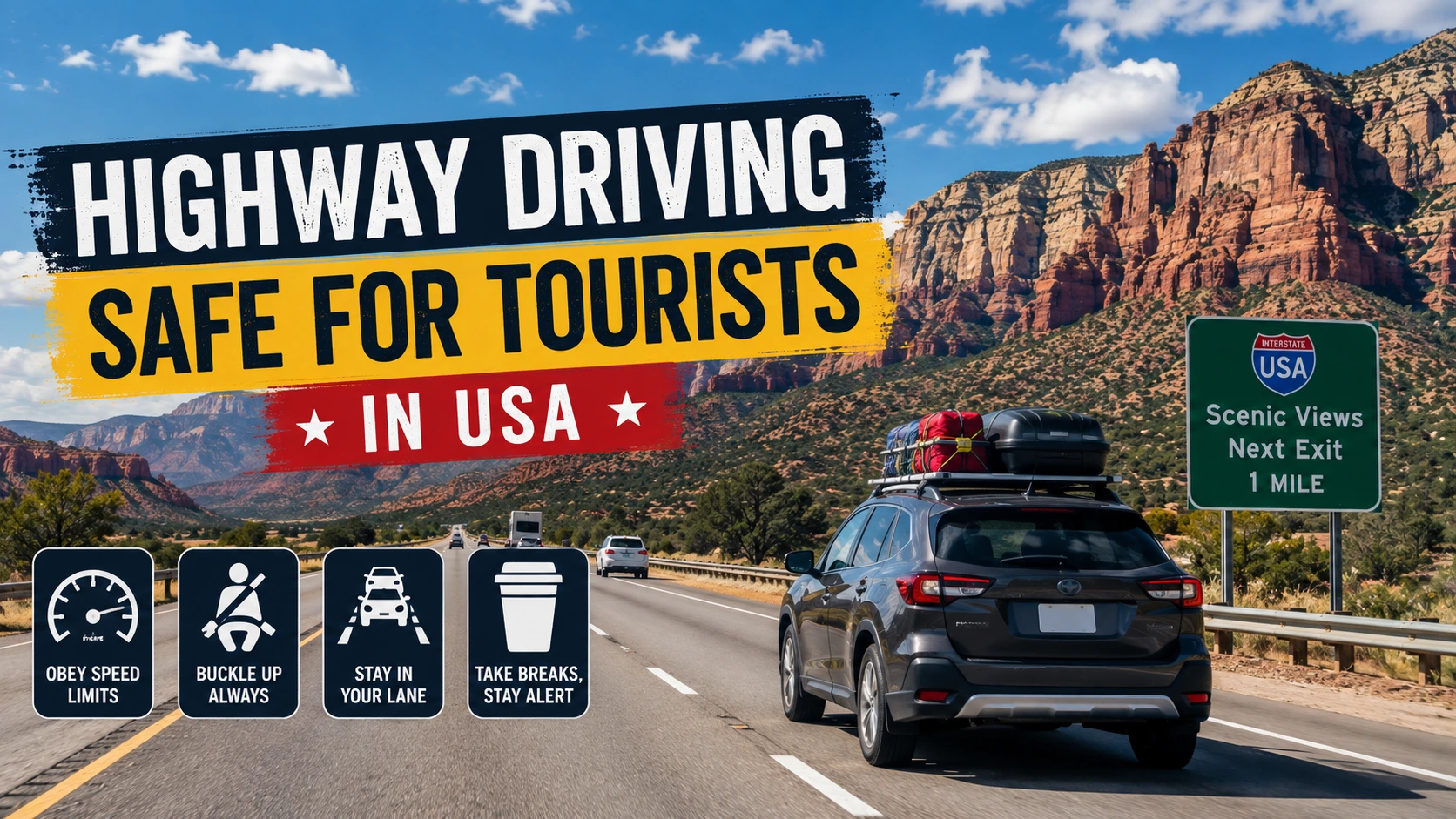
Highway Driving Safe for Tourists in USA 2026
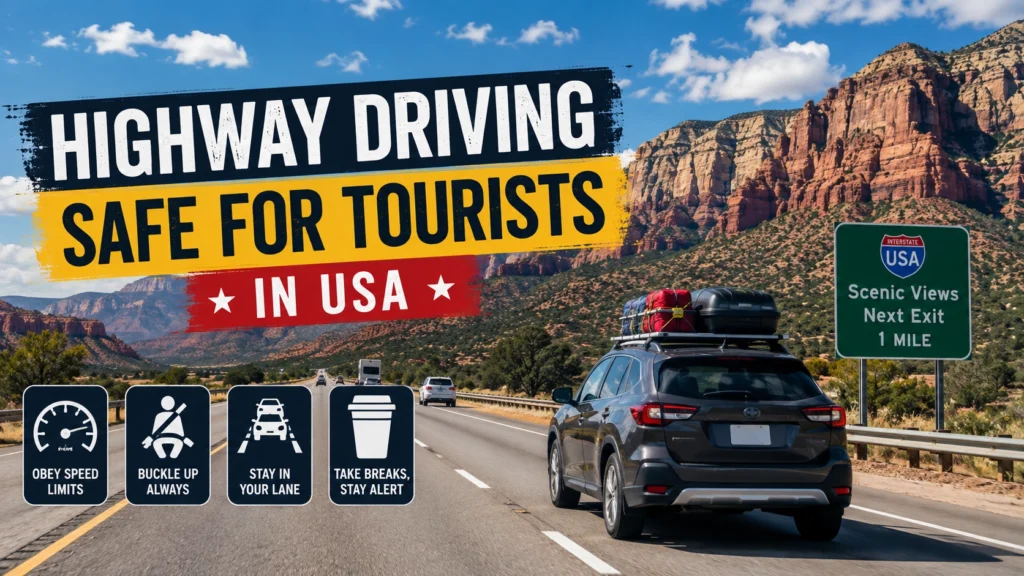
Highway Driving Safe. The open road is calling. You’ve got your route planned , your playlist curated and the promise of adventure on the horizon. But before you hit the gas , there’s one question that might be quietly tugging at your mind: is highway driving safe for tourists in USA?
That’s perfectly fine of course and it’s a question that perhaps you wouldn’t expect me to be so enthusiastic about! After years behind the wheel and covering many thousands of miles the entire breadth of this large country from the wide and flat deserts of Arizona up through the dizzyingly steep bends of the Colorado Rockies’ mountains.
The reality?
American highways , while full of opportunities for adventure and scenery unmatched anywhere else in the world are also notorious for dangers that lie in wait. Highway Driving Safe.
However, with a bit of knowledge and the right precautions, you can travel the roads safely while simultaneously having the trip of your dreams. In this guide, we will examine everything from the more perilous and to be avoided highway routes , to specific advice that can keep you safe on your journey. This article is for you regardless of whether you’re visiting this country for the first time or a domestic traveler looking to explore next. Highway Driving Safe.
Understanding America’s Highway System
America’s highway network is a marvel of modern engineering a 48,000 mile web of interstates connecting the nation . But this vast system is also a patchwork of different driving conditions, local laws, and regional cultures. Highway Driving Safe.
The Interstate System vs. Scenic Byways
The Interstate Highway System is the backbone of long distance travel . Designed for high speed efficiency , these multi lane roads are generally the fastest way to get from point A to point B. You’ll find them buzzing with a mix of commercial truckers, commuters and fellow road-trippers.
On the flip side , scenic byways and state routes offer a slower, more intimate experience . Think of the famous Pacific Coast Highway or the Blue Ridge Parkway . While stunning, these roads often feature sharper turns , steeper inclines and less predictable traffic. Each has its own character and importantly , its own risks.
State Laws and Driving Cultures
One of the first lessons for international travelers: there is no single set of rules for the road in America . Traffic laws are set largely at the state level . That means simple things like whether you can turn right on a red light the speed limit or even if you must wear a seatbelt can change as you cross from one state to another. Highway Driving Safe.
For instance , New Hampshire is the only state that doesn’t require adults to wear a seatbelt . And the rules on cell phone usage, helmet requirements for motorcyclists and even smoking in a car with minors can all vary . This patchwork of laws catches many visitors off guard , so doing your homework before you go is essential. Highway Driving Safe.
Is Highway Driving Safe for Tourists in USA? The Facts and Stats
Let’s look at the numbers . More than 38,000 people die on U.S . roads annually , with fatigue, speeding and distracted driving being leading factors . In 2023 alone, speed was a factor in roughly one-third of all traffic fatalities . It sounds daunting but knowledge is power. Understanding where the risks are highest can help you avoid them. Highway Driving Safe.
Top States and Roads for Safe Travel
You might be surprised to learn that some of the safest states for driving are also incredible for road trips . A recent WalletHub study ranked Utah as the second best state for a summer road trip, thanks to its “breathtaking scenery , outdoor recreation and safe driving conditions” . The state ranks in the top 10 for the least car thefts per capita and is fourth in fewest fatalities per 100 million miles driven . Minnesota took the top spot overall due to its low costs and high spending on parks and recreation . Highway Driving Safe.
If you’re concerned about safety , these states are an excellent place to start your journey . Their well maintained roads , combined with a culture of defensive driving make for a more relaxed and worry free experience. Highway Driving Safe.
America’s Deadliest Highways
On the flip side, certain highways have gained a notorious reputation. A study analyzing NHTSA data identified the following as some of the most dangerous highways in the U.S. :
- I-15 (San Bernardino County, California): The deadliest stretch in the nation, with 80 fatal crashes over three years. Long desert stretches and high weekend travel volumes to Las Vegas contribute to the danger . Highway Driving Safe.
- I-10 (Maricopa County, Arizona): A busy route through the Phoenix metropolitan area, shared by commuters and truckers, with 57 fatal crashes . Highway Driving Safe.
- I-10 (Riverside County, California): Handles enormous traffic volume connecting Los Angeles with Palm Springs, with 54 fatal crashes .
- I-94 (Cook County, Illinois): Slices through the Chicago metro area, known for congestion and unpredictable weather . Highway Driving Safe.
- I-40 (Bernalillo County, New Mexico): Cuts through Albuquerque, combining high desert elevation, long hauls and frequent speeding . Highway Driving Safe.
Other high risk corridors include I-5 and I-95. I-95, the main artery along the East Coast, carries nearly 300,000 vehicles daily and recorded 379 fatalities in 2020 alone . I-5, a major West Coast highway, saw 193 fatalities in the same year . Highway Driving Safe.
Top Causes of Accidents Involving Tourists
So, what’s behind these statistics? Here are the most common culprits:
- Distracted Driving : Texting or talking on a phone (even hands on free) significantly raises the likelihood of an accident . As a tourist relying on GPS, it’s easy to take your eyes off the road at the wrong moment. Highway Driving Safe.
- Drunk Driving : This is a factor in around a third of all fatal car accidents . There is zero tolerance for it and penalties are stiff. Highway Driving Safe.
- Fatigue : Long , straight stretches of highway can lull you into a dangerous state known as “highway hypnosis.” Highway Driving Safe.
- Unfamiliarity : International visitors are often caught off guard by state specific traffic laws, like the “four way stop” where cars take turns based on arrival order . Highway Driving Safe.
Proactive Safety: How to Prepare Before You Hit the Road
Preparation is the single most important step you can take to ensure a safe trip. Highway Driving Safe.
Vehicle Prep: Your Road Trip Safety Checklist
Before you even start the engine, give your vehicle a thorough once over. The National Highway Traffic Safety Administration (NHTSA) recommends checking the following :
- Tires: Check the pressure and condition and don’t forget the spare tire. Highway Driving Safe.
- Fluid Levels: Engine oil , coolant , brake fluid and windshield washer fluid. Highway Driving Safe.
- Wipers and Lights: Ensure they are all in good working order. Highway Driving Safe.
- Belts and Hoses: Hot temperatures can accelerate the degradation of rubber .
- Battery: Have a mechanic check its health and charging system .
- A/C Performance: A lack of A/C on a hot day can be dangerous , especially for children and the elderly . Highway Driving Safe.
Packing Your Emergency Roadside Kit
I never hit the road without a well stocked emergency kit. Trust me, it’s better to have it and not need it than the other way around. Here’s what to include :
- Essentials: Water and non perishable snacks a first aid kit , a flashlight with extra batteries, and jumper cables. Highway Driving Safe.
- Safety Gear: Safety reflectors or flares and the tools (and know how) to change a flat tire.
- Navigation: A physical, paper map! Technology fails and cell service is notoriously spotty in remote areas . Highway Driving Safe.
- Other Items: A blanket, travel pillow, portable phone charger and an extra quart of oil. Highway Driving Safe.
Insurance: Don’t Leave Home Without It
For international visitors, rental car insurance is a major source of confusion . The coverage that applies at home or through a credit card may or may not extend to a U.S. rental . Highway Driving Safe.
Know before you approach the counter do your home work. Learn the phrases “Collision Damage Waiver” and “Liability Insurance” the right way. Know if you are already covered by your automobile insurance or your travel insurance. Highway Driving Safe. Highway Driving Safe.
Know precisely what your credit card provider can and cannot afford. When you are tired off a protracted flight, rental agency clerk can coax to up sale ; doing analysis beforehand can put together you to reject politely the addenda. Highway Driving Safe. Highway Driving Safe.
Essential Safety Tips for Navigating USA Highways
Now that you’re prepared, let’s talk strategy. How do you actually drive safely on these roads?
For International Drivers: What to Expect
If you’re visiting from abroad, be aware of these uniquely American driving conventions :
- Right Turn on Red: In most states, you can turn right at a red light after coming to a complete stop, unless a sign says otherwise. Highway Driving Safe.
- The Four Way Stop: At an intersection with stop signs in all four directions the first car to arrive has the right of way. Highway Driving Safe.
- School Buses: When a school bus flashes its red lights , traffic in both directions on an undivided road must come to a complete stop. This is strictly enforced. Highway Driving Safe.
Mountain Driving: Conquering the Peaks
Driving through the Rockies or the Sierras is an incredible experience but it demands respect. Here are some key tips :
- Don’t ride your brakes going downhill. Shift into a lower gear, even in an automatic car. This saves your brakes from overheating and failing. Highway Driving Safe.
- Keep your gas tank full. Gas stations are few and far between in mountainous areas.
- Be prepared for winter weather. Even in spring, carry antifreeze, snow chains, an ice scraper, and a small shovel . Highway Driving Safe.
- If there are more than three cars behind you, pull over when it’s safe and allow them to pass .
Dealing with Dangerous Weather
America’s weather is as dramatic as its landscapes. Here’s how to handle some common challenges.
Navigating Wet and Rainy Conditions
Rain can turn a smooth drive into a slippery mess. Always slow down, as posted speed limits are for ideal conditions . And remember the golden rule: “If your wipers are going, your headlights are glowing” .
Hydroplaning: What to Do
If your car starts to hydroplane (when the tires lose contact with the road and slide on a film of water), stay calm. Don’t slam on the brakes or jerk the wheel. Just take your foot off the gas and steer in the direction you want the car to go .
Fog and Winter Driving Safety
- Fog: Never use your high beams in heavy fog. The light reflects off the water molecules and makes it harder to see. Use low beams or fog lamps instead .
- Ice: If you hit a patch of black ice, don’t panic. Take your foot off the accelerator and steer in the direction you want the car to go .
Aggressive Drivers and Road Rage
Unfortunately, you might encounter aggressive drivers. My advice is simple: don’t engage. If someone is tailgating you, move over a lane and let them pass . If a driver is acting threateningly toward you, call 911. Don’t stop; let the dispatcher direct you to a safe location where an officer can meet you .
Emergency Procedures
If Your Car Breaks Down
If your engine stalls, put your hazard lights on right away and release the accelerator . Try to veer safely onto the right shoulder and come to a stop. While waiting for help in the right shoulder lane, it’s actually safer to sit in the passenger seat, positioning yourself as far away from traffic as possible .
If You Witness a Car Fire
If you see smoke or flames coming from the engine, pull over, turn off the engine, and move at least 100 feet away from the vehicle. Do not try to fight the fire yourself .
Parking Safety for Road Trips
Whether you’re in an RV or a car, where you park matters.
- RVs and Vans: Campgrounds are your safest bet. While some Walmarts allow overnight RV parking, always check in with the manager first and make a purchase . Rest stops are not intended for overnight stays and can sometimes be unsafe due to their isolated locations and poor lighting .
- General Parking: When stopping for a break, choose well-lit, busy areas. Don’t leave valuables in plain sight.
The Most Dangerous Roads in America
Some roads have earned a reputation for being particularly treacherous. While they offer incredible views, they demand extra caution.
The Dalton Highway, Alaska
Stretching 414 miles through northern Alaska the Dalton Highway is often considered the most dangerous road in the U.S. . Three quarters of it lies beyond the Arctic Circle and it’s largely unpaved, often covered in ice and plagued by rockfalls , potholes and wildlife crossings . There are only two towns along the route and services are virtually non existent. This is a road for the truly adventurous and the exceptionally well prepared .
California Highway 190 Death Valley Road
This road cuts through one of the most extreme environments on the planet. Summer temperatures can soar above 120°F, making any breakdown a life threatening emergency . Cell service is unreliable and help is far away. Tourists who underestimate Death Valley often end up stranded .
U.S. Route 550, Colorado The Million Dollar Highway
This road snakes through steep mountain passes with hairpin turns and no guardrails . Winter snowstorms and rockslides make it even more perilous.
U.S. Route 1, Florida The Overseas Highway
Connecting the Florida Keys to Miami, this stretch features long bridges and stunning ocean views. But it’s also one of the deadliest roads in the country, largely due to distracted drivers and no ban on handheld devices .
Also Check : Tourist Safety Tips for Visiting Los Angeles 2026
The Hidden Gems: Safe, Scenic Drives for Your Itinerary
Now for the fun part! Let’s look at some of the safer and most spectacular drives in the U.S., perfect for your offbeat USA travel blog.
Must See Routes for Your Road Trip
- Scenic Byway 12, Utah: This route is a showcase of the state’s diverse and stunning landscapes, winding through red rock canyons and high plateaus. Utah is considered a very safe state for road trips, so you can enjoy the views with peace of mind .
- The Million Dollar Highway (US Route 550), Colorado: While I mentioned this as a dangerous road, it’s also one of the most beautiful. If you’re an experienced driver, take it slow. The 25 mile section offers million dollar views, but it has steep grades and hairpin turns with no guardrails .
- Blue Ridge Parkway, Virginia/North Carolina: Known for its gentle, sweeping curves and breathtaking mountain views, it’s a far less stressful drive than many major interstates. The speed limit is low, encouraging you to enjoy the scenery.
Conclusion
So, is highway driving safe for tourists in USA? The answer is nuanced. It can be incredibly safe and an absolute blast if you’re prepared and informed. The freedom of the open road is intoxicating, and with the right knowledge, you can avoid the pitfalls and focus on the adventure.
Key Takeaways to Remember:
- Plan Ahead: Map your route and check the local traffic laws of the states you’ll visit.
- Prepare Your Vehicle: A thorough vehicle check and a well packed emergency kit are non negotiable.
- Drive Defensively: Avoid distractions, don’t speed, and never, ever drive under the influence.
- Know the Dangerous Spots: Be extra cautious on notorious highways like I-5, I-10 and I-95, and during bad weather.
- Respect the Conditions: Adjust your speed for rain, fog, and mountain roads.
- Stay Calm in Emergencies: Whether it’s a breakdown, a car fire, or an aggressive driver, stay calm and follow the safety protocols.
I hope this guide gives you the confidence to embark on an unforgettable journey. The U.S. has an incredible variety of landscapes and experiences waiting for you, and now you’re equipped to enjoy them safely.
Call to Action: Have you ever driven on an American highway? Do you have any safety tips to share with our community? Let us know in the comments below! If you found this guide helpful, please share it on your social media to help other travelers prepare for their own hidden trips!
Frequently Asked Questions (FAQs)
Is highway driving safe for tourists in USA compared to driving in other countries?
Yes, it can be safe, but it’s different. The U.S. has high traffic volumes, high speed limits and unique rules like the “four way stop.” The biggest risks are distracted driving and fatigue, so tourists should be extra vigilant and plan their routes carefully .
What is the single most dangerous thing you can do while driving in the U.S.?
Distracted driving specifically, texting or using a phone while driving is incredibly dangerous. It significantly raises the likelihood of an accident . Even reading a text at highway speed means you’re traveling the length of a football field with your eyes off the road .
What are the most dangerous highways for tourists in the USA?
The most dangerous stretches include I-15 in California I-10 in Arizona and I-94 in Illinois. These are often congested urban routes or long desert stretches with high speed limits .
Do traffic laws change from state to state?
Yes, they do. Things like speed limits, seatbelt laws, phone usage rules and whether you can turn right on a red light can all vary. Always check the specific regulations for the states you will be visiting .
What should I do if I get pulled over by a police officer?
Stay calm, pull over to the right in a safe spot, turn off your engine, and keep your hands visible on the steering wheel. Wait for the officer’s instructions before reaching for your license or registration.
Is it safe to drive through the mountains in the USA?
Yes but it requires caution. Use lower gears when going downhill, keep your gas tank full and carry emergency supplies like snow chains and an ice scraper, especially if traveling outside of summer .
What if my car breaks down on the highway?
Put your hazard lights on immediately and steer your car to the right shoulder. Once you’ve stopped, it’s safer to sit in the passenger seat while waiting for help. Call roadside assistance or 911 .
Is it safe to sleep in my car at a rest stop?
While you can catch a few hours of sleep at a rest stop, they are generally not intended for overnight stays. They can be unsafe due to isolated locations and poor lighting. Campgrounds or a well lit busy area like a Walmart (with permission) are better options .
Can I turn right on a red light everywhere in the USA?
No. It is legal in most states after a complete stop but it’s not a universal rule. You must always come to a full stop and look for signs that prohibit it. Some busy cities have stricter rules about it .
How can I handle an aggressive driver on the highway?
The best thing to do is not to engage. Don’t speed up or make eye contact. Move over a lane to let them pass. If you feel threatened, call 911. Keep driving and let the dispatcher direct you to a safe, public location to meet an officer .