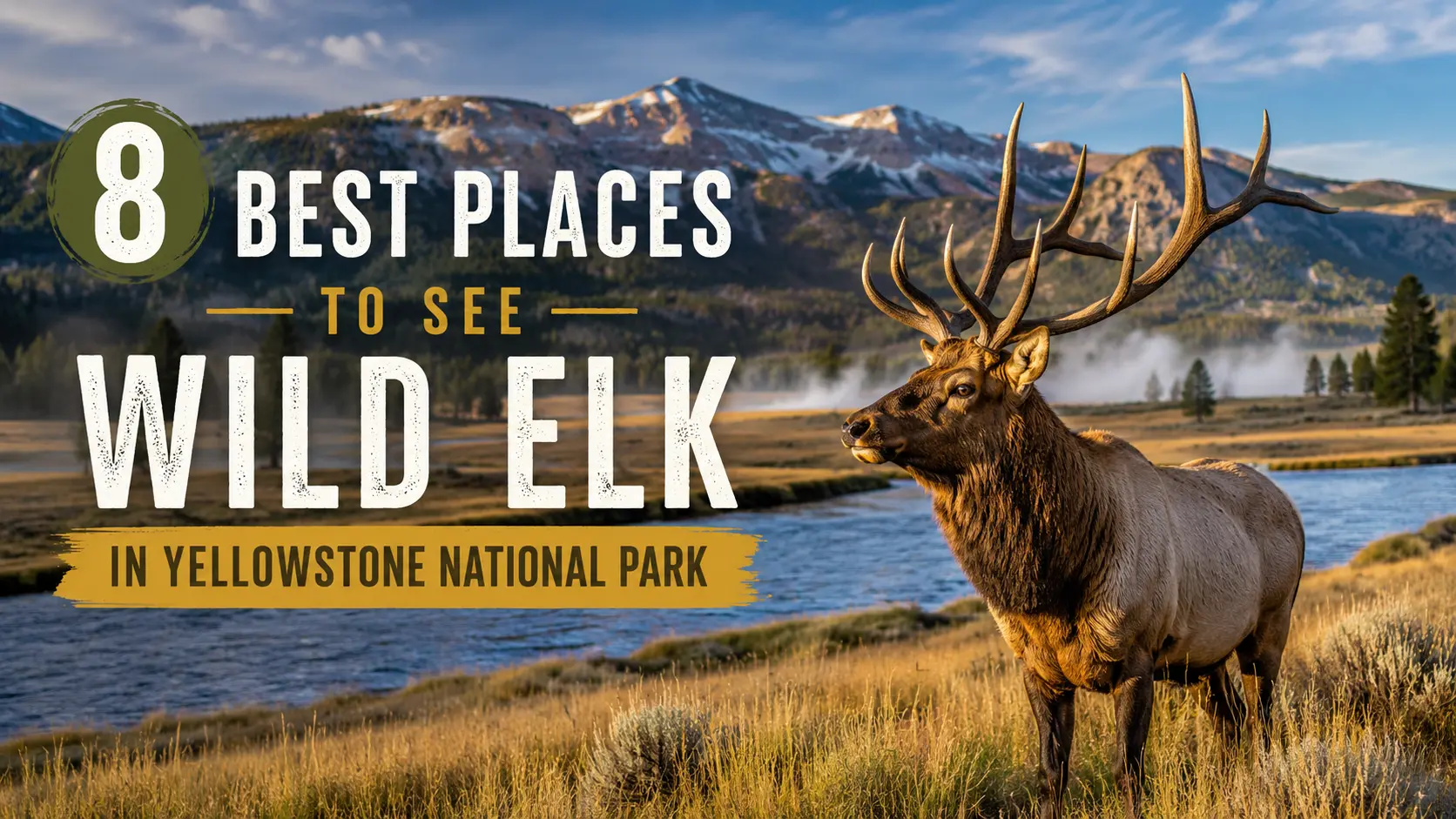
8 Best Places to See Wild Elk in Yellowstone National Park
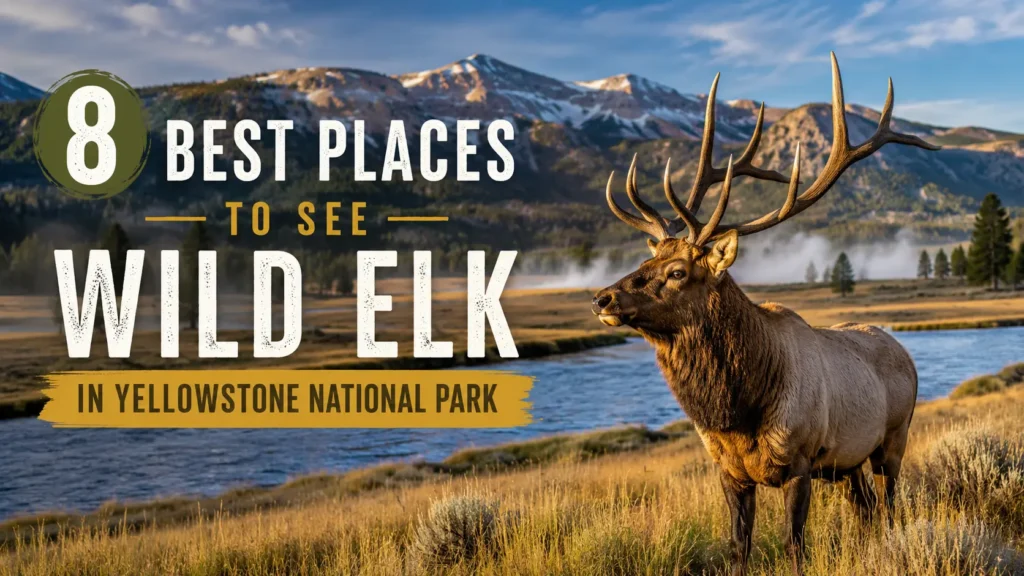
8 Best Places to See Wild Elk in Yellowstone National Park. There’s a sound that stops you dead in your tracks. It starts as a high pitched whistle, then descends into a deep, guttural bugle that echoes across the valley. That is the sound of wild elk in Yellowstone National Park, and it is one of the most thrilling wildlife experiences in America.
If you are planning a trip to Wyoming, Montana, or Idaho, spotting elk is often at the top of the bucket list. But here is the truth: While Yellowstone has thousands of elk, they aren’t always easy to find. They move with the seasons, the weather, and the crowds. That’s why I wrote this guide to help you skip the guesswork. I’ve mapped out the 8 Best Places to See Wild Elk in Yellowstone National Park, along with the exact times to go and the safety rules you cannot ignore.
Let’s hit the road and find some giants.
Why Yellowstone is the Elk Capital of America
Before we dive into the hotspots, let’s talk about why this park is so special. Yellowstone is home to the largest herd of elk in the United States roughly 10,000 to 20,000 animals depending on the season. These creatures are the true locals. You’ll find them grazing in meadows, wading through rivers, and even strolling through parking lots if you’re lucky (or unlucky, depending on your patience for traffic jams).
Unlike bears or wolves, elk are active during the day. That makes them perfect for family viewing. But here’s the catch: They are wild, unpredictable, and fast. Knowing where to look cuts your search time in half.
Best Time of Year to See Elk in Yellowstone
Timing is everything. You can stand in the perfect spot, but if it’s the wrong season, you’ll be staring at empty grass.
- Spring (April–June): Elk move to lower elevations to give birth. Look for cows (females) protecting their spotted calves. Keep your distance moms are aggressive.
- Summer (July–August): Herds split up. You’ll see smaller groups near rivers and meadows early in the morning.
- Fall (September–October): This is the golden window. The rut (mating season) means bulls are bugling, fighting, and herding cows. You will hear them before you see them.
- Winter (November–March): Most elk migrate north of the park to the National Elk Refuge in Jackson. Only a hardy few stay near geothermal areas for warmth.
Pro tip: Arrive at sunrise (6:00–7:30 AM) or two hours before sunset. Elk rest during the hot middle of the day.
The 8 Absolute Best Places to See Wild Elk in Yellowstone
I’ve ranked these spots by reliability, scenery, and ease of access. Some are famous. A few are hidden gems even locals love.
1. Mammoth Hot Springs The Year Round Winner
If you only have one day in the park, go here. Mammoth Hot Springs is the most consistent place to see elk in every season. The elk love the grassy lawns near the historic hotel and terraces. Why? The geothermal heat keeps the ground warmer, and there are fewer predators.
- Best time: Dawn or dusk, especially in fall.
- What to expect: Large bulls lounging right next to boardwalks. Park rangers often stand nearby to keep crowds safe.
- Warning: Do not honk your horn or approach. Every year, tourists get charged here.
2. Lamar Valley The Serengeti of North America
Lamar Valley is famous for wolves, but it is just as good for elk. This wide, open valley gives you miles of visibility. Bring binoculars or a spotting scope. In September, the bugling echoes off the hills like a nature symphony.
- Best time: Early morning (before 8 AM) or late evening.
- Where to pull over: Any turnout near Slough Creek or the Lamar River bridge.
- Bonus: You might see elk carcasses in winter (brutal but fascinating wolves eat well here).
3. Madison River Valley Underrated and Peaceful
Most tourists rush through Madison Junction on their way to Old Faithful. That’s a mistake. The meadows along the Madison River hold elk all summer and fall. The light at sunset turns the water gold, and the elk stand right in the river, cooling off.
- Best time: September evenings.
- Exact spot: Between Madison Campground and West Yellowstone entrance.
- Why it’s a hidden gem: Fewer photographers than Lamar Valley.
4. Hayden Valley The Classic Midday Option
Hayden Valley is the busiest wildlife corridor in the park. Yes, you will sit in a bear jam (traffic jam caused by wildlife). But it’s worth it. Elk graze here from June through October. The difference? You can see them as late as 10 AM, unlike other spots where they vanish by 7 AM.
- Best time: 7–10 AM.
- Look for: Bison elk mixed herds. They often graze side by side.
- Pro tip: Pull into the Grizzly Overlook turnout. Scan the far treeline.
5. Norris Geyser Basin The Unexpected Spot
People come to Norris for steam vents and acidic pools, not elk. But the forest edges around Norris are prime hiding spots for bulls during the summer rut. I’ve watched a 6×6 bull (meaning six points on each antler) walk within 50 yards of the boardwalk while tourists stared at a geyser.
- Best time: Late afternoon.
- Quiet tip: Walk the Back Basin trail. Elk bed down in the trees just off the path.
6. Gibbon Falls Area Small But Reliable
Just south of Norris, the Gibbon River cuts through a narrow canyon. The meadows near Gibbon Falls are small, but elk herds of 20–30 animals gather here every September. The bonus? Waterfalls in your photos.
- Best time: Sunset.
- Parking: Small pullout on the west side of the road. Arrive early.
7. West Thumb Geyser Basin Lake Views and Elk
Most people skip West Thumb because it’s “just another geyser basin.” Their loss. The elk here graze along the shoreline of Yellowstone Lake. You get a reflection shot of a bull elk with a giant lake and mountains behind him.
- Best time: June (calves are tiny and adorable).
- Safety note: The boardwalks are narrow. If an elk walks onto the path, back away slowly.
8. 7Mile Bridge (Between Madison and West Yellowstone) The True Hidden Gem
Almost nobody talks about this spot. Seven miles east of the West Yellowstone entrance, there’s a small bridge over the Madison River. In mid September, at exactly 6:30 PM, I have seen bulls wade across the river every single night. No crowds. No rangers. Just you, the river, and the bugle.
- Best time: September, 1 hour before sunset.
- How to find it: From West Yellowstone, drive 7 miles east. Look for a small dirt turnout on your left after the bridge.
How to Stay Safe While Watching Elk (Non-Negotiable Rules)
Elk are not deer. A full-grown bull weighs 700–1,000 pounds. A cow will stomp you into the ground if she thinks her calf is in danger. I’ve seen tourists get within 10 feet for a selfie. That is how people get gored.
Follow these rules every single time:
- Stay 75 feet away (25 yards). That’s two bus lengths.
- During the fall rut (Sept–Oct), make it 100 feet. Bulls are hormonal and aggressive.
- Never get between a cow and her calf. The calf will be on the ground hiding. If you see a lone cow staring at you, you are too close.
- If an elk raises its ears or stomps a hoof, back up now. That’s a warning.
- Carry bear spray. It works on elk too.
What to Bring for the Perfect Elk Watching Trip
You don’t need fancy gear, but a few items make the difference between a blurry dot and a National Geographic moment.
- Binoculars (8×42 or 10×42). This is non negotiable. Elk are often 200 yards away.
- Spotting scope if you want to see antler details from a safe distance.
- Camera with a telephoto lens (300mm minimum).
- Layered clothing. Mornings are freezing. Afternoons are warm.
- Sunscreen and a hat. You’re at 6,000–8,000 feet elevation.
- Snacks and water. Gas stations are few and far between.
- Paper map. Cell service is almost nonexistent.
Common Mistakes Tourists Make (And How to Avoid Them)
I see these errors every single week. Don’t be that person.
- Sleeping in. Elk vanish by 9 AM. You must be in position at sunrise.
- Stopping in the middle of the road. Pull completely off the pavement. Use designated turnouts.
- Getting out of the car near a bull. In fall, stay inside your vehicle unless you’re in a crowded, ranger patrolled area like Mammoth.
- Only looking at the main road. Elk hide in treelines 50–100 yards off the pavement. Scan the edges.
- Forgetting ear protection. The bugle can hit 90 decibels up close. It’s loud.
Best Elk Photography Tips for Non Professionals
You don’t need a $5,000 camera. Your iPhone or basic DSLR works fine if you follow these tips.
- Shoot during golden hour (first hour of light, last hour before sunset).
- Use burst mode. Elk move fast. Hold the shutter button down to take 10 photos per second.
- Focus on the eyes. A sharp eye makes a bad photo look good.
- Include the landscape. A tiny elk in a huge valley tells a better story than a zoomed in headshot.
- Never use flash. It startles them and is illegal in national parks.
Where to Stay Near the Best Elk Spots
You can’t see elk at sunrise if you’re driving two hours from Jackson. Stay inside the park or at a gateway town.
Inside the park (best option):
- Mammoth Hot Springs Hotel (steps from elk)
- Canyon Lodge (central to Hayden and Lamar)
- Lake Yellowstone Hotel (near West Thumb)
Outside the park (budget-friendly):
- West Yellowstone, MT (closest to Madison and 7Mile Bridge)
- Gardiner, MT (5 minutes from Mammoth)
- Cooke City, MT (east entrance near Lamar Valley)
Book 6–12 months in advance. Park lodging sells out the day it opens.
Also Read :How to Avoid Timed Entry Lines in US National Parks 2026
Etiquette for Watching the Fall Rut (Bugling Season)
The rut is magical. It’s also stressful for the animals. Hundreds of people with cameras can push elk off their feeding grounds. Here’s how to watch without harming them.
- Stay quiet. No yelling, whistling, or howling to make them bugle.
- Don’t block the road to watch two bulls fight. Pull over safely or keep driving.
- Keep dogs at home. Pets are not allowed on most trails or near wildlife.
- Leave your drone in the car. Drones are banned in all national parks.
What If You Don’t See Elk? (Backup Plans)
Some days the elk just don’t show up. If you strike out, here are three backup wildlife experiences within the park.
- Bison in Hayden Valley. You literally cannot miss them. Hundreds of bison block the road daily.
- Pronghorn in Lamar Valley. Fastest land mammal in North America. Look for white rumps.
- Sandhill cranes in the Madison River. Big, gray, prehistoric-looking birds. Elegant and loud.
How This Guide Compares to Other Yellowstone Elk Resources
Most blog posts give you two or three generic spots (“Lamar Valley and… that’s it”). This list gives you eight, including a hidden gem (7Mile Bridge) that even some park rangers don’t mention. I’ve also included exact times, safety rules, and photography tips not just a list of names.
If you follow this guide, you will see elk. Not maybe. Not hopefully. You will.
Frequently Asked Questions (FAQs)
What is the single best month to see elk in Yellowstone?
September. The rut brings bulls out into the open, and the bugling is constant. October is also good, but some herds start migrating south.
Can I see elk in Yellowstone in winter?
Yes, but only a few hundred stay. Look near Mammoth Hot Springs and the Norris Geyser Basin, where geothermal heat keeps grass available.
Is it safe to hike alone in elk territory?
Generally yes, but avoid hiking alone during the fall rut. Bulls have charged hikers on trails. Stick to popular trails and carry bear spray.
How early should I arrive at Lamar Valley for elk?
Be in position by 6:00 AM in summer, 6:30 AM in September. The elk are most active for only 90 minutes after sunrise.
Do elk ever attack cars?
Rarely. But during the rut, a bull has charged a moving car. More commonly, they walk into roads. Slow down and never honk.
Can I use a drone to get elk footage?
No. Drones are banned in all US national parks. You will face fines up to $5,000.
What’s the difference between elk and deer?
Elk are much larger (700–1,000 lbs vs. 150–300 lbs). Elk have a tan body with a dark brown neck and a white rump patch. Deer are smaller and reddish brown.
Are there elk in the Old Faithful area?
Occasionally, but not reliably. Too many tourists and geothermal hazards keep them away. Stick to Mammoth or Lamar.
What should I do if an elk charges me?
Run. Do not play dead. Put a tree, car, or large rock between you and the elk. Bear spray is effective spray when the elk is 15–20 feet away.
Can I see elk calves in Yellowstone?
Yes, from late May through June. Be extra cautious. Cow elk with calves are more dangerous than bulls. Never approach a spotted calf on the ground. The mother is watching you.
Conclusion
Finding the 8 Best Places to See Wild Elk in Yellowstone National Park comes down to three things: timing, patience, and knowing where to stand. Hit Mammoth Hot Springs at sunrise in September. Scan the Madison River at sunset. Pull over at that tiny bridge near West Yellowstone. And for the love of all that is wild, stay 75 feet away.
Elk are the heartbeats of Yellowstone. Their bugles are the soundtrack of autumn in the Rockies. Go see them. Go listen. But go respectfully.
Now it’s your turn. Have you ever heard a bull elk bugle up close? Or do you have a secret spot I missed? Drop a comment below I read every single one. And if this guide helped you, share it with a friend who needs to get off the couch and into the park.