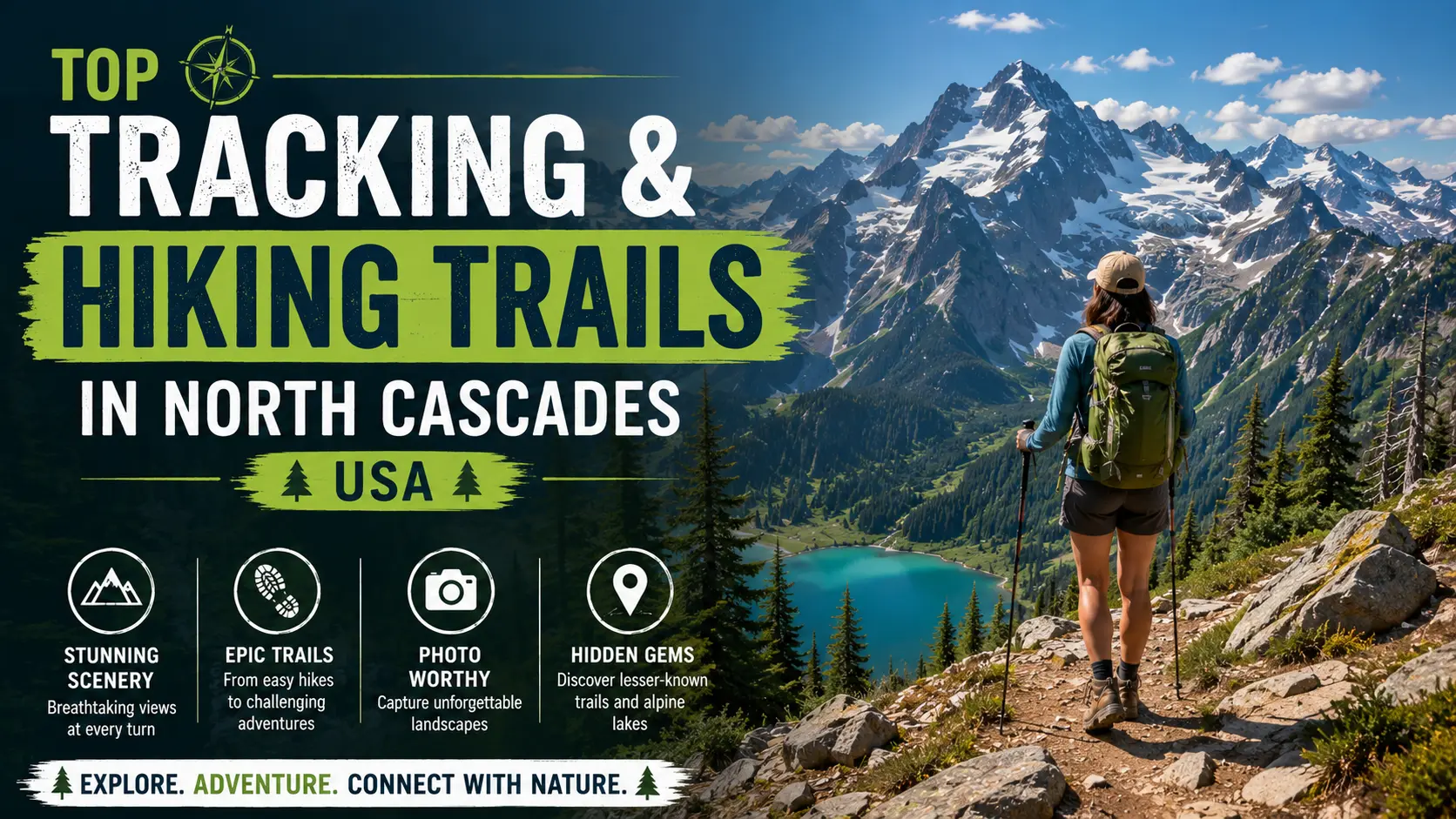
Top Tracking and Hiking Trails in North Cascades USA
Top Tracking and Hiking Trails in North Cascades USA. Most people drive right past the North Cascades on their way to Seattle or Vancouver. Their loss. Yours is the biggest gain in the Pacific Northwest.
Locals call it the “American Alps” and for good reason. Jagged granite peaks, over 300 glaciers (that’s more than any other US park outside Alaska), and turquoise rivers so clear you can count the stones at the bottom. But here’s the secret the postcards don’t tell you: the Top Tracking and Hiking Trails in North Cascades USA are rarely crowded. You won’t fight for parking at 6 AM like in Yellowstone.
I’ve spent three summers living out of a van just outside Marblemount. I’ve been lost, rained on, sunburnt, and gifted with views that made me forget to breathe. In this guide, I’m sharing the absolute best trails from easy day hikes to multi day epics so you can skip the tourist clutter and step straight into the wild heart of Washington State.
Ready to lace up? Let’s go find some silence.
Why the North Cascades Deserve Your Hiking Boots (More Than Rainier)
Before we drop trail names, a quick reality check. The North Cascades Complex (National Park + Recreation Areas) is rugged. This isn’t a paved promenade. But that’s exactly why Top Tracking and Hiking Trails in North Cascades USA feel like true discovery.
- Low crowds, high reward: In 2023, North Cascades National Park saw 30,000 visitors. Compare that to Zion’s 5 million. You do the math.
- Real wildlife: Black bears, mountain goats, marmots, and if you’re lucky, a wolverine.
- Glacier access at lower elevations: You can touch ice in July without mountaineering gear on some trails.
Best time to visit: Late July through early October. Snow lingers high. Mosquitoes own June. September is gold cool mornings, no bugs, larches turning yellow.
The 10 Top Tracking and Hiking Trails in North Cascades USA (From Easy to Expert)
I’ve ranked these by effort, not beauty. Because every single one will steal your breath.
Maple Pass Loop The Classic That Delivers Every Time
Difficulty: Moderate
Distance: 7.2 miles loop
Elevation gain: 2,000 ft
Trailhead: Rainy Pass (Highway 20, milepost 158)
If you only hike one trail here, make it Maple Pass. You’ll climb through old growth forest, pop above treeline, and stare down at Lake Ann a perfect teal mirror. In late September, the subalpine larches turn flaming gold.
Pro tip: Go counter clockwise. The steepest climb comes first, but you get the panoramic views on a gradual descent. And bring a windshell the pass is exposed and can whip up sudden gusts.
Parking: Arrive before 8 AM or after 3 PM. The lot fills fast, even on weekdays.
Cascade Pass Trail The “Shortest Path to the High Country”
Difficulty: Moderate to strenuous
Distance: 7.4 miles out & back (to Sahale Arm junction)
Elevation gain: 1,800 ft
Trailhead: Cascade River Road (gravel for last 23 miles)
This is the crown jewel. The first 3.5 miles switchback through meadows exploding with wildflowers in August. Then you hit Cascade Pass a flat, rocky saddle where you’ll hear ice crack from nearby glaciers.
Don’t stop there. Continue another 1.5 miles (steep) onto Sahale Arm. You’ll walk a knife edge ridge with 360° peaks. Go early to beat afternoon thunderstorms.
Road warning: Cascade River Road is rough. High clearance recommended. Check the park’s road status before leaving.
Thunder Knob Trail Best Easy Hike for Sunrise
Difficulty: Easy
Distance: 3.6 miles out & back
Elevation gain: 635 ft
Trailhead: Colonial Creek Campground (Diablo Lake)
Short. Sweet. Massive payoff. Thunder Knob gives you a panoramic view of Diablo Lake that famous bright turquoise color caused by glacial flour. Start at 5:30 AM in summer, reach the knob by 6:15, and watch the sun paint the peaks pink.
Ideal for: Families, recovering legs, or a quick win before driving home.
Hidden Lake Lookout A Climber’s Favorite (No Rope Needed)
Difficulty: Strenuous
Distance: 8.8 miles out & back
Elevation gain: 3,500 ft
Trailhead: Hidden Lake Trailhead (off Sibley Creek Road)
This one nearly broke me. But standing inside a historic fire lookout perched on a granite spire, with clouds below your feet? Worth every sweat drop.
Critical tips:
- The last 0.5 miles is class 3 scrambling (using hands on rock). Not for vertigo sufferers.
- Bring 3 liters of water minimum. No reliable streams after the first mile.
- The road in requires AWD and high clearance. Park below if you have a sedan and add 2 miles.
Blue Lake Trail Short, Sweet, and Insanely Photogenic
Difficulty: Easy
Distance: 4.4 miles out & back
Elevation gain: 1,050 ft
Trailhead: Blue Lake Trailhead (Highway 20, milepost 161)
Blue Lake is the hike you bring your non-hiker friends on. Gentle grade, well maintained, and ends at a jewel toned lake with Liberty Bell Mountain reflected perfectly. Bring a picnic. Stay for an hour.
Best timing: 10 AM : 2 PM for sunlight on the mountain face.
Thornton Lakes Trail For Solitude Seekers
Difficulty: Strenuous
Distance: 8.8 miles out & back
Elevation gain: 2,350 ft
Trailhead: Thornton Lakes Road (off Highway 20)
This trail hurts. Old growth, then steep talus fields, then a boot sucking mud patch. But then… you pop out at the first Thornton Lake. Emerald water. No cell signal. Maybe one other group all day.
Insider note: Continue another mile to the upper lake for better camping and peak views. Bring a bug net in July.
Park Creek Pass via Panther Creek Off Trail Adventure
Difficulty: Very strenuous (route finding required)
Distance: 16 miles out & back
Elevation gain: 4,200 ft
Trailhead: Panther Creek (off Highway 20, near Ross Lake)
This isn’t a maintained trail. It’s a route. You’ll navigate over downed logs, wade creeks, and push through devil’s club. But Park Creek Pass delivers a view of 9,000 foot peaks that feels stolen.
Only for: Experienced navigators with GPS and map skills. Do not attempt solo unless you’ve done similar scrambles.
Desolation Peak Lookout The Kerouac Hike
Difficulty: Strenuous
Distance: 13.2 miles out & back (from East Bank Trailhead)
Elevation gain: 5,200 ft
Trailhead: East Bank Trailhead (Ross Lake, requires boat shuttle)
Jack Kerouac spent 63 days here as a fire lookout in 1956. You’ll understand why when you reach the top. The trail is relentless switchbacks through burn zones and berry patches but the 360° view of Ross Lake and Hozomeen Mountain is religious.
Logistics: You must take the Ross Lake Resort water taxi (seasonal, book ahead) or hike 10 extra miles around the lake. Worth every dollar for the boat.
Easy Pass Trail Steep but Short Grind
Difficulty: Moderate to strenuous
Distance: 6.8 miles out & back
Elevation gain: 2,500 ft
Trailhead: Easy Pass Trailhead (Highway 20, milepost 151)
Don’t let the name fool you. “Easy Pass” is a cruel joke. The first 2.5 miles are straight up. But then you crest into a basin filled with wild blueberries (August) and a waterfall dropping 1,000 feet into Fisher Creek.
Bear safety: This area is active with black bears. Carry spray. Make noise.
McGregor Mountain Trail The Unsung Epic
Difficulty: Strenuous
Distance: 14.2 miles out & back
Elevation gain: 5,800 ft
Trailhead: Bridge Creek Trailhead (Stehekin)
This is for the masochists. McGregor isn’t famous because it’s punishing. But from the summit, you see the entire Stehekin Valley, Lake Chelan, and Glacier Peak. You’ll likely have the mountain to yourself all day.
Access: Requires a ferry to Stehekin (from Chelan, 4 hours one way). Plan a multi day trip. Worth it for the total isolation.
Also Read : What Is the Cheapest Month to Fly to America 2026
Essential Gear for the Top Tracking and Hiking Trails in North Cascades USA
You don’t need a mountaineering axe for most of these, but don’t show up in sneakers either. Here’s my stripped down pack list after 200+ miles in this range.
Non negotiables:
- Ten Essentials: Navigation (map + GPS app), headlamp, sun protection, first aid, knife, fire starter, emergency shelter, extra food, extra water, extra layers.
- Boots over trail runners: The trails are rocky and rooty. Ankle support saves trips.
- Layered clothing: Start in a t-shirt, pack a fleece, rain jacket, and puffy. Weather changes in 10 minutes.
- Bear spray: Even for day hikes. I’ve seen bears on Maple Pass and Thornton.
- Water filter or tablets: Streams are abundant, but don’t drink untreated even from crystal-clear creeks (beaver fever is real).
Bonus tip: Download offline maps on AllTrails or Gaia. There is zero cell service on 90% of these trails.
Hidden Gems Nearby Where to Sleep and Eat
You’ve earned a hot meal and a dry bed. Here’s where locals actually go.
Camping (free & paid):
- Colonial Creek Campground (Diablo Lake): First come, first served. Arrive Thursday for a weekend spot.
- Milepost 158 pullouts (Rainy Pass): Dispersed camping allowed. No services. Pack out everything.
- Grandy Creek Campground (Marblemount): Quiet, forested, $12/night.
Food that doesn’t suck:
- Marblemount Diner: Greasy spoon breakfast. The hiker burrito will fuel a full day.
- Wild Grain Bakery (Concrete, WA): Detour 20 minutes. Their sourdough and cinnamon rolls are legendary.
- Eastsound (on Orcas Island accessible via ferry): Not in the park, but if you’re driving up, stop at Brown Bear Baking for almond croissants.
Lodging:
- Buffalo Run Inn (Marblemount): Basic but clean. Hot showers. Hiker friendly owner who gives intel on trail conditions.
- Ross Lake Resort: Floating cabins on the lake. Book 6+ months in advance.
Safety & Leave No Trace Don’t Be That Tourist
I’ve watched people hike Cascade Pass in jeans and flip flops. Don’t be them. The North Cascades are wild, not Disneyland.
- Mountain weather: Afternoon thunderstorms roll in fast. If you hear thunder above treeline, turn around immediately.
- Stream crossings: Spring runoff (June – early July) turns innocent creeks into death traps. Cross early morning when flows are lowest.
- Leave No Trace: Pack out all trash, including toilet paper (use a wag bag if no pit toilet). Bury human waste 6 inches deep, 200 feet from water.
- Wildlife: Never feed marmots or ground squirrels. They’ll chew through your backpack for a salt lick.
Emergency: No cell service. Tell someone your itinerary. The nearest ranger station is at Marblemount (North Cascades Visitor Center). Satellite messengers (Garmin inReach, Zoleo) are smart investments.
Frequently Asked Questions (FAQs)
Do I need a permit to hike the top tracking and hiking trails in North Cascades USA?
No permit is required for day hiking in North Cascades National Park. Overnight backcountry permits are required and available via Recreation.gov (reservations open in spring). Some areas like Enchantments (adjacent) have a lottery system.
What’s the best month for hiking North Cascades?
September. Crowds thin, larches turn gold, mosquitoes die, and the weather is stable (60-70°F days, 40°F nights). Late July and August are also great but busier.
Can I hike the North Cascades in early June?
Yes, but expect snow above 4,500 feet. Maple Pass will be snow covered until mid July. Stick to lower trails like Thunder Knob or Blue Lake (snow melts by late June).
Are these trails dog friendly?
Most national park trails do NOT allow dogs (to protect wildlife and pack animals). The exceptions are a few trails in Ross Lake NRA and National Forest lands. Check each trailhead sign. Leave your pup at home unless specified.
How difficult is Sahale Arm compared to Maple Pass?
Sahale Arm is harder. Maple Pass has 2,000 ft gain. Sahale Arm from Cascade Pass adds another 1,500 ft on rocky, exposed terrain. Do Maple Pass first as a warm-up.
Is Highway 20 open year round?
No. Highway 20 (North Cascades Highway) typically closes from late November to mid-April due to snow at Washington Pass. Check WSDOT’s app before planning a spring trip.
Where can I see larches (golden trees) in North Cascades?
Maple Pass Loop, Cutthroat Pass, and Blue Lake Trail all have larches. Peak colors are the last week of September through first week of October.
Do I need a GPS or can I rely on trail signs?
Trail signs are present at major junctions, but many routes (like Thornton Lakes) have faded markers. Download offline maps on AllTrails or Gaia GPS. Cell service is nonexistent.
What’s the closest airport to North Cascades National Park?
Seattle Tacoma International Airport (SEA). Drive time is 2.5 hours to Marblemount. Bellingham International (BLI) is closer (1.5 hours) but has fewer flights.
Is the water safe to drink from streams?
No. Even clear glacial streams can contain Giardia (beaver fever). Always filter, boil, or use purification tablets. I use a Sawyer Squeeze or Katadyn BeFree.
Conclusion
The Top Tracking and Hiking Trails in North Cascades USA aren’t just lines on a map. They’re medicine for the part of you that’s tired of screens, traffic, and noise. Whether you tackle Sahale Arm or just stroll to Blue Lake with a sandwich, you’ll leave with glacier-silt under your nails and a quiet kind of joy.
So pick a trail from this list. Pack that bear spray. Drive Highway 20 with the windows down. And when you’re standing on a ridge with no one else for miles, whisper a thank you to the mountains and to yourself for showing up.
Now I want to hear from you. Which of these trails are you adding to your bucket list? Or did I miss your favorite hidden hike? Drop a comment below. And if this guide helped you, share it with a friend who needs to escape the crowds.