13 Least Crowded National Parks in the US for True Solitude
13 Least Crowded National Parks in the US for True Solitude. Let’s be real for a second. Nobody saves up for a year, packs their car, and drives six hours just to sit in a traffic jam at a scenic overlook. But if you’ve tried to visit least crowded national parks in the US like Yellowstone or the Great Smokies lately, you know the secret is out. You’re fighting for parking spots at 8 AM and sharing a silent sunrise with fifty other strangers.
I’ve been there. Staring at a valley full of RVs, wondering where the “wild” went.
That’s when I started hunting for the quiet side of the National Park System. I’m talking about the forgotten corners, the desert stretches where the only noise is the wind, and the forests where the bears outnumber the people.
If your definition of a great adventure includes not seeing a selfie stick for 48 hours, you’ve come to the right place. Here is my curated, boots on the ground guide to the 13 least crowded national parks in the US the real hidden gems of America’s backyard.
Why “Crowded” is a Four Letter Word (And Solitude is King)
Before we dive into the maps, let’s talk about why you want the “least visited” list. In 2023, Great Smoky Mountains National Park saw over 13 million visitors. That’s a small city moving through the woods.
Meanwhile, the parks on this list saw fewer than 50,000 people total last year. That means you get:
- Wildlife sightings without the chorus line: Animals come out when the humans go home.
- First come, first served campsites: No lottery required.
- Actual silence: You hear your heartbeat, the crunch of gravel, and the echo of your own thoughts.
- No reservation drama: Most of these don’t need timed entry tickets.
Key Takeaway: “Least visited” does not mean “least beautiful.” It usually means “hardest to reach.” And that is exactly why I love them.
Gates of the Arctic National Park, Alaska
Annual Visitors: 9,000 (Yes, you read that right. Nine thousand.)
The Ultimate Test of Bushwhacking Skills
If you want a paved road, flush toilets, or a ranger station with a gift shop, turn back now. Gates of the Arctic is wilderness in the purest sense. Located entirely above the Arctic Circle, this park has no trails. No signs. No cell service. Just six million acres of jagged peaks, tundra, and braided rivers.
How to Get There (It’s Not Easy, But That’s The Point)
You have to fly into Fairbanks, then take a small bush plane to the tiny village of Bettles or Anaktuvuk Pass. From there, you get dropped off by float plane onto a lake. Then? You walk.
Best Time to Visit
June to August. The mosquitoes are brutal (bring a head net), but the midnight sun gives you 24 hours of daylight to explore.
Pro Tip: You don’t need technical climbing gear, but you do need to know how to read a topographical map and ford rivers. This is not a “first camping trip” destination. But if you do go, you will have an entire mountain range to yourself.
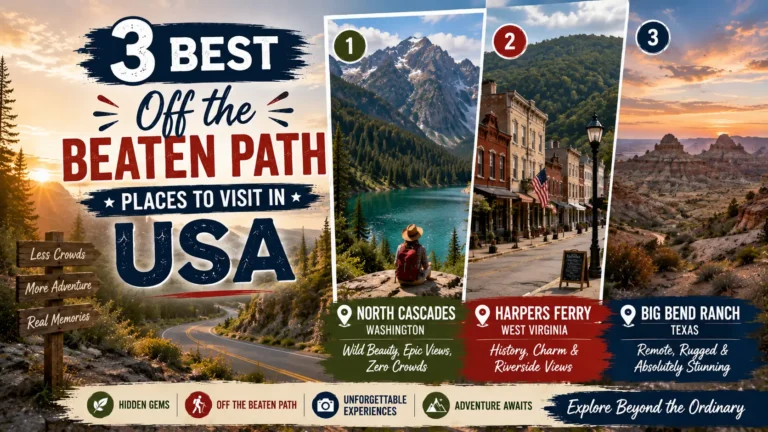
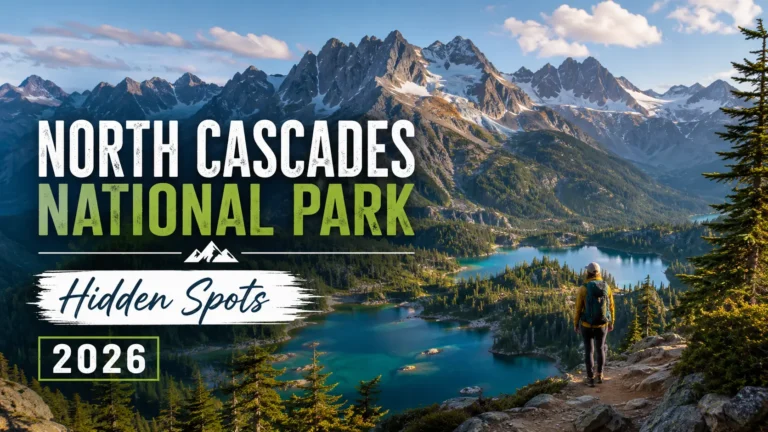
North Cascades National Park, Washington
Annual Visitors: 30,000 (Compare that to 3 million at nearby Mount Rainier)
The American Alps, Hiding in Plain Sight
Seattle locals love to keep this one a secret. Just three hours from the city, North Cascades is often called the “American Alps” for a reason. Jagged granite spires, over 300 glaciers (the most of any US park outside Alaska), and water so turquoise it looks photoshopped.
What You Need to See
- Ross Lake: Rent a canoe and paddle to a backcountry campsite. You’ll share the water with eagles, not jet skis.
- Cascade Pass Trail: The most popular hike here (35,000 annual hikers) would be a deserted trail in Yosemite.
Practical Tip
The park is open year round, but Highway 20 closes in winter due to snow. Plan for July through September for the full alpine experience.
Great Basin National Park, Nevada
Annual Visitors: 150,000
The Ancient Bristlecones and Underground Rivers
Nevada isn’t just Las Vegas and desert. Tucked near the Utah border, Great Basin is a vertical shock to the system. You drive across the flat basin, and suddenly, Wheeler Peak juts 13,000 feet into the sky.
Two Things You Can’t Miss
- The Bristlecone Pines: These are the oldest living things on Earth. Some trees here were seedlings when the Egyptians built the pyramids. Walk the Wheeler Peak Grove trail it’s humbling.
- Lehman Caves: A limestone cave system with shield formations you won’t see anywhere else. Tours are cheap and run year-round.
Best Time: Summer (June–Sept) for hiking. Spring/Fall for the caves (less heat).
Isle Royale National Park, Michigan
Annual Visitors: 25,000
Wolves, Moose, and a Ferry Ride to Nowhere
Isle Royale is a remote island in the middle of Lake Superior. It’s closer to Canada than the US. You can only get here by seaplane or ferry, and once you’re here, there are no cars. Just 170 miles of hiking trails and a unique predator prey study between the wolves and moose that live there.
How to Maximize Your Trip
- The Minong Ridge Trail: The hardest trail on the island. You need 4-5 days. You’ll see zero people.
- Stay on a houseboat: Rent a “houseboat” at Rock Harbor for a basecamp.
Warning
The weather on Superior changes instantly. A sunny 75°F morning can turn into a 45°F foggy rainstorm by noon. Pack layers, and pack wool.
Congaree National Park, South Carolina
Annual Visitors: 145,000
The Flooded Forest of the South
Most people drive past Congaree on I-77. Big mistake. This is the largest intact expanse of old growth bottomland hardwood forest in the southeastern US. In spring, it floods, and you have to paddle through the trees. In summer, it’s a bioluminescent wonderland.
The Best “Hidden” Activity
Firefly Viewing (May-June). Congaree is one of only a few places where you can see synchronous fireflies (they flash in unison). The park runs a lottery for tickets, but because it’s Congaree, the lottery is way easier to win than the Smokies.
Pro Tip: Rent a kayak at the outfitter outside the gate. The “Cedar Creek Canoe Trail” is a 15-mile loop that takes you through a flooded cathedral of 1,000 year old cypress trees.
Dry Tortugas National Park, Florida
Annual Visitors: 80,000
A Civil War Fort in the Middle of the Ocean
70 miles west of Key West lies a 19th century fort called Fort Jefferson. It’s surrounded by crystal clear water, coral reefs, and sea turtles. Because it requires a $200 seaplane or a 3-hour ferry ride, the crowds stay away.
The Overnight Secret
Most people do a day trip. Don’t.
Book a campsite (only 8 sites exist). Stay overnight. When the last ferry leaves at 3 PM, you and seven other tents have the entire 19th-century fort to yourselves. Sunset from the top of the fort walls is a religious experience.
Bring: Your snorkel gear. The moat wall is teeming with marine life.
Pinnacles National Park, California
Annual Visitors: 230,000
Condors and Cave Crawling
Just a 2 hour drive from San Francisco or San Jose, Pinnacles is proof that you don’t need to fly to Patagonia to see dramatic rock spires. This park is split into two sides (East and West) that don’t connect by road.
The Must Do Hike
Bear Gulch Cave to High Peaks Loop. You will crawl through a talus cave (bring a headlamp!) and emerge onto a ridge where California Condors (wingspan of 9.5 feet) soar directly over your head.
Best Time: Fall and Winter. Summer gets brutally hot (over 100°F). Spring is beautiful, but the wildflowers bring weekend crowds.
Kobuk Valley National Park, Alaska
Annual Visitors: 15,000
The Great Sand Dunes of the Arctic
I know what you’re thinking. Sand dunes? In Alaska? Yes. 25 square miles of towering golden sand dunes, surrounded by boreal forest and the Kobuk River. There are no roads, no trails, no rangers stationed here.
How to See the Caribou Migration
This is the only place to witness the Western Arctic Caribou herd (over 200,000 animals) cross the dunes. You need a bush plane from Kotzebue.
The Magic: You land on the river sandbar. You walk to the dunes. You look up, and the sky is full of antlers.
Warning: Grizzly bears live here. Know how to use bear spray.
Guadalupe Mountains National Park, Texas
Annual Visitors: 215,000
The Highest Peak in Texas, With No Line
Everyone goes to Big Bend. Smart travelers go to Guadalupe. This park contains the “Permian Reef,” a fossilized 260 million year old limestone reef that looks like a giant battleship rising from the Chihuahuan Desert.
The Hike You Came For
Guadalupe Peak Trail (8.4 miles round trip). It’s a steep, unrelenting climb to the “Top of Texas.” The reward is standing on the highest point between here and Colorado. On a clear day, you can see the Salt Flats.
Pro Tip: Stop at the Pine Springs Campground. It’s basic (vault toilets, no hookups), but it’s $8 a night and puts you right at the trailhead.
Lake Clark National Park, Alaska
Annual Visitors: 18,000
Where the Volcanoes Meet the Salmon
Lake Clark is what you imagine when you close your eyes and think “Alaska.” Active volcanoes (Redoubt Volcano), turquoise lakes, coastal brown bears fishing for salmon, and waterfalls that drop straight into the ocean.
The Ultimate Bear Viewing
If you want to see bears without the insanity of Brooks Falls (Katmai), fly to Silver Salmon Creek or Chinitna Bay in Lake Clark. The bears here are used to fishermen, not tourists. You can watch sows teach cubs to fish from 50 yards away.
Logistics: Fly out of Port Alsworth. Expect to pay $500-$800 for a flight tour, but considering Katmai charges the same for a lottery ticket, it’s a steal.
Theodore Roosevelt National Park, North Dakota
Annual Visitors: 700,000 (Wait, that’s high for this list, but hear me out)
The Quiet Badlands
700,000 sounds like a lot until you remember Yellowstone does 4 million. The crowds at “TR” are confined to the scenic loop road. You can escape them instantly by hiking just one mile into the backcountry.
The Hidden Loop
Skip the South Unit (where everyone goes). Drive 70 miles north to the North Unit. The landscape is sharper, the colors are redder, and the Achenbach Trail requires scrambling and route finding.
Bonus: Wild horses roam freely here. Not burros. Wild Spanish mustangs.
Best Time: September. The heat breaks, the mosquitoes die, and the bison are in full rut (watch from your car!).
National Park of American Samoa
Annual Visitors: 5,000
The South Pacific Paradise on US Soil
Yes, you need a passport (American Samoa has its own immigration). Yes, the flight is long (10+ hours from Hawaii). But you are landing on a tropical island where the rainforest meets the reef.
Also Check : Best Tourist SIM Card in USA for Foreigners 2026
What Makes It “Hidden”
You hike to the Mount ’Alava Trail through mud that stains your shoes purple. You snorkel at Ofu Beach (voted the most beautiful beach you’ve never heard of). You share the trail with flying foxes (giant fruit bats with 3-foot wingspans).
Serious Tip: There are almost no rental cars. You need to make friends with a local or hire a guide in Pago Pago. It’s expensive to get here, but it’s the most remote US national park on Earth.
Voyageurs National Park, Minnesota
Annual Visitors: 230,000
A Water based Wilderness
Voyageurs is 40% water. The only way to see it is by houseboat, motorboat, kayak, or (in winter) snowmobile. There are no roads inside the park. You park your car at the visitor center, load your boat, and disappear into the Canadian Shield.
The Northern Lights Experience
Because there is zero light pollution over the Kabetogama Peninsula, this is one of the best places in the Lower 48 to see the Aurora Borealis.
Fall (September-October) is the sweet spot. The water is still warm enough for paddling, the bugs are gone, and the skies are dark enough for the lights to dance.
Practical Toolkit: How to Visit the Least Crowded National Parks in the US
Since you’re now planning a trip to one of these 13 gems, let’s get tactical. Visiting remote parks requires a different gear list than a drive up campsite.
Checklist for Solitude Seekers:
- Download Offline Maps: You will lose cell signal immediately. Use Gaia GPS or AllTrails Pro.
- Pack a Satellite Messenger: I never hike remote trails without a Garmin inReach (or similar). You can’t yell for help in the Arctic.
- Bear Safety: For any park north of Texas (and including Texas), carry bear spray. Know how to pull the safety clip.
- Water Filtration: Most of these parks have pristine streams. A Katadyn or Sawyer filter saves you carrying 5 gallons of water.
- Resilience: When there is no ranger station for 100 miles, you are the ranger. Triple check your vehicle’s spare tire and oil.
Now I want to hear from you.
Have you visited any of these hidden spots? Did I miss your favorite offbeat park (looking at you, Channel Islands fans)? Drop a comment below and let’s build the ultimate solitude bucket list. And if this guide helped you, share it with a friend who needs to unplug.
Frequently Asked Questions (FAQs)
Which of the least crowded national parks in the US is easiest to drive to?
Congaree (South Carolina) and Pinnacles (California) are the most accessible by paved roads. Both are within 2 hours of major airports (Columbia, SC and San Jose, CA).
Are these parks free to enter?
Most of them are free because they lack staffed entrance gates. However, Great Basin, North Cascades, and Pinnacles require a standard National Park pass ($30/vehicle) or the America the Beautiful Pass.
What is the absolute least visited national park?
National Park of American Samoa (5,000 visitors) is technically the least visited. But among the contiguous 48 states, Isle Royale (Michigan) and North Cascades (Washington) are the quietest.
Can I bring my dog to these parks?
Most National Parks are very strict dogs are usually only allowed in parking lots and paved roads, not on trails. Exceptions: In Gates of the Arctic (no rules exist, but it’s dangerous) and Voyageurs (dogs allowed on houseboats and frozen lakes in winter). Always check the specific park’s pet policy before driving.
Which park is best for solo female travelers?
Theodore Roosevelt (North Dakota) and Great Basin (Nevada). Both have reliable cell service near the visitor centers, well marked trails, and a high number of RVs/campers (safety in numbers) without being overcrowded.
What is the best park for beginners who want solitude?
Congaree National Park, SC. It’s flat, impossible to get lost (the boardwalk loop is 2.4 miles), and you can see the entire park in a day. It gives you the “remote feel” without the risk of death.
When is the worst time to visit these parks (crowd wise)?
Summer (Memorial Day to Labor Day) is still the busiest season, even for these hidden gems. To get true solitude, visit in September or early October. The weather is better anyway.
Do I need a 4×4 vehicle?
For Gates of the Arctic, you need a plane. For Dry Tortugas, you need a boat. For the others, a standard sedan is fine to get to the main visitor center, but a high-clearance vehicle helps for backcountry dirt roads (specifically in North Cascades and Great Basin).
Can I see the Northern Lights in any of these parks?
Yes! Voyageurs (Minnesota) and Isle Royale (Michigan) are the best in the Lower 48. For the strongest lights, you need to go to Gates of the Arctic or Kobuk Valley in Alaska between September and March.
How do I find backcountry campsites if no reservation system exists?
For parks like Gates of the Arctic or North Cascades, you practice “Leave No Trace” dispersed camping. For parks like Isle Royale or Voyageurs, you self register at a metal box at the trailhead. Bring a pen and cash for the fee envelope.
Conclusion
Look, the famous parks are famous for a reason. The Grand Canyon is awe inspiring. Yosemite’s El Capitan makes you weep. But if you ask me what changed my soul? It wasn’t standing in a shuttle line.
It was sitting alone on a ridgeline in Great Basin watching the Milky Way rise over 4,000 year old trees.
It was kayaking through a flooded forest in Congaree as the owls started hunting at dusk.
It was holding onto a bush plane seat in Alaska, realizing the map below me had no roads.
The 13 Least Crowded National Parks in the US for True Solitude aren’t the leftovers. They are the real frontiers. They require a little more effort, a little more money for gas and flights, and a lot more courage to go off the grid. But the reward?