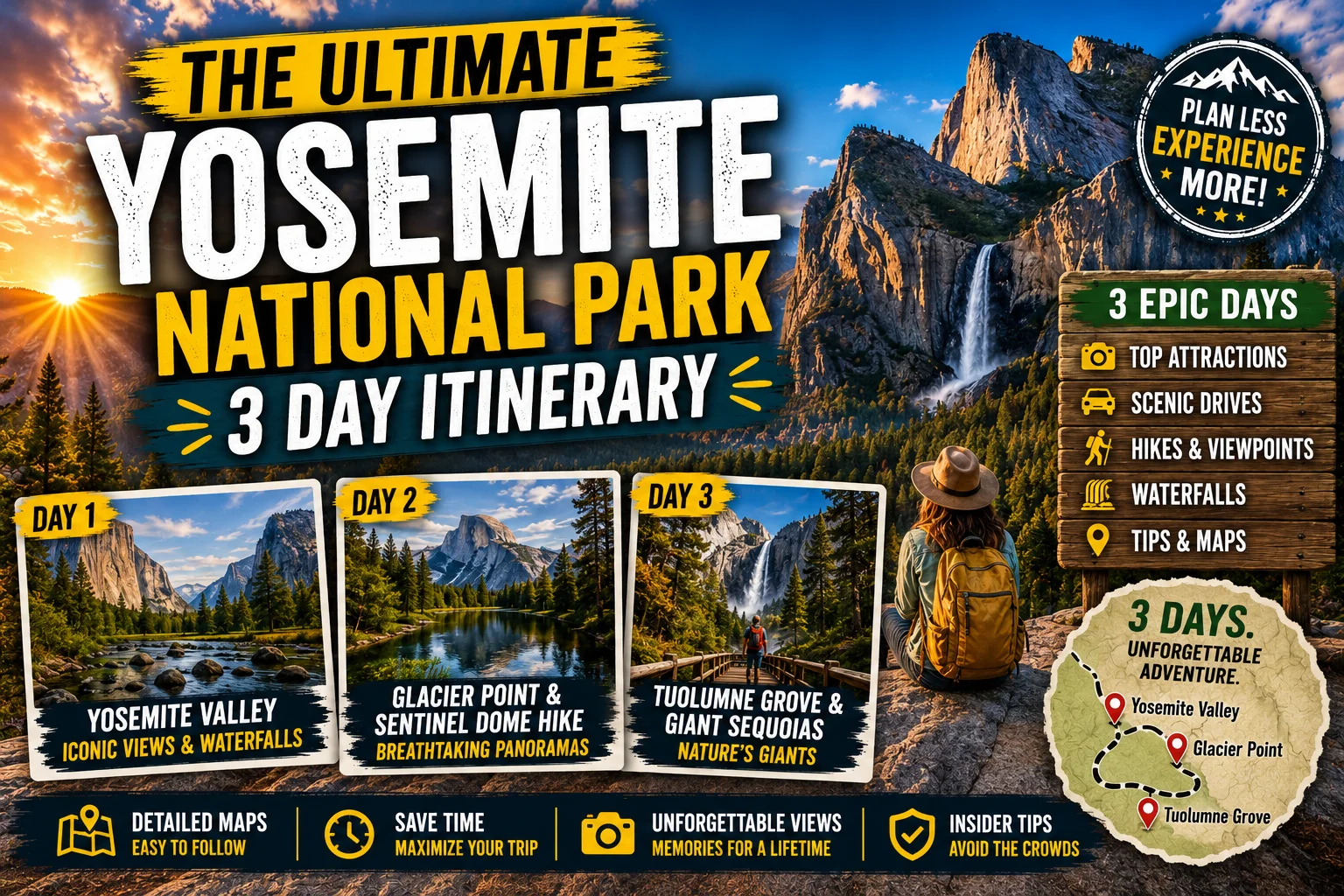
The Ultimate Yosemite National Park 3 Day Itinerar 2026
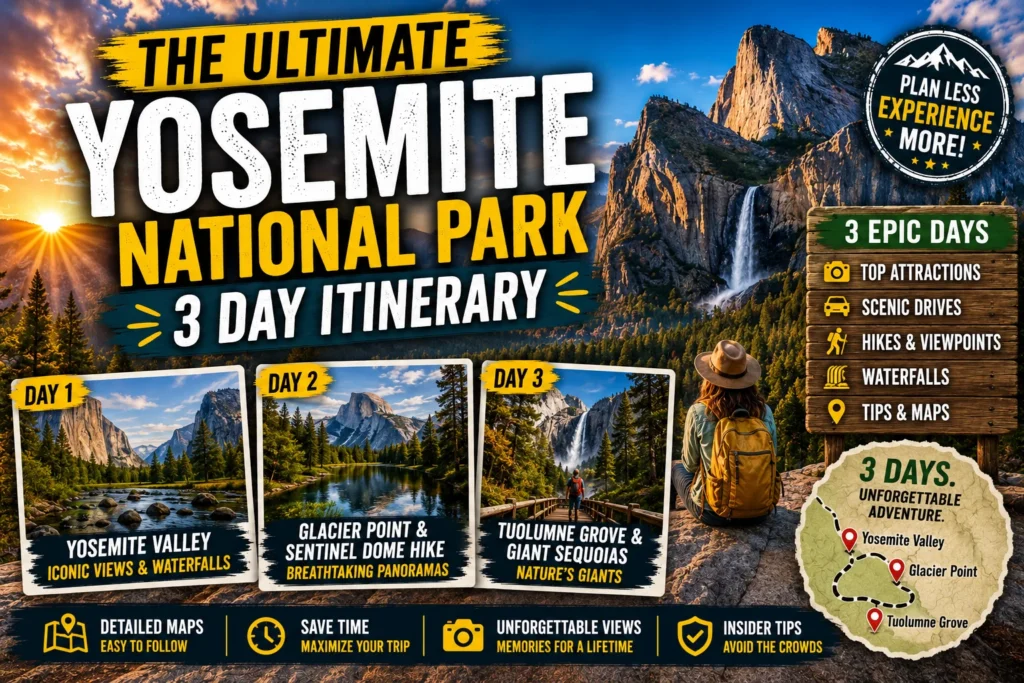
The Ultimate Yosemite National Park 3 Day Itinerar Yosemite NP is quite intimidating with its giant cliffs and huge sequoia trees Yosemite 3 Day itinerary so many places to visit so let’s have no stress Planning your 3 Day Yosemite trip may sound challenging! After all, we do have to hit those breathtaking cliffs and, of course, visit ancient giant sequoias . I have compiled what is, in my opinion, the PERFECT 3 Day itinerary so you’ll have the chance to hit Yosemite’s finest and still have time to enjoy a peaceful hike or two.
This itinerary is the ideal itinerary for pretty much any traveler who enjoys a dose of hiking or any lover of nature.
Let’s get to it!
Planning Your Yosemite Trip
Before we venture out, just for a moment to get the stuff done. Small tips can take away some of the planning hassle for the daily tours.
Choosing Your Gateway and Getting Around
It’s HUGE, so the way you travel there and how you get around will determine your experience.
By Car (recommended): If you plan on having your own vehicle, rent one! A rental car would be the most convenient way of getting around because you can explore the high country, stop off at different trailheads, and travel at your own pace. It is also a popular road trip destination for both San Francisco (approximately 4 hours away) and Los Angeles (roughly 6 hours away).
By Shuttle: A shuttle service operates during high season. The Yosemite Valley shuttle makes a loop around the valley floor, stopping at all trailheads, sightseeing attractions and lodges. This is a good idea to miss out on having to hunt for parking, which can be a nightmare.
Timing is Everything: To beat the crowds, show up early. Try to get to park entrances and the trail heads for the top Hiking Destinations before 8 o’clock in the morning. Cell phone service can be unreliable, so download offline maps for the area beforehand and plan your routes accordingly.
Where to Stay
Where you stay changes your day plan. In The Park, at places such as the Ahwahnee lodge, Yosemite Valley Lodge, or Curry Village-you’ll save gas and time going to the front line of sunrises, and sunsets-but you’ll pay the top and need reservations several months out. In Gateway Towns; towns such as Mariposa, Oakhurst, and Groveland provide cheaper accommodations as do other places in West Yosemite to make getting down into valley even without paying premium $$$ – just drive 15-30 minutes or so in.
Timing Your Visit
Yosemite is dynamic with the changing seasons-and provides a different adventure each time.
Spring (March-May): The waterfalls are still roaring with snowmelt, creating a spectacle of nature. The valley is exhetically lush and green. While most high-elevation roads could still be snowbound,.
Summer (June-August): Slightly less warm than June and August but the most popular season. All park roads will be open and traffic will be high. Waterfalls will generally be at their weakest in late summer.
Autumn (September-November): The cooler weather and fewer tour bus crowds plus the vibrant colors of the leaves changing make this my favorite time to go. The water levels are lower, but it’s a small price to pay for being able to relax and warm up with a hearty meal after a day of sightseeing.
Winter (December to February): The park becomes a winter paradise. Several roads are shut, but the views over the snow covered Half Dome are incredible. It is a peaceful time to enjoy the park’s “strange magic”, although access can be quite restricted.
Conquer the Iconic Valley
Your first day is all about the highlights. We’ll start with a bang by taking on Yosemite’s most famous trail.
Morning
Begin your day early. The Mist Trail is probably the most recognizable hike in Yosemite, and it’s easy to see why. It winds along the Merced river until it brings you face to face with Vernal Fall. In spring/early summer the “mist” is more of a deluge so be ready to get wet!
The hike itself; to the top of Vernal Fall, it is a steep 2.4 miles round trip with an average length of 3 hours. The hike is made along a cemented path, with a long steep flight of stairs on either side. It is strenuous hike and while taking your time, it will be fine.
Or if you do not want the extra climb you can walk just the first 1.6 miles and view from the footbridge where you can get amazing photographs of the waterfall.
The trail is easy to get to from the main valley floor.
Afternoon
After your strenuous morning hike, switch into a lower gear – the valley floor itself holds a wealth of wonders that are remarkably accessible: LOWER YOSEMITE FALL TRAIL. If you don’t feel like your legs are fully burned out already, this accessible and shaded 1-mile loop will lead you right to the foot of the tallest waterfall in North America. You’ll get up close and personal with Yosemite Falls in all its splendor.
Allow an hour for the hike.
EL CAPITAN MEADOW.
Rest on your derrière at the base of Yosemite’s granite iconic El Capitan (about three times the height of the Empire State Building). See speck-like dots of rock climbers scaling it and prepare to be awestruck by Yosemite’s proportions. This is the ultimate perch for Yosemite gigantism viewing.
Evening
Wrap up day one with a must-have Yosemite postcard snapshot. Tunnel View is definitely worth the visit. When you pull out of the Wawona Tunnel, the entire valley opens up before you, and you’re granted a complete panorama of El Capitan, Half Dome, and Bridalveil Fall all in one shot.
Sunset can be enchanting, as you can watch the granite rock formations glow in the light .
Expect a lot of people, so try to arrive a little early for a good vantage point .
Day 2
Today, we’ll trade the steep climbs for a more relaxed, but equally rewarding, exploration of Yosemite Valley’s hidden gems.
Morning
Start by driving through the loop to explore all the different valley views.
Cathedral Beach: I would start here. This is located off Southside Drive and is such a nice relaxing river-side area that has beautiful views of El Capitan and Cathedral Rocks. This is one of the first locations when you enter the one way Southside Drive, make sure not to pass it up.
Sentinel Beach:A quick hop along Southside Drive you’ll come up on Sentinel Beach. Sentinel Beach has lovely views of Upper Yosemite falls and Sentinel rock.
Swinging Bridge:This is one that a lot of locals like to recommend. It is known to capture a very iconic view of Upper Yosemite Falls on the surface of the river. Swinging Bridge is an extremely popular place for locals and guest to swim in the river during the summer season.
Afternoon: A Historic Chapel and a Reflective Lake
- Yosemite Chapel: Enjoy a brief detour into visiting the 1879 Yosemite Chapel. This, built for use in the valley , has the appearance of an inviting old schoolhouse. A quiet and time-rich rest spot, this peaceful stop offers solace from your itinerary.
- Mirror Lake Trail: Enjoy a peaceful afternoon ride with your Destination Mirror Lake Trailhead journey. On this lovely, relatively short and gentle 2-mile circuit tour, you can circumvent your fellow Tourists. As the spring and initial summertime months proceed , the water appears to become the naming for Mirror lake reflection with no doubt of the great 17,773’ TallHalf Dome reflection!
- It converts itself from pond to field throughout the late springtime months!
- The trail is not so strenuous and it provides us with magnificent sights associated withTENAYA, CREEEK and the WASHINGTON , COLLUNM.
Evening
For sunset: Sentinel Bridge This offers a new perspective than the aforementioned Tunnel View, emphasizing Half Dome. As the sun goes down, the face of the granite goes golden and reflect on the Merced River. It sounds insanely romantic but it’s also intensely popular so arrive early to secure a viewing spot.
Day 3
Your last day is all about getting a bird’s eye view. We’ll journey to the park’s high country for sweeping vistas.
Morning Drive to Glacier Point
Our day starts with a drive to one of the most stunning vantage points in the park Glacier Point. Driving there is a nice little hike and will provide you ample pull-offs to stop and marvel. (Note, the road there is usually open May through October).
The View: When you get to the top, wow, there is 360 degrees worth of eye candy.
The views were vastly different from up the mountain. Plenty of parking, facilities, and water if you’d like to take your lunch to eat it up here.
Midday Hike to Taft Point or Sentinel Dome
Need to hike a little bit more? There are a couple of great trail opportunities closer to Glacier Point that tend to be a lot less busy than the floor of the valley.
Taft Point This is a fairly simple 2.2 mile loop that ends with you on the edge of a cliff with immense dropoffs on either side. You can also hike out to several awesome rock fissures where granite has cracked open hundreds of feet deep. It is frightening as well as magnificent .
Sentinel Dome You may want to head over to Sentinel Dome as well. This 2.2 mile roundtrip hike climbs out over the very top of a granite dome which provide you with unobstructed, 360-degree views of both the valley as well as high country surrounding you. You can see an entire range from this spot in the park.
Evening
As your Yosemite National Park 3 day itinerary comes to a close, end on a high note at Valley View. It’s a different take on the Tunnel View panorama, but from ground level. It’s a beautiful perspective of El Capitan, Half Dome, Cathedral Rocks, and the Merced River all in one shot .
Hidden Gems
Here are a few of Yosemite’s hidden gems for if you have more time, or if you just want a break from the crowds: Hetch Hetchy Reservoir One of the most striking hidden gems in Yosemite is Hetch Hetchy, which is often dubbed the “other” valley of Yosemite. This remote area is known for its breathtaking reservoir and hiking trails. There’s a 5 mile round trip trail that will lead you to the beautiful Wapama Falls.
You will walk your way through a tunnel on the way.
Chilnualna Falls If you want a challenging alternative hike, the Chilnualna Falls hike in Wawona is an excellent alternative. The hike is a challenging 8.2 miles and will take you to a series of different cascads. Merced Grove Giant Sequoias There are more Giant Sequoias than what’s known and found at Mariposa Grove. If you want a secluded trail, then you should try to venture out on the Merced Grove trail!
It is a moderate hike (3 miles) where you are treated with the sight of several of these beautiful giantsscatterd around a ravine.
It rarely gets crowded in Merced. North Dome This trail is one of the closest alternatives to the HalfDome if you don’t want to be caught up in the rush and hassle of obtaining HalfDomepermits. In addition, instead of attempting the grueling 6,000 ft elevation gain, the 9 mile out and back trail from the Porcupine Flat trailhead leads you straight up to an epic view of Half Dome.
Conclusion
I hope this 3 Day Yosemite Itinerary has filled you with inspiration and made planning your visit a breeze. From the mighty Mist Trail to serene Mirror Lake, and iconic Yosemite Valley from Glacier Point you can’t go anywhere without witnessing some breathtaking views.
Have you visit to Yosemite?
Where is your favorite spot to visit?
Don’t hesitate to drop a comment down below with your tips and questions.
Share with your travel mates if you found this Yosemite National Park Itinerary useful.
Safe travels!
Frequently Asked Questions (FAQs)
Is 3 days enough for Yosemite National Park?
Yes, three days is a great amount of time to see the highlights. You can comfortably explore Yosemite Valley, drive to Glacier Point, and visit a sequoia grove. While you could spend weeks exploring its depths, this 3 day Yosemite National Park itinerary is the perfect introduction for first timers.
Do I need a reservation to enter Yosemite?
Yes, from late spring through early fall, you’ll often need a peak-hours reservation to enter the park. You can usually reserve a spot online at Recreation.gov. The requirement typically applies from May through September.
What is the best time of year to visit Yosemite?
Spring (May-June) for waterfalls, summer (July-August) for full access, fall (September-October) for fewer crowds, and winter (November-March) for snow. The best time depends on what you want to experience.
What should I pack for a trip to Yosemite?
You’ll want layers, sunscreen, a refillable water bottle, sturdy hiking shoes, a camera, and snacks. Temperatures can vary widely, so you should be prepared for anything.
Are there bears in Yosemite, and what should I do?
Yes, black bears live in the park. You must store all food, including scented items like lotion, in bear proof food lockers. Never leave any food in your car.
Is the Mist Trail dangerous?
The Mist Trail is challenging and steep, with slippery granite steps. Use caution, especially when it’s wet. While it’s not “dangerous” if you are careful, it’s not recommended for those with limited mobility.
Can I see giant sequoias in Yosemite?
Yes! Mariposa Grove is the largest and most popular, but you can also visit the Tuolumne and Merced Groves for a quieter experience.
1.
2.
3.
Spring (May-June) for waterfalls, summer (July-August) for full access, fall (September-October) for fewer crowds, and winter (November-March) for snow. The best time depends on what you want to experience.
4.x
5.
6.
7.
8. Is the Yosemite Valley shuttle free?
Yes, the Yosemite Valley shuttle is free. It runs year-round on a limited schedule and stops at all the key spots in the valley.
9. Can I drive through Yosemite in the winter?
Yes, but road closures are common. Carry tire chains and check road conditions on the NPS website before you go. Many high-elevation roads close for the season.
10. How much does it cost to enter Yosemite?
The entrance fee is $35 per vehicle, and it’s valid for seven days.