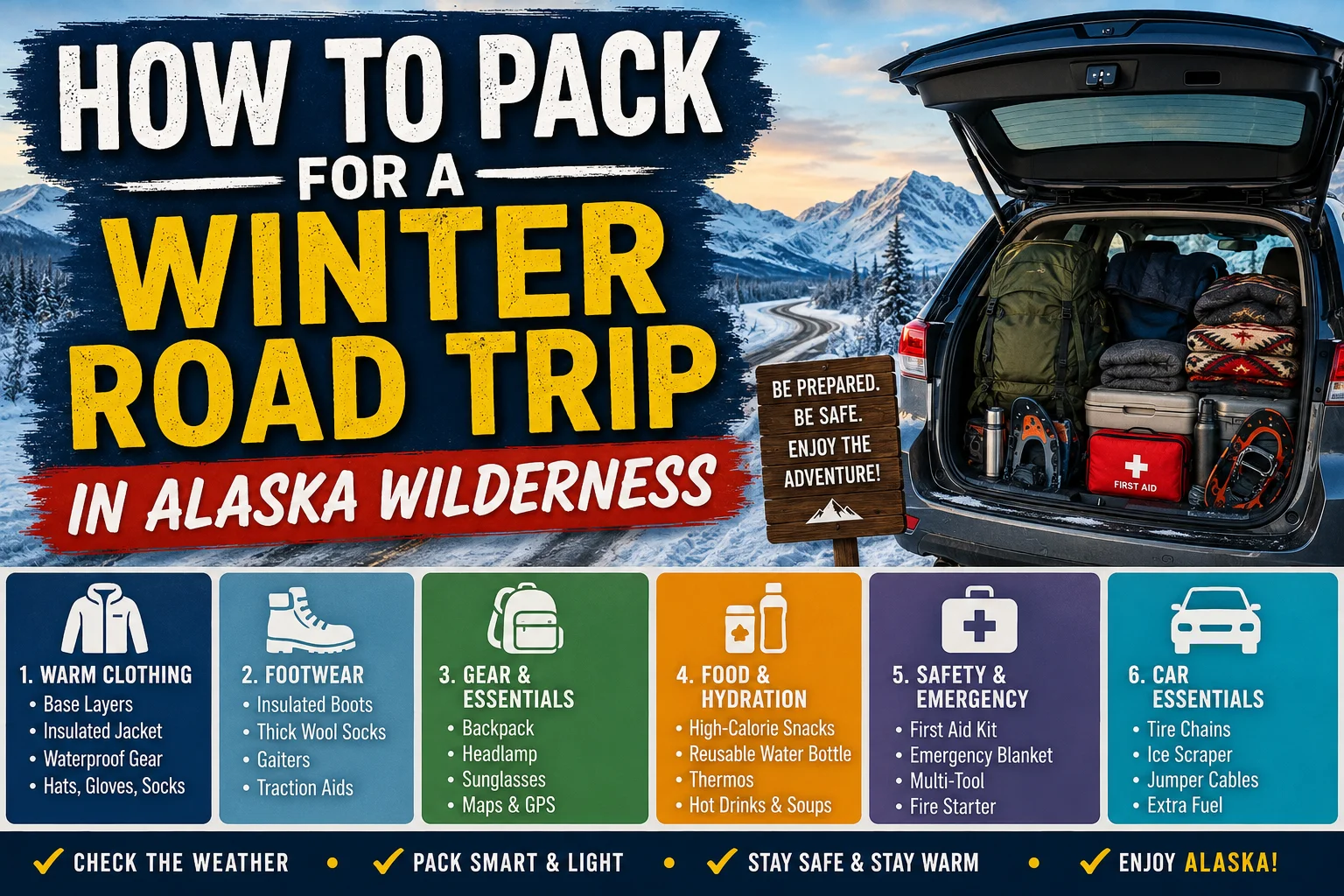
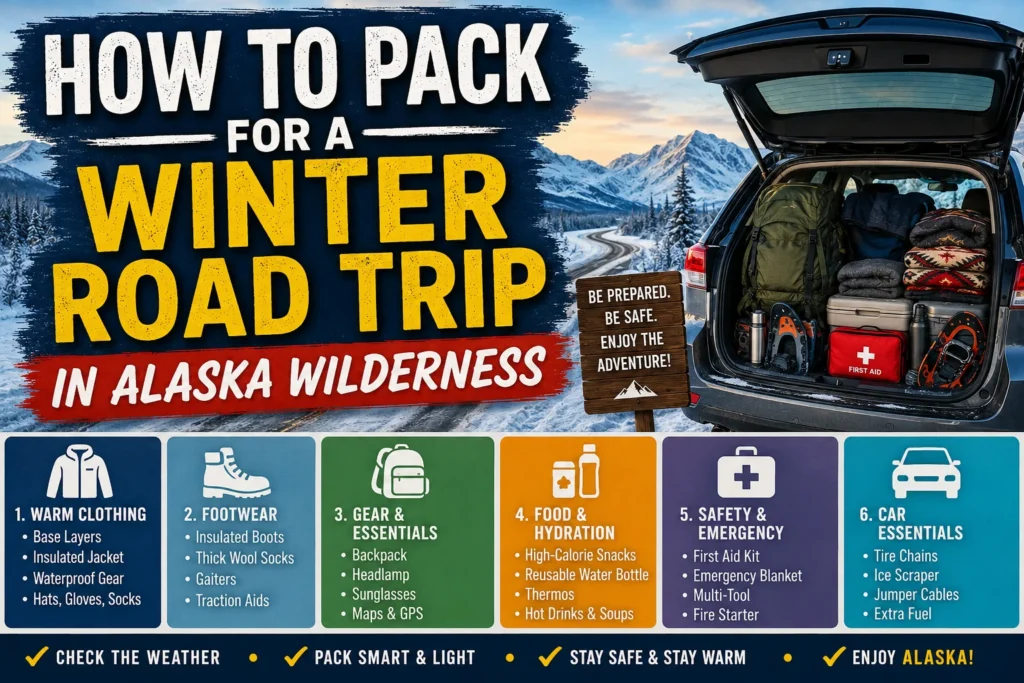
How to Pack for a Winter Road Trip in Alaska Wilderness 2026
For The rental car agent in Anchorage gives you a look. Not a dismissive look. A concerned one. “You know the roads are closed past that point, right? And the sun will be down by four.”
This is the moment when a winter Alaska road trip goes from being a cool idea to a serious logistical challenge. The state is roughly twice the size of Texas, with a road system about the size of Hawaii’s. Towns are few and far between. Cell service disappears for long stretches. And temperatures can plunge to minus 60 degrees Fahrenheit in the interior.
Knowing how to pack for a winter road trip in the Alaska wilderness is not just about comfort. It is about safety. I have driven these roads, experienced whiteout conditions, and learned the hard way what happens when you are not prepared.
Let me show you exactly what you need to pack.
The Golden Rule
Here is what a local will tell you. Do not treat this like a trip to the mountains in Colorado or Vermont. Alaska winters are a different beast. Interior Alaska often experiences temperatures below minus 60 degrees Fahrenheit for days at a time. Northern cities like Fairbanks can endure weeks of minus 40 degree temperatures.
But the real danger is not the cold itself. It is being stranded in it. Roads can close without warning. Heavy snow can make driving impossible. Help may be hours away. Pack with the mindset that you could spend a night in your vehicle if conditions suddenly change.
Vehicle Prep
Before we even talk about what goes in your bag let us talk about the car itself.
Tires & Traction
Winter tires are not optional. They are essential for safe winter driving. Studded tires provide better traction on icy roads and are recommended whenever temperatures drop to 45 degrees Fahrenheit or lower. In Alaska, most drivers rely on front wheel drive or four wheel drive vehicles with higher ground clearance. If you are renting a vehicle, make sure it is properly winterized before leaving the rental lot.
Locals also recommend using a battery warmer, oil pan warmer, and an engine block heater to help ensure the vehicle starts reliably in extreme cold.
Always in the Car Essentials
These items should live in your vehicle for the entire trip.
| Category | Item | Why You Need It |
| Traction & Recovery | Snow shovel | To dig yourself out of a snowbank |
| Kitty litter or sand | For traction on ice under your tires | |
| Tow strap or rope | To get pulled free by another vehicle | |
| Breakdown Kit | Booster/Jumper cables | Frigid temps kill batteries. Also consider a pre charged power bank |
| Spare tire jack lug wrench | Verify these fit your car | |
| Flares or warning lights | Visibility is critical especially in whiteout conditions | |
| Fuel line deicer | Moisture in gas lines can freeze | |
| Tools & Fluids | Duct tape & multi tool | Quick field repairs |
| Extra gas (jerry can) | Gas stations are few and far between | |
| Windshield washer fluid | Road grime and salt are constant problems | |
| Visibility | Ice scraper (long handled) | To clear windows headlights and mirrors |
Pro tip: Do not rely on the “Fix a Flat” aerosol can as your primary repair kit. It is a temporary backup. Carry an actual spare tire and know how to install it .
Clothing & Personal Gear
Alaskans live by the layering system. You do not bring one massive parka. You bring three layers that work together.
The Three Layers
Base Layer Moisture Wicking.
Merino wool or thermal underwear is essential. It pulls moisture away from your skin and helps keep you warm. Avoid cotton because it absorbs sweat, stays wet, and can quickly make you cold in freezing temperatures.
Mid Layer Insulation.
Wear fleece jackets, wool sweaters, or lightweight down layers to trap body heat. Many Alaska locals wear long underwear beneath all of their winter clothing for added insulation.
Outer Layer Weather Protection.
Finish with a windproof and waterproof shell that includes a hood. In severe winter conditions, strong wind can strip away body heat even faster than the cold itself, making a quality outer layer essential.
What to Bring for Yourself
| Item | Why |
| Winter boots | Pack boots rated to -20°F or -40°F |
| Wool socks | Multiple pairs. Extra pair for dry feet |
| Gloves vs. Mittens | Mittens are warmer. Bring both |
| Wool hat / balaclava | You lose a lot of heat from your neck and head. Hooded jackets help |
| Snow pants | If you have to step out into deep snow |
| Scarf / face mask | Protection from wind chill |
| Sunglasses | The glare off the snow can be debilitating |
The Emergency Kit: What Stays in the Car
This is the “stranded in a ditch for 48 hours” kit. Do not skip these.
Shelter & Warmth
- Sleeping bag rated to minus 20 degrees Fahrenheit or colder. If your vehicle breaks down in a remote area, a cold weather sleeping bag can be a lifesaver.
- Space blankets. Lightweight emergency blankets help retain body heat and can boost the warmth of your sleeping bag or blankets.
- Extra blankets. Even if you have a cold weather sleeping bag, pack several extra blankets for additional insulation.
- Fire starter logs and waterproof matches. If you become stranded and conditions allow, these can help you start a fire for warmth. Always follow local fire restrictions and use caution.
- Tarp and rope. A tarp and sturdy rope can be used to create an emergency shelter, block the wind, or protect gear from snow and moisture.
Food & Water
- Three day supply of non perishable food. Pack foods such as crackers, peanut butter, energy bars, beef jerky, trail mix, and chocolate. Choose items that provide plenty of calories and require no cooking.
- Water. Carry several bottles in insulated containers to help prevent them from freezing. Store some inside the passenger compartment rather than the trunk whenever possible.
- Soup or coffee packets and a thermos. If you are carrying a camp stove, instant soup, coffee, or hot chocolate can provide warmth and boost morale during an emergency.
- Camp stove and fuel. A compact camp stove can be used to heat water or prepare hot drinks and meals if you become stranded. Never operate a camp stove inside your vehicle or any enclosed space because it can produce dangerous carbon monoxide.
Survival Tools
- Headlamp and flashlight with extra batteries. A headlamp keeps both hands free for changing a tire changing tire chains or making emergency repairs in the dark. Pack spare batteries and keep them warm because cold temperatures can reduce battery life.
- First aid kit. Include gauze adhesive tape antiseptic wipes pain relievers prescription medications and any personal medical supplies you may need.
- Multi purpose knife or utility tool. A sturdy knife or multi tool is useful for cutting rope preparing fire starters making small repairs and handling other emergency tasks. Transport and use it in accordance with local laws and safety guidelines.
- Portable power bank. Keep a fully charged power bank in your vehicle so you can recharge your phone or other essential devices if your vehicle loses power.
- Satellite messenger. In remote areas where cell service disappears a satellite messenger can be used to send your location or contact emergency services if you need help.
Navigating the Weather & Road Conditions
Alaska is vast. The weather varies dramatically across the state. Coastal areas such as Ketchikan often stay close to the freezing point while Anchorage can drop below minus 20 degrees Fahrenheit. The interior is even more extreme with Fairbanks experiencing weeks of minus 40 degree temperatures. Whiteout conditions are a serious hazard and can reduce visibility to the point where driving becomes impossible. If you encounter a blizzard slow down increase your following distance and never stop in the middle of the road.
During whiteout conditions drive at a reduced speed leave earlier than usual and check current road conditions before setting out. In many parts of Alaska it is also common to keep your vehicle running for short periods while parked in extreme cold to help prevent it from freezing. Follow local guidance and never leave a vehicle running in an enclosed area.
Conclusion
Packing for an Alaska winter road trip is not about making sure you have a fresh outfit for dinner. It is about making sure you can stay safe if things go wrong.
You are traveling through a vast unforgiving wilderness where the road may be your only lifeline. With the right gear including warm layers emergency supplies and a reliable four wheel drive vehicle you can travel with greater confidence and fully appreciate the raw pristine beauty that makes Alaska unforgettable.
Click For More: How to Save Money on Historic Triangle Tickets in Virginia 2026
Frequently Asked Questions (FAQs)
What is the single most important thing to pack?
A sleeping bag rated for -20°F. If you break down, your car will lose heat fast. A sleeping bag is your first line of defense.
Do I need four-wheel drive?
Yes. A highl learance 4WD vehicle with studded tires is heavily recommended . Remote stretches are not for standard sedans.
Can I rely on my cell phone?
No. There is often no cell coverage in remote Alaska. You need a satellite messenger for true remote stretches . Print out maps as a failsafe .
What food should I pack?
Non perishable items like peanut butter crackers energy bars jerky and canned soup. Have at least a 3 day supply for each traveler .
What are the best winter boots for Alaska?
Pack boots rated to -20°F or -40°F . Look for waterproof insulation and high traction on ice.