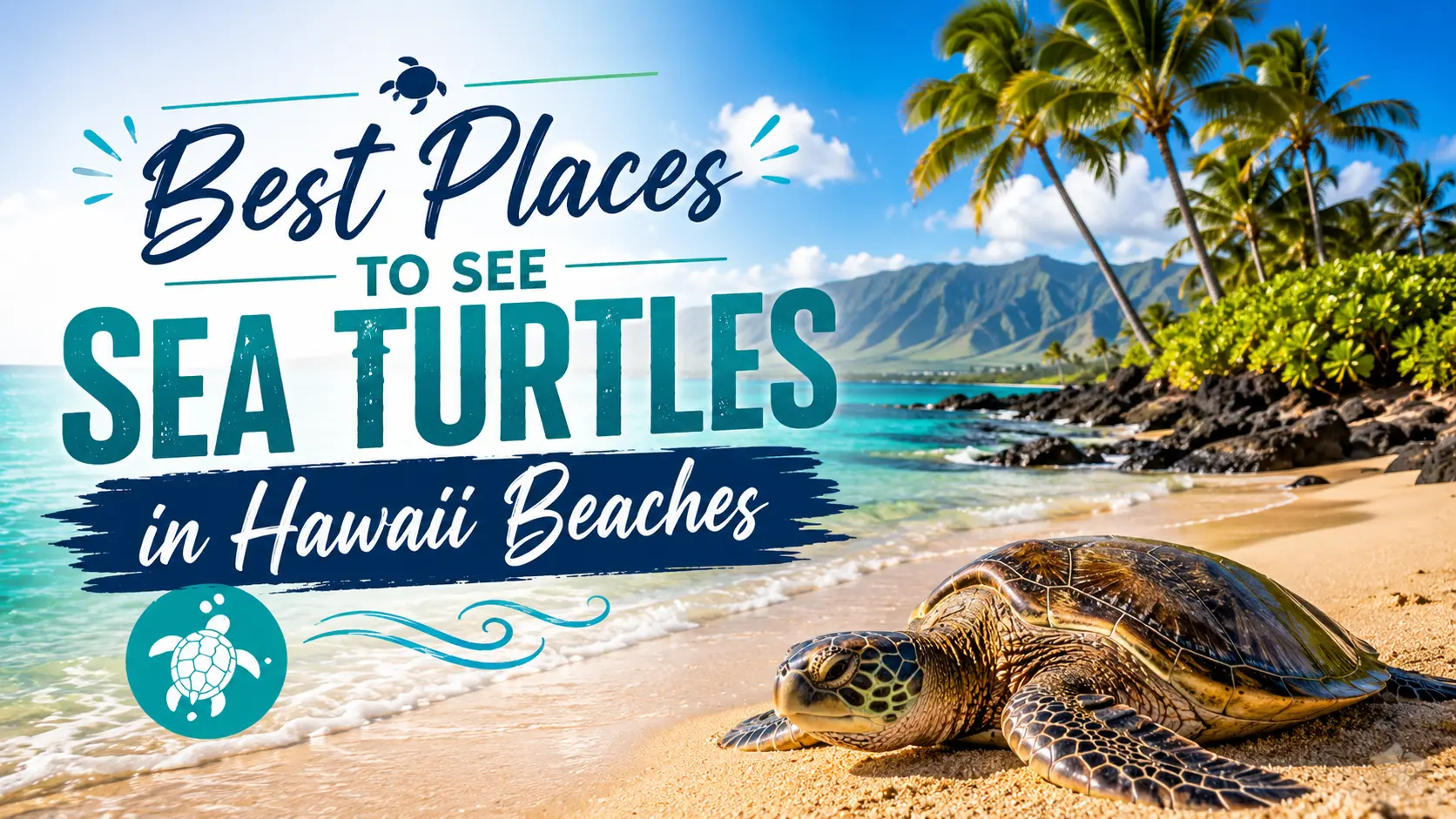
Best Places to See Sea Turtles in Hawaii Beaches 2026
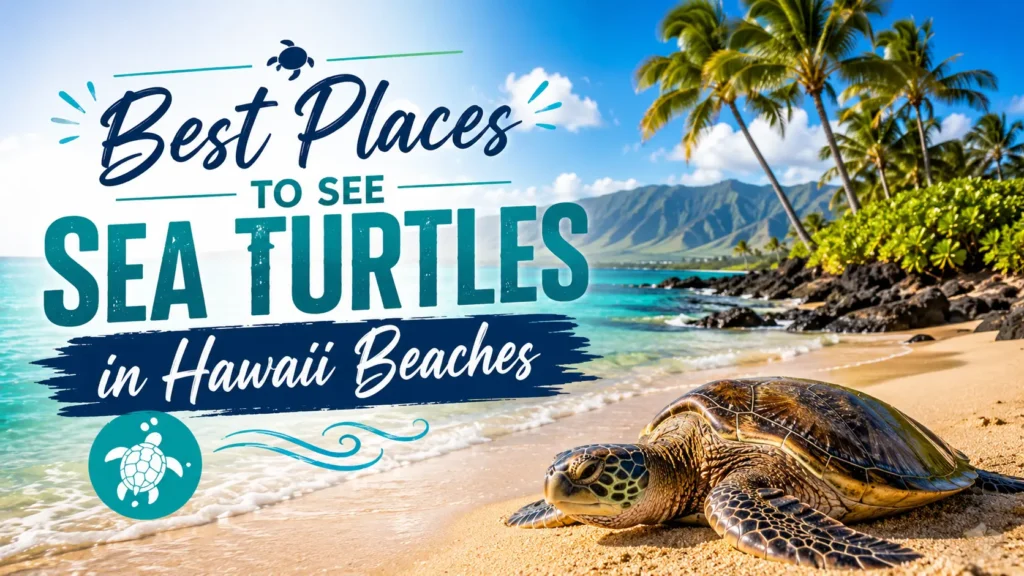
Best Places to See Sea Turtles in Hawaii Beaches. The sun is warming your shoulders, the scent of plumeria floats on the breeze, and you’re floating in crystal clear water. Suddenly, a massive, graceful shadow glides beneath you. You lock eyes with a creature that has roamed the Pacific for over 100 million years. That is the magic of finding the Best Places to See Sea Turtles in Hawaii Beaches.
In Hawaii, these gentle reptiles are known as Honu. They are symbols of good luck, endurance, and wisdom. But spotting them isn’t just about luck. You need to know where to go, what time of day to visit, and how to respect their space.
I’ve spent years exploring the hidden coastlines of the Hawaiian Islands, tracking down the quiet coves where turtles nest and feed. Forget the crowded tourist pontoons. Let me take you to the real spots the offbeat beaches where you can have a safe, magical, and ethical Honu encounter.
Let’s dive in.
Why Hawaii is a Global Hotspot for Sea Turtles
Before we jump into the exact beach names, you need to understand why Hawaii is so special. Of the seven species of sea turtles in the world, Hawaii is home to five. But the one you will almost certainly see is the Hawaiian Green Sea Turtle (Chelonia mydas).
Locals call them Honu. These giants can weigh up to 400 pounds and live to be 80 years old. Unlike other sea turtles that migrate thousands of miles, Hawaiian Green Turtles are “resident.” They stay in the islands year round because the warm water and shallow coastal reefs provide a non-stop buffet of algae and sea grass.
Key Takeaway: Because they don’t migrate far, your chances of seeing one in Hawaii are higher than almost anywhere else on Earth. You just need the right beach.
The Golden Rules of Turtle Watching (Read This First!)
I am going to give you exact GPS coordinates below, but first, a serious talk. In Hawaii, Sea Turtles are protected by state and federal law. Touching, chasing, or feeding a turtle is a felony. Fines start at $10,500.
Do not be that tourist.
Follow these three rules religiously:
- Give them 10 feet (3 meters) of space. If a turtle swims toward you (they are curious), freeze. Let it pass. Do not chase it.
- No flash photography. It disorients their navigation.
- Watch for red markings. Scientists tag some turtles for research. If you see a numbered tag, do not touch it. Just observe.
Pro Tip: If you see a turtle on the beach (basking), stay behind the rope barrier if one is set up. Basking is rare in Hawaii, but when it happens, the turtle is exhausted or sick. Disturbing it could kill it.
The 7 Best Places to See Sea Turtles in Hawaii Beaches (Island by Island)
I have broken this down by island so you can plan your trip. While you can find turtles on every major island, some beaches are guaranteed sightings, while others require a bit of a hike.
Oahu: The Accessible Honu Hotspots
Oahu is busy, but the turtles here are used to humans (respectfully). You don’t need a boat; just walk into the water.
1. Laniakea Beach (Turtle Beach) North Shore
This is the most famous spot on the planet for seeing Honu. Locals call it “Turtle Beach” for a reason.
- Best time: Low tide, between 11 AM – 2 PM.
- The Vibe: There are volunteer “Turtle Guardians” on duty every day. They will answer your questions and keep the turtles safe.
- Hidden Tip: Park on the highway shoulder before the bridge. Do not block the narrow road.
2. Electric Beach (Kahe Point Beach Park) West Side
This is for the adventurous snorkeler. A power plant discharges warm water into the ocean, which attracts plankton, which attracts turtles.
- The Catch: The current is strong. You need fins.
- What you’ll see: Massive turtles feeding right next to the outflow pipes. The visibility is stunning.
- Safety: Go at calm surf (check Surfline first). Never go alone.
Maui: The Leeward Hideaways
Maui’s south and west shores have shallow reefs that are perfect turtle nurseries.
3. Maluaka Beach (Turtle Town) Makena
Agencies sell boat tours to “Turtle Town,” but you can swim right from the sand at Maluaka Beach for free.
- Why it works: The reef creates a natural cleaning station. Small fish pick parasites off the turtles’ shells, and the turtles line up like cars at a car wash.
- Depth: Only 5–15 feet deep. Perfect for beginner snorkelers.
- Locate it: Head south past the Makena Golf Course. Look for the public access path near the Makena Beach & Golf Resort.
4. Ho’okipa Beach Park Paia
This is a famous windsurfing beach, but the left side of the cove is turtle central.
- Best viewing: From the shore! You don’t even need to get wet. Look for dark rocks that move they are sleeping turtles.
- Special event: At sunset, watch the turtles ride the waves into the shallows to rest.
- Warning: The shore break is brutal. Do not swim here if you are a weak swimmer. Watch from the rocks.
Big Island (Hawaii Island): The Wild Wild East
The Big Island has the highest population of Honu because of the lack of predators and vast sea grass meadows.
5. Punalu’u Black Sand Beach
This is one of the Best Places to See Sea Turtles in Hawaii Beaches if you want a surreal backdrop. The sand is jet black (volcanic), and the water is a deep emerald.
- Why turtles love it: The black sand absorbs heat. Female turtles sometimes bask here to warm up their cold blood.
- The Reality: There is no snorkeling here (water is silty). But the turtles literally crawl up onto the black sand to sleep.
- Ethical note: Do not throw black sand. Do not sit on the turtles (yes, people try). Stay 15 feet back.
6. Kahalu’u Beach Park Kailua Kona
If you have kids, go here. It is a protected bay with a lifeguard and gentle entry.
- The Turtle Highway: There is a specific lava rock channel on the south side of the bay. Snorkel along that rock wall at high tide. You will see 10-20 turtles resting against the rocks.
- Facilities: Showers, bathrooms, and shade pavilions. Very family friendly.
Kauai: The Quiet Secret
Kauai is less developed, so the turtles are shyer, but the reward is solitude.
7. Poipu Beach South Shore
Specifically, the small sandbar that connects to a tiny island called “Nukumoi Point.”
- The trick: Go at sunrise. The tour boats don’t arrive until 10 AM. You will have the turtles to yourself.
- What you see: Turtles sleeping under the rocky ledges. Look for their back flippers sticking out.
- Warning: The current rips through the channel. Swim parallel to the shore, not across it.
Seasonal Timing: When to Go for Maximum Encounters
Unlike whale watching, turtle watching is a year round activity in Hawaii. However, behavior changes with the seasons.
- Summer (May – September): The water is flat calm. This is the best time for snorkeling the “Turtle Town” locations. You will see them feeding.
- Winter (November – March): North shores get giant waves. Turtles migrate to the south and west shores for shelter. This is the best time for basking (turtles on the beach) because the water gets slightly cooler.
- Nesting Season (Mid-May to December): Female turtles come ashore at night to lay eggs. Do not approach nesting females. Watch from 50 feet away. If you see a nest (marked with yellow tape), do not walk near it.
Best Time of Day: 10:00 AM to 2:00 PM. This is when the sun is highest, warming the shallow reefs. Turtles are cold blooded; they need the sun to digest their food.
Land Based Viewing vs. Snorkeling vs. Boat Tours
You don’t need to be Michael Phelps to see Honu. Here is the breakdown of how to choose your adventure.
Land Based Viewing (Best for families or non swimmers)
- Beaches: Punalu’u (Big Island), Laniakea (Oahu), Ho’okipa (Maui).
- What you see: Turtles resting on the sand or surfacing for air just offshore.
- Gear needed: Sunglasses and patience.
Snorkeling (Best for up close, ethical viewing)
- Beaches: Kahalu’u (Big Island), Maluaka (Maui), Poipu (Kauai).
- What you see: Turtles grazing on algae. You will hear them crunching.
- Gear needed: Reef-safe sunscreen (zinc oxide only), mask, snorkel, fins.
Boat Tours (Best for remote spots)
- Where: Waikiki (Oahu) or Kaanapali (Maui).
- Pros: You get to Turtle Canyon, which is too deep to swim from shore.
- Cons: Expensive ($80-$150) and sometimes crowded.
- Hidden Tip: Take a kayak tour instead of a power boat. Kayaks are quieter, and turtles are not scared of them.
Also Check : How to Visit Olympic National Park in Three Days
What to Pack in Your Turtle Watching Day Bag
You cannot just show up in jeans and flip flops. The Hawaiian sun is brutal, and the lava rocks are sharp.
- Reef Safe Sunscreen: Legal requirement in Hawaii. No oxybenzone.
- Rashguard (Swim shirt): Better than sunscreen. Protects you from sun and jellyfish.
- Water shoes: Many of these beaches have rocky entries. Coral cuts get infected easily.
- Dry bag: To keep your phone and keys safe from surprise waves.
- GoPro on a stick: You can film without getting close.
- Do NOT bring: Plastic straws, polystyrene coolers, or red lights (confuses nesting turtles).
How to Photograph Sea Turtles Without Being a Jerk
We all want the shot for Instagram. But I have seen people shove cameras into a turtle’s face. Here is the professional code of conduct.
- Use a zoom lens. If you are on land, stay back. Crop the photo later.
- Go wide. If you are snorkeling, use a GoPro in wide mode. This allows you to stay 10 feet away but still get the turtle in the frame.
- Turn off the flash. Always. Even your phone’s “flashlight” feature.
- Be patient. The best photos happen when you stop moving. Hold still, and the turtle will often swim directly over you to check you out. That is the shot.
The Golden Rule of Photography: If the turtle changes its behavior (stops eating, speeds up, or turns away) because of you, you are too close. Back off.
Frequently Asked Questions (FAQs)
Is it legal to swim with sea turtles in Hawaii?
Yes, it is legal to swim near them, but it is illegal to touch, chase, or harass them. You must maintain a distance of at least 10 feet (3 meters) at all times.
What is the single best beach for guaranteed turtle sightings?
Laniakea Beach on Oahu’s North Shore (also called Turtle Beach) has the highest daily sighting rate, often 90%+ during midday low tide.
Can you see sea turtles at Waikiki Beach?
Rarely. Waikiki is too busy and deep. You have a better chance at the edges of the reef near the Waikiki Aquarium, but it is not reliable. Drive 20 minutes to Laniakea instead.
What time of day are sea turtles most active?
Between 10:00 AM and 2:00 PM. This is when the sun warms the shallow reefs, and the turtles come up from deep water to feed on algae.
Do sea turtles bite?
They can, but they are herbivores (plant eaters). A bite is rare and usually accidental if you stick your hand in their mouth while feeding them. Do not feed turtles.
What should I do if a sea turtle approaches me?
Freeze. Do not kick your fins. Let the turtle swim past you. If you stay still, the turtle might come within 1-2 feet out of curiosity. Enjoy the moment, but do not reach out.
Are there sea turtles on all Hawaiian Islands?
Yes. You can find Honu on Oahu, Maui, Kauai, Big Island, Molokai, and Lanai. Only Niihau (the forbidden island) is off limits to visitors.
What is the difference between a Green Sea Turtle and a Hawksbill?
Green Sea Turtles (Honu) have round, blunt heads and eat algae. Hawksbills have sharp, bird like beaks and eat sponges. Hawksbills are critically endangered and extremely rare to see if you see one, you are incredibly lucky.
Is it safe to snorkel in Turtle Town (Maui)?
Yes, but only if you stay inside the reef line. Do not go out to the deep blue water. The waves can pick up in the afternoon. Go in the morning (8 AM – 11 AM) when the wind is low.
What happens if I accidentally touch a sea turtle?
You will not be arrested immediately, but you could be fined up to $10,500. If you accidentally drift into one, apologize (yes, say sorry) and slowly swim backward. Report the incident to a lifeguard if the turtle seems distressed.
Conclusion
Hawaii is a living museum, and the Honu are its gentle guardians. By seeking out the Best Places to See Sea Turtles in Hawaii Beaches, you are not just ticking a box on a vacation checklist. You are stepping into their world. Remember the 10-foot rule. Wake up early for sunrise at Poipu. Brave the current at Electric Beach. And always, always turn off the flash.
These creatures have navigated these waters since before humans arrived. Treat them with respect, and they will give you a memory that lasts a lifetime.